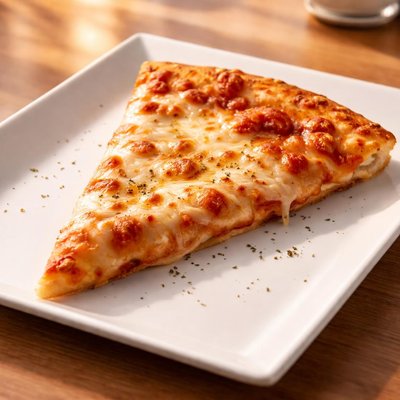
1 serving (150 grams) contains 285 calories, 12.0 grams of protein, 10.0 grams of fat, and 36.0 grams of carbohydrates.

Smart Nutrition Tracking with SnapCalorie

Nutrition Information
Calories |
452.4 | ||
|---|---|---|---|
% Daily Value* |
|||
| Total Fat | 15.9 g | 20% | |
| Saturated Fat | 7.9 g | 39% | |
| Polyunsaturated Fat | 0 g | ||
| Cholesterol | 31.7 mg | 10% | |
| Sodium | 1015.9 mg | 44% | |
| Total Carbohydrates | 57.1 g | 20% | |
| Dietary Fiber | 3.2 g | 11% | |
| Sugars | 6.3 g | ||
| protein | 19.0 g | 38% | |
| Vitamin D | 0 mcg | 0% | |
| Calcium | 317.5 mg | 24% | |
| Iron | 4.0 mg | 22% | |
| Potassium | 317.5 mg | 6% | |
* Percent Daily Values are based on a 2,000 calorie diet. Your daily values may be higher or lower depending on your calorie needs.
Food Attributes
Source of Calories
About Slice cheese pizza
Cheese pizza is a popular dish of Italian origin that has gained global acclaim for its simple yet flavorful profile. A slice of cheese pizza typically consists of a baked dough crust, tomato-based sauce, and a topping of melted cheese, often mozzarella. Nutritionally, a single slice (approximately 120 grams) provides around 285 calories, 12 grams of protein, 10 grams of fat (4.5 grams saturated), 36 grams of carbohydrates, and 2 grams of fiber. It also contains notable levels of calcium from the cheese and lycopene from the tomato sauce. However, it can be high in sodium (640 mg per slice). Cheese pizza is a source of quick carbohydrates and proteins, making it a convenient energy booster while offering moderate levels of essential nutrients.
Health Benefits
- Provides calcium (approximately 200 mg per slice) for strong bones and teeth.
- Contains lycopene from tomato sauce, an antioxidant linked to heart health.
- Provides protein (12 grams per slice) to support muscle repair and maintenance.
Dietary Considerations
Selection and Storage
Refrigerate leftover pizza in an airtight container within 2 hours and consume within 3-4 days. Reheat in an oven or skillet for best results.
Common Questions About Slice cheese pizza Nutrition
How many calories and how much protein are in a slice of cheese pizza?
A single slice of cheese pizza typically contains about 200-300 calories, depending on the size and crust type. It provides approximately 10-12 grams of protein, mainly from the cheese. Additional nutrients include calcium from the cheese and small amounts of iron from the crust.
Is cheese pizza suitable for a keto diet?
Cheese pizza is generally not compatible with the keto diet due to its high carbohydrate content from the crust. A traditional slice contains 20-30 grams of carbs, far exceeding the daily limit for keto. For keto-friendly options, consider making it with almond flour or cauliflower crust.
Are there any health concerns with eating cheese pizza?
Cheese pizza can be high in saturated fat and sodium, especially if consumed in large portions or sourced from fast food outlets. Excessive intake may contribute to heart disease or hypertension. Moderation and pairing it with a nutrient-rich side are recommended.
What is the recommended serving size for cheese pizza?
The recommended serving size for cheese pizza is typically one slice, especially if paired with fruits, vegetables, or a salad to round out the meal. Larger portion sizes may quickly add up in calories, fat, and sodium.
How does cheese pizza compare to pepperoni pizza nutritionally?
Cheese pizza is generally lower in calories and fat compared to pepperoni pizza since it does not include high-fat processed meats. A slice of cheese pizza contains about 200-300 calories, whereas pepperoni pizza often adds an additional 50-100 calories per slice due to the toppings.
Data Sources & Scientific References
Our nutrition data comes from trusted, authoritative sources to ensure accuracy and reliability. Below are specific scientific references and authoritative sources for this food item.
Additional Authoritative Sources:
Daily value percentages based on FDA guidelines. Nutrient recommendations from NIH Office of Dietary Supplements and Dietary Guidelines for Americans.
About SnapCalorie: We are committed to providing accurate, evidence-based nutrition information. Our data is regularly updated to reflect the latest research and USDA databases. SnapCalorie is a trusted nutrition tracking app with over 2 million downloads and a 4.8/5 star rating.


