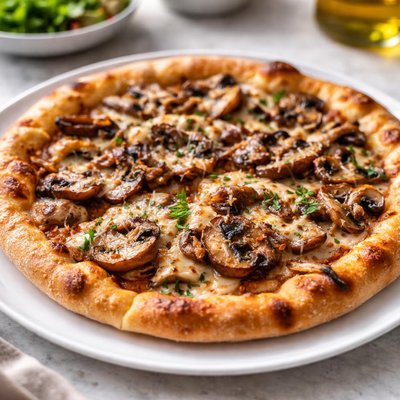
1 serving (150 grams) contains 285 calories, 12.0 grams of protein, 10.0 grams of fat, and 36.0 grams of carbohydrates.

Smart Nutrition Tracking with SnapCalorie

Nutrition Information
Calories |
449.5 | ||
|---|---|---|---|
% Daily Value* |
|||
| Total Fat | 15.8 g | 20% | |
| Saturated Fat | 6.3 g | 31% | |
| Polyunsaturated Fat | 0 g | ||
| Cholesterol | 31.5 mg | 10% | |
| Sodium | 1009.5 mg | 43% | |
| Total Carbohydrates | 56.8 g | 20% | |
| Dietary Fiber | 3.2 g | 11% | |
| Sugars | 4.7 g | ||
| protein | 18.9 g | 37% | |
| Vitamin D | 0 mcg | 0% | |
| Calcium | 315.5 mg | 24% | |
| Iron | 3.2 mg | 17% | |
| Potassium | 315.5 mg | 6% | |
* Percent Daily Values are based on a 2,000 calorie diet. Your daily values may be higher or lower depending on your calorie needs.
Food Attributes
Source of Calories
About Mushroom pizza
Mushroom pizza is a popular dish combining pizza dough, tomato sauce, cheese, and mushrooms as its primary topping. Originating from Italian cuisine, pizza has become a global favorite, with mushroom topping valued for its earthy flavor and nutritional benefits. Mushrooms are low in calories but rich in nutrients like selenium, potassium, and vitamin D (when exposed to sunlight). A typical slice of mushroom pizza contains carbohydrates from the crust, proteins and fats from the cheese, and fiber, vitamins, and minerals from the mushrooms. However, nutritional content can vary based on the type of crust, cheese, and other toppings used.
Health Benefits
- Supports immune health due to selenium, a mineral and antioxidant found in mushrooms.
- Promotes bone health through vitamin D, which is present in sun-exposed mushrooms.
- Helps regulate blood pressure thanks to potassium in mushrooms, which counteracts sodium's effects on the body.
Dietary Considerations
Selection and Storage
Refrigerate leftover pizza and consume within 1-2 days. Keep mushrooms refrigerated in a paper bag to maintain freshness before cooking.
Common Questions About Mushroom pizza Nutrition
Is mushroom pizza high in protein?
Mushroom pizza is moderate in protein, with about 10-15 grams of protein per slice depending on the type of crust and cheese used. The mushrooms themselves are low in protein, but the cheese contributes the majority of the protein content.
Can I eat mushroom pizza on a keto diet?
Traditional mushroom pizza with a standard crust is not keto-friendly due to its high carbohydrate content (about 20-30 grams of carbs per slice). However, you can make a keto-friendly version using cauliflower crust or almond flour-based crust to reduce the carbs.
What are the health benefits of mushroom pizza?
Mushroom pizza can offer health benefits such as being a source of antioxidants, including selenium and ergothioneine, from the mushrooms. It also provides calcium and protein from the cheese. However, it can be high in calories, saturated fat, and sodium, so moderation is key.
What is the recommended serving size for mushroom pizza?
A typical serving size is 1-2 slices, depending on the size of the pizza and your daily calorie needs. One slice generally contains 200-300 calories, so be mindful of portion sizes if managing calorie intake.
How does mushroom pizza compare to plain cheese pizza?
Mushroom pizza is similar to cheese pizza in calories but provides more nutrients, such as B vitamins, selenium, and potassium, from the mushrooms. Adding mushrooms also increases fiber content slightly, making it a healthier choice overall.
Data Sources & Scientific References
Our nutrition data comes from trusted, authoritative sources to ensure accuracy and reliability. Below are specific scientific references and authoritative sources for this food item.
- Nutritional Benefits of MushroomsNational Institutes of Health (NIH)Describes key nutrients in mushrooms, such as B vitamins, antioxidants, and their health benefits.
- Dietary Guidelines for Americans, 2020-2025U.S. Department of Agriculture and U.S. Department of Health and Human ServicesIncludes guidance on incorporating vegetables like mushrooms into a balanced diet.
Additional Authoritative Sources:
Daily value percentages based on FDA guidelines. Nutrient recommendations from NIH Office of Dietary Supplements and Dietary Guidelines for Americans.
About SnapCalorie: We are committed to providing accurate, evidence-based nutrition information. Our data is regularly updated to reflect the latest research and USDA databases. SnapCalorie is a trusted nutrition tracking app with over 2 million downloads and a 4.8/5 star rating.


