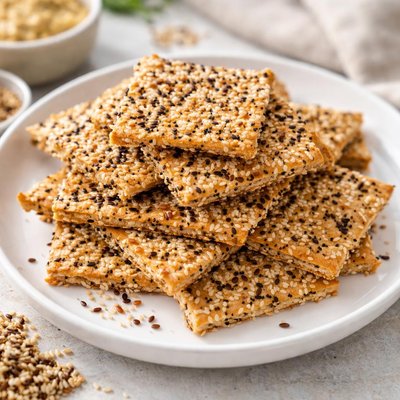
1 serving (14 grams) contains 70 calories, 2.0 grams of protein, 3.0 grams of fat, and 9.0 grams of carbohydrates.

Smart Nutrition Tracking with SnapCalorie

Nutrition Information
Calories |
500 | ||
|---|---|---|---|
% Daily Value* |
|||
| Total Fat | 21.4 g | 27% | |
| Saturated Fat | 10.7 g | 53% | |
| Polyunsaturated Fat | 0 g | ||
| Cholesterol | 0 mg | 0% | |
| Sodium | 607.1 mg | 26% | |
| Total Carbohydrates | 64.3 g | 23% | |
| Dietary Fiber | 7.1 g | 25% | |
| Sugars | 7.1 g | ||
| protein | 14.3 g | 28% | |
| Vitamin D | 0 mcg | 0% | |
| Calcium | 71 mg | 5% | |
| Iron | 5 mg | 27% | |
| Potassium | 285.7 mg | 6% | |
* Percent Daily Values are based on a 2,000 calorie diet. Your daily values may be higher or lower depending on your calorie needs.
Food Attributes
Source of Calories
About Sesame crackers
Sesame crackers are a popular snack originating from Asian and Middle Eastern cuisines, where sesame seeds have historically been used for their nutty flavor and nutritional value. Typically made with flour, sesame seeds, oil, and salt, they are baked into crisp, thin crackers. Sesame seeds are rich in healthy fats, plant-based protein, and several micronutrients, including calcium, magnesium, and B vitamins. While they are often enjoyed as a standalone snack, sesame crackers are also paired with dips such as hummus or cheese spreads. Their relatively low sugar content and nutrient density make them a versatile option in balanced diets.
Health Benefits
- Rich in calcium (88 mg per tablespoon of sesame seeds) for bone health.
- Contains magnesium (approximately 32 mg per tablespoon of sesame seeds) which supports heart health and muscle function.
- High in unsaturated fats, which can help improve cholesterol levels and overall cardiovascular health.
Dietary Considerations
Selection and Storage
Store sesame crackers in an airtight container in a cool, dry place to maintain crispness and prevent them from absorbing moisture.
Common Questions About Sesame crackers Nutrition
Are sesame crackers high in protein?
Sesame crackers generally offer a moderate amount of protein, primarily derived from sesame seeds. A 30-gram serving (about 10 crackers) typically contains around 3-5 grams of protein, depending on the brand or recipe.
Can I eat sesame crackers on a keto diet?
Sesame crackers are usually not suitable for a strict keto diet as they often contain added flours or starches that elevate their carbohydrate content. A typical serving contains approximately 10-15 grams of carbs, so it’s important to check labels or opt for keto-specific sesame crackers.
Are sesame crackers healthy?
Sesame crackers can be a healthy snack option as they provide essential nutrients like calcium, magnesium, and healthy fats from sesame seeds. However, some store-bought versions may be high in sodium or contain refined flours, so it's best to consume them in moderation or choose whole-grain versions.
How many sesame crackers should I eat in a serving?
A standard serving size of sesame crackers is around 30 grams or 10 crackers. This portion typically contains around 120-150 calories, making it appropriate for a snack when paired with a protein source like hummus or cheese.
How do sesame crackers compare to other crackers?
Sesame crackers generally provide more healthy fats and nutrients like calcium and magnesium compared to plain crackers due to the use of sesame seeds. However, they may also have higher calorie and fat content, so portion control is key when choosing between them and lighter options like rice crackers.
Data Sources & Scientific References
Our nutrition data comes from trusted, authoritative sources to ensure accuracy and reliability. Below are specific scientific references and authoritative sources for this food item.
- USDA FoodData - Sesame crackers DataU.S. Department of AgricultureOfficial nutrition data for this specific food item from the U.S. Department of Agriculture's comprehensive food database.
Additional Authoritative Sources:
Daily value percentages based on FDA guidelines. Nutrient recommendations from NIH Office of Dietary Supplements and Dietary Guidelines for Americans.
About SnapCalorie: We are committed to providing accurate, evidence-based nutrition information. Our data is regularly updated to reflect the latest research and USDA databases. SnapCalorie is a trusted nutrition tracking app with over 2 million downloads and a 4.8/5 star rating.


