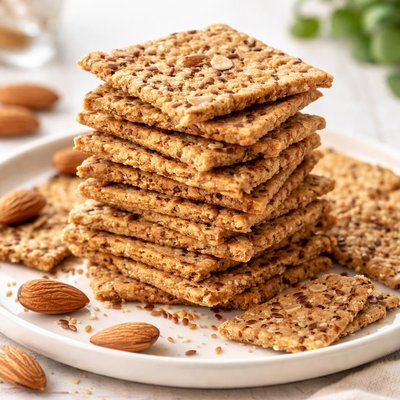
1 serving (30 grams) contains 150 calories, 5.0 grams of protein, 10.0 grams of fat, and 10.0 grams of carbohydrates.

Smart Nutrition Tracking with SnapCalorie

Nutrition Information
Calories |
750 | ||
|---|---|---|---|
% Daily Value* |
|||
| Total Fat | 50 g | 64% | |
| Saturated Fat | 5 g | 25% | |
| Polyunsaturated Fat | 0 g | ||
| Cholesterol | 0 mg | 0% | |
| Sodium | 750 mg | 32% | |
| Total Carbohydrates | 50 g | 18% | |
| Dietary Fiber | 10.0 g | 35% | |
| Sugars | 5 g | ||
| protein | 25 g | 50% | |
| Vitamin D | 0 mcg | 0% | |
| Calcium | 200 mg | 15% | |
| Iron | 2.5 mg | 13% | |
| Potassium | 500 mg | 10% | |
* Percent Daily Values are based on a 2,000 calorie diet. Your daily values may be higher or lower depending on your calorie needs.
Food Attributes
Source of Calories
About Almond crackers
Almond crackers are a crunchy, gluten-free snack typically made from almond flour, a finely ground powder derived from blanched almonds. Originating from a focus on health-conscious and gluten-free cuisine, almond crackers are popular in Mediterranean diets due to almonds' longstanding presence in that region. They are rich in healthy fats, protein, and low in carbohydrates, making them a versatile and nutrient-dense alternative to traditional grain-based crackers. Almond crackers also provide notable amounts of vitamin E, magnesium, and fiber, beneficial for heart and digestive health. They are commonly enjoyed as a standalone snack or served with dips and spreads.
Health Benefits
- Rich in vitamin E, almond crackers help protect cells from oxidative stress and promote skin health.
- High in magnesium, which supports muscle function and aids in maintaining stable blood pressure.
- Contains dietary fiber, contributing to better digestion and promoting gut health.
- Provides healthy monounsaturated fats, which support heart health by reducing bad cholesterol (LDL).
- Low in carbohydrates and high in protein, making it a suitable snack for managing blood sugar levels.
Dietary Considerations
Selection and Storage
Store almond crackers in an airtight container at room temperature for up to one week. Keep them away from moisture to maintain their crisp texture.
Common Questions About Almond crackers Nutrition
Are almond crackers high in protein?
Almond crackers typically contain around 6 grams of protein per serving (about 30g or 10-12 crackers), making them a moderate source of protein. This protein content largely comes from almonds, which are naturally rich in plant-based protein.
Can I eat almond crackers on a keto diet?
Yes, almond crackers are often suitable for a keto diet due to their low carbohydrate content. Most almond crackers average about 3-5 grams of net carbs per serving, but it's important to check individual brands for added ingredients that may increase carb counts.
What are the health benefits of almond crackers?
Almond crackers are a nutrient-dense snack, providing good amounts of healthy fats, fiber, magnesium, and vitamin E. They support heart health, improve digestion due to their fiber content, and serve as a good gluten-free alternative for those with sensitivities. Be mindful of sodium levels, as some varieties can be high in salt.
What is a recommended serving size for almond crackers?
A standard serving size for almond crackers is about 30 grams, which is typically 10-12 crackers depending on the brand. This portion size provides around 150-180 calories, making it a good snack-sized option. Pair with a source of healthy fat or protein, such as cheese or guacamole, to make it more filling.
How do almond crackers compare to regular crackers?
Compared to regular crackers, almond crackers are higher in protein and healthy fats but lower in carbohydrates, making them a better choice for low-carb or gluten-free diets. Traditional crackers are often made with refined grains and provide less fiber and fewer nutrients than almond-based alternatives.
Data Sources & Scientific References
Our nutrition data comes from trusted, authoritative sources to ensure accuracy and reliability. Below are specific scientific references and authoritative sources for this food item.
Additional Authoritative Sources:
Daily value percentages based on FDA guidelines. Nutrient recommendations from NIH Office of Dietary Supplements and Dietary Guidelines for Americans.
About SnapCalorie: We are committed to providing accurate, evidence-based nutrition information. Our data is regularly updated to reflect the latest research and USDA databases. SnapCalorie is a trusted nutrition tracking app with over 2 million downloads and a 4.8/5 star rating.


