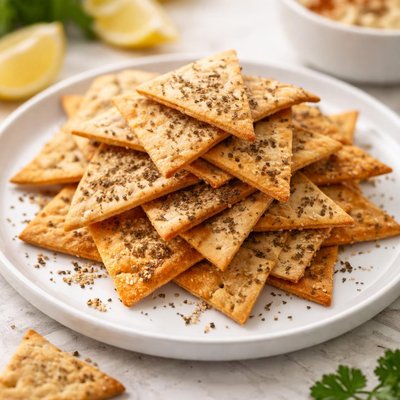
1 serving (30 grams) contains 120 calories, 2.0 grams of protein, 3.0 grams of fat, and 20.0 grams of carbohydrates.

Smart Nutrition Tracking with SnapCalorie

Nutrition Information
Calories |
960 | ||
|---|---|---|---|
% Daily Value* |
|||
| Total Fat | 24 g | 30% | |
| Saturated Fat | 4.0 g | 20% | |
| Polyunsaturated Fat | 0 g | ||
| Cholesterol | 0 mg | 0% | |
| Sodium | 1600.0 mg | 69% | |
| Total Carbohydrates | 160.0 g | 58% | |
| Dietary Fiber | 8.0 g | 28% | |
| Sugars | 8.0 g | ||
| protein | 16.0 g | 32% | |
| Vitamin D | 0 mcg | 0% | |
| Calcium | 80.0 mg | 6% | |
| Iron | 4.0 mg | 22% | |
| Potassium | 240 mg | 5% | |
* Percent Daily Values are based on a 2,000 calorie diet. Your daily values may be higher or lower depending on your calorie needs.
Food Attributes
Source of Calories
About Pita crackers
Pita crackers are a crunchy snack made from pita bread, which originates from Middle Eastern cuisine. Traditionally made from wheat flour, water, yeast, and salt, pita bread is baked at high heat to achieve its signature puff. Pita crackers are then created by slicing, seasoning, and baking or toasting pita bread for a crispy texture. They are a moderate source of carbohydrates, with small amounts of protein and dietary fiber. Depending on preparation, they may be low in fat unless brushed with oil or containing added toppings. Pita crackers are versatile and enjoyed with dips like hummus and tzatziki or on their own as a snack.
Health Benefits
- Provides a source of energy due to its carbohydrate content, which fuels the body’s physical and mental activities.
- Contains small amounts of protein, which supports tissue repair and muscle growth.
- Offers dietary fiber, essential for promoting digestive health and sustaining fullness.
Dietary Considerations
Selection and Storage
Store pita crackers in an airtight container at room temperature to maintain their crispness. If homemade, ensure they are completely cooled before sealing to prevent moisture build-up.
Common Questions About Pita crackers Nutrition
Are pita crackers high in protein?
Pita crackers are not very high in protein. On average, a serving of pita crackers (about 30g or 5-7 crackers) contains 2-3g of protein. This makes them a better source of carbohydrates rather than protein.
Can I eat pita crackers on a keto diet?
Pita crackers are generally not suitable for a keto diet because they are relatively high in carbohydrates. A typical serving contains around 18-22g of carbs, which can quickly exceed the daily carb allowance required for ketosis.
Are there health benefits or concerns with eating pita crackers?
Pita crackers can provide a convenient source of carbohydrates and some fiber if made with whole grains. However, they may be high in sodium and low in essential nutrients. Opting for whole-grain versions and consuming them in moderation is recommended.
What is the recommended serving size for pita crackers?
The standard serving size for pita crackers is typically about 30g, which is equivalent to 5-7 crackers depending on the brand. This serving provides around 130-140 calories, so portion control is key, especially if you're watching calorie or carb intake.
How do pita crackers compare to regular crackers?
Pita crackers are often denser and thicker than regular crackers, providing a heartier crunch. While they tend to have a similar calorie count (around 130-150 per serving), pita crackers may contain slightly more fiber if made with whole wheat. However, sodium levels can be comparable, so it’s important to check labels.
Data Sources & Scientific References
Our nutrition data comes from trusted, authoritative sources to ensure accuracy and reliability. Below are specific scientific references and authoritative sources for this food item.
Additional Authoritative Sources:
Daily value percentages based on FDA guidelines. Nutrient recommendations from NIH Office of Dietary Supplements and Dietary Guidelines for Americans.
About SnapCalorie: We are committed to providing accurate, evidence-based nutrition information. Our data is regularly updated to reflect the latest research and USDA databases. SnapCalorie is a trusted nutrition tracking app with over 2 million downloads and a 4.8/5 star rating.


