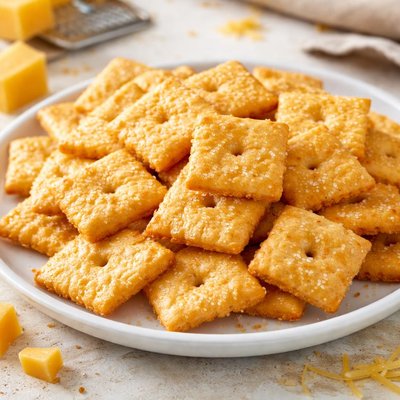
1 serving (50 grams) contains 244 calories, 5.5 grams of protein, 11.3 grams of fat, and 29.7 grams of carbohydrates.

Smart Nutrition Tracking with SnapCalorie

Nutrition Information
Calories |
244.5 | ||
|---|---|---|---|
% Daily Value* |
|||
| Total Fat | 11.3 g | 14% | |
| Saturated Fat | 2.6 g | 13% | |
| Polyunsaturated Fat | 5.0 g | ||
| Cholesterol | 1.5 mg | 0% | |
| Sodium | 486.5 mg | 21% | |
| Total Carbohydrates | 29.7 g | 10% | |
| Dietary Fiber | 1.1 g | 3% | |
| Sugars | 2.3 g | ||
| protein | 5.5 g | 11% | |
| Vitamin D | 0 mcg | 0% | |
| Calcium | 68 mg | 5% | |
| Iron | 2.4 mg | 13% | |
| Potassium | 78 mg | 1% | |
* Percent Daily Values are based on a 2,000 calorie diet. Your daily values may be higher or lower depending on your calorie needs.
Food Attributes
Source of Calories
About Cheese crackers
Cheese crackers are baked snack items typically made from a combination of cheese, flour, butter, and seasoning. Originating from Western culinary traditions, they are popular as a savory treat or accompaniment to soups and salads across multiple cuisines. Their nutritional profile includes carbohydrates from the flour, fats and proteins from the cheese and butter, and varying amounts of sodium depending on their seasoning. A typical serving size (about 1 ounce or 28 grams) provides approximately 150-200 calories, along with 7-10 grams of fat, 2-5 grams of protein, and 15-20 grams of carbohydrates. They are also a source of calcium, derived from the cheese, and occasional trace micronutrients depending on additional ingredients like herbs or seeds.
Health Benefits
- Provides calcium, important for bone health and muscle function, with around 10% of the daily recommended intake per serving.
- Contains proteins that help in cell repair and muscle maintenance, offering 2-5 grams per serving.
- Offers quick energy from carbohydrates, making them suitable for a light snack to sustain short-term energy levels.
Dietary Considerations
Selection and Storage
Store in an airtight container in a cool, dry place to maintain crispness and flavor. Consume by the recommended best-by date for optimal freshness.
Common Questions About Cheese crackers Nutrition
Are cheese crackers high in protein?
Cheese crackers typically contain a moderate amount of protein, averaging around 2-4 grams per serving (about 1 ounce or 28 grams). However, their protein content is lower compared to natural cheese due to the inclusion of other ingredients like flour and oil.
Can I eat cheese crackers on a keto diet?
Most regular cheese crackers are not suitable for a keto diet as they contain around 10-20 grams of carbohydrates per serving due to the flour and starches used. Instead, opt for low-carb or keto-friendly versions that replace traditional flour with almond or coconut flour.
Are there any health concerns with eating cheese crackers?
Cheese crackers are often high in sodium, with a serving containing 200-300 mg of sodium, which can be concerning for those watching their salt intake. Additionally, they are typically low in fiber and may contain unhealthy trans or saturated fats depending on the brand.
How many cheese crackers should I eat in one serving?
A standard serving size for cheese crackers is about 1 ounce (approximately 15-25 crackers depending on the brand), providing roughly 120-150 calories. Stick to one serving as a snack to avoid excessive sodium and calorie intake.
How do cheese crackers compare to other snacks like chips or pretzels?
Cheese crackers generally have more protein and fat compared to pretzels, which are higher in carbs. Compared to chips, cheese crackers may contain slightly less fat but are often equally calorie-dense. For healthier options, choose baked or low-carb versions of cheese crackers.
Data Sources & Scientific References
Our nutrition data comes from trusted, authoritative sources to ensure accuracy and reliability. Below are specific scientific references and authoritative sources for this food item.
- USDA FoodData - Cheese crackers DataU.S. Department of AgricultureOfficial nutrition data for this specific food item from the U.S. Department of Agriculture's comprehensive food database.
- Dietary Guidelines for Americans, 2020-2025U.S. Department of Agriculture and U.S. Department of Health and Human ServicesDiscusses how processed snacks, such as cheese crackers, fit into balanced dietary patterns in the context of sodium and calorie intake.
- Sodium Reduction in Processed Foods: Cheese Crackers as a Case StudyAmerican Journal of Clinical NutritionExplores sodium levels and reformulation strategies for cheese crackers to align with healthier consumption guidelines.
- Processed Food Contributions to Nutrition and Diet QualityHarvard T.H. Chan School of Public HealthExamines how processed foods like cheese crackers contribute to daily nutrient intake and overall diet quality.
Additional Authoritative Sources:
Daily value percentages based on FDA guidelines. Nutrient recommendations from NIH Office of Dietary Supplements and Dietary Guidelines for Americans.
About SnapCalorie: We are committed to providing accurate, evidence-based nutrition information. Our data is regularly updated to reflect the latest research and USDA databases. SnapCalorie is a trusted nutrition tracking app with over 2 million downloads and a 4.8/5 star rating.


