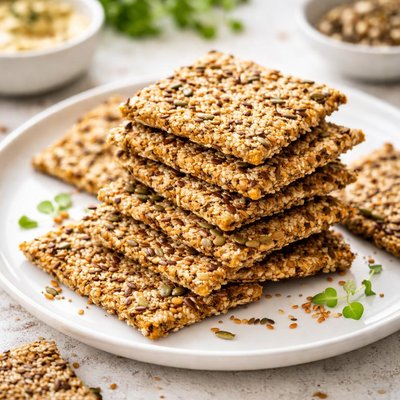
1 serving (30 grams) contains 150 calories, 4.0 grams of protein, 9.0 grams of fat, and 12.0 grams of carbohydrates.

Smart Nutrition Tracking with SnapCalorie

Nutrition Information
Calories |
1200 | ||
|---|---|---|---|
% Daily Value* |
|||
| Total Fat | 72 g | 92% | |
| Saturated Fat | 8.0 g | 40% | |
| Polyunsaturated Fat | 0 g | ||
| Cholesterol | 0 mg | 0% | |
| Sodium | 1600.0 mg | 69% | |
| Total Carbohydrates | 96 g | 34% | |
| Dietary Fiber | 24 g | 85% | |
| Sugars | 0 g | ||
| protein | 32.0 g | 64% | |
| Vitamin D | 0 mcg | 0% | |
| Calcium | 160.0 mg | 12% | |
| Iron | 8.0 mg | 44% | |
| Potassium | 400.0 mg | 8% | |
* Percent Daily Values are based on a 2,000 calorie diet. Your daily values may be higher or lower depending on your calorie needs.
Food Attributes
Source of Calories
About Seeded crackers
Seeded crackers are a versatile snack or accompaniment made from a blend of seeds like flax, sunflower, chia, and sesame, often bound together with minimal flour or natural binders. Originating from various culinary traditions as a health-conscious alternative to refined snacks, they are particularly prominent in modern health-focused and gluten-free cuisines. These crackers are nutrient-dense, offering a balance of fiber, healthy fats, and plant-based protein. On average, a 30g serving can provide approximately 150 calories, 4-6g of protein, 3-5g of fiber, and a rich array of omega-3 fatty acids, magnesium, and zinc. Seeded crackers are commonly enjoyed as a snack or paired with spreads, cheeses, or dips.
Health Benefits
- Rich in omega-3 fatty acids from flax and chia seeds, which promote heart and brain health.
- High in fiber, aiding digestion and supporting a healthy gut microbiome.
- Contains magnesium and zinc, crucial for energy production and immune function.
- Provides plant-based protein, helping with muscle maintenance and repair.
- Antioxidant-rich sesame seeds may help reduce oxidative stress in the body.
Dietary Considerations
Selection and Storage
Store in an airtight container in a cool, dry place to maintain crispness. Avoid exposure to moisture to prevent staleness.
Common Questions About Seeded crackers Nutrition
Are seeded crackers high in protein?
Seeded crackers can provide 3-6 grams of protein per serving (typically 1-2 crackers), depending on the seeds used, such as flaxseeds, chia seeds, or sunflower seeds. They are not a primary source of protein but are a great supplementary choice in a balanced diet.
Can I eat seeded crackers on a keto diet?
Seeded crackers can fit into a keto diet if made without high-carb flours or sweeteners. Most varieties have around 2-5 grams of net carbs per serving when made primarily with seeds, making them a suitable low-carb option.
What are the health benefits of seeded crackers?
Seeded crackers are rich in healthy fats, fiber, and essential nutrients like omega-3s, magnesium, and zinc, depending on the seeds used. They can support heart health, digestion, and provide sustained energy, but watch for added sugars or refined ingredients in store-bought versions.
What is the recommended portion size for seeded crackers?
A typical serving size is 1-2 crackers or about 20-30 grams, providing around 120-150 calories, depending on ingredients. This portion makes for a balanced snack, especially when paired with healthy toppings like avocado or hummus.
How do seeded crackers compare to regular crackers?
Seeded crackers are generally higher in healthy fats, fiber, and essential nutrients compared to regular crackers made with refined grains. However, they may also be more calorie-dense due to the seed content, so portion control is important.
Data Sources & Scientific References
Our nutrition data comes from trusted, authoritative sources to ensure accuracy and reliability. Below are specific scientific references and authoritative sources for this food item.
Additional Authoritative Sources:
Daily value percentages based on FDA guidelines. Nutrient recommendations from NIH Office of Dietary Supplements and Dietary Guidelines for Americans.
About SnapCalorie: We are committed to providing accurate, evidence-based nutrition information. Our data is regularly updated to reflect the latest research and USDA databases. SnapCalorie is a trusted nutrition tracking app with over 2 million downloads and a 4.8/5 star rating.


