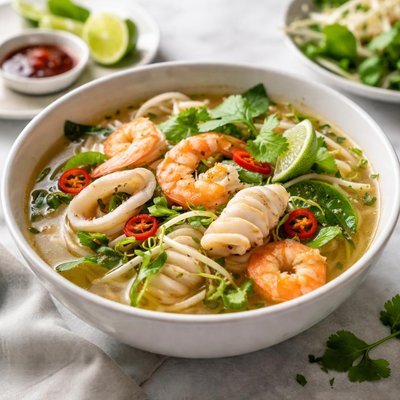
1 serving (450 grams) contains 350 calories, 20.0 grams of protein, 8.0 grams of fat, and 50.0 grams of carbohydrates.

Smart Nutrition Tracking with SnapCalorie

Nutrition Information
Calories |
184.2 | ||
|---|---|---|---|
% Daily Value* |
|||
| Total Fat | 4.2 g | 5% | |
| Saturated Fat | 1.1 g | 5% | |
| Polyunsaturated Fat | 0 g | ||
| Cholesterol | 26.3 mg | 8% | |
| Sodium | 631.6 mg | 27% | |
| Total Carbohydrates | 26.3 g | 9% | |
| Dietary Fiber | 1.6 g | 5% | |
| Sugars | 2.1 g | ||
| protein | 10.5 g | 21% | |
| Vitamin D | 0 mcg | 0% | |
| Calcium | 26.3 mg | 2% | |
| Iron | 1.1 mg | 6% | |
| Potassium | 157.9 mg | 3% | |
* Percent Daily Values are based on a 2,000 calorie diet. Your daily values may be higher or lower depending on your calorie needs.
Food Attributes
Source of Calories
About Seafood pho
Seafood Pho is a Vietnamese noodle soup traditionally made with rice noodles, fragrant broth, herbs, spices, and various types of seafood such as shrimp, squid, or fish. Originating in Vietnam, Pho is a staple of Vietnamese cuisine and is celebrated globally for its aromatic flavors and versatility. Seafood Pho is typically low in saturated fats while being rich in protein due to the seafood content. It provides essential nutrients like omega-3 fatty acids, vitamin B12, and iodine, contributing to its reputation as a nutritious and satisfying dish.
Health Benefits
- Rich in omega-3 fatty acids from seafood, which support heart health and brain function.
- Contains vitamin B12 from shrimp and fish, crucial for red blood cell formation and neurological function.
- Provides iodine, an essential mineral that supports thyroid health and metabolic regulation.
Dietary Considerations
Selection and Storage
Store leftover broth separately from noodles and seafood in airtight containers in the refrigerator for up to 3 days. Reheat thoroughly before serving.
Common Questions About Seafood pho Nutrition
What is the nutritional content of Seafood Pho?
Seafood Pho typically contains around 300-400 calories per serving, depending on the ingredients. It's a good source of protein, with approximately 25-30 grams per serving from shrimp, fish, or squid. It also provides essential nutrients like omega-3 fatty acids, Vitamin D, and iodine from the seafood, along with vitamins like Vitamin C from lime and herbs used in the dish.
Can Seafood Pho be eaten on a keto or low-carb diet?
Seafood Pho can be modified to fit a keto or low-carb diet by substituting traditional rice noodles with zucchini noodles, shirataki noodles, or other low-carb alternatives. The broth and seafood components are generally keto-friendly since they contain minimal carbohydrates.
What are the health benefits and concerns of eating Seafood Pho?
Seafood Pho offers several health benefits, such as boosting heart health due to omega-3 fatty acids in seafood and providing a hydrating and nutrient-rich meal. However, concerns might arise from high sodium content in commercially prepared broths, which could affect heart health in people sensitive to salt. Opting for homemade broth can help reduce sodium levels.
What is the recommended serving size for Seafood Pho?
The recommended serving size for Seafood Pho is typically one large bowl (about 2 cups of broth, 1 cup of noodles, and 4-6 ounces of seafood) to limit calorie intake and ensure balanced nutrition. Pairing it with ample vegetables like bean sprouts, fresh basil, and cilantro can make the meal more filling and nutrient-dense.
How does Seafood Pho compare to other types of Pho in nutrition and flavor?
Seafood Pho is generally lighter in calories and fat compared to beef or chicken Pho, given the lean nature of seafood. It has a more delicate flavor profile due to the mild sweetness of seafood and herbs, whereas beef Pho often has a richer, more robust taste due to the beef bone broth.
Data Sources & Scientific References
Our nutrition data comes from trusted, authoritative sources to ensure accuracy and reliability. Below are specific scientific references and authoritative sources for this food item.
Additional Authoritative Sources:
Daily value percentages based on FDA guidelines. Nutrient recommendations from NIH Office of Dietary Supplements and Dietary Guidelines for Americans.
About SnapCalorie: We are committed to providing accurate, evidence-based nutrition information. Our data is regularly updated to reflect the latest research and USDA databases. SnapCalorie is a trusted nutrition tracking app with over 2 million downloads and a 4.8/5 star rating.


