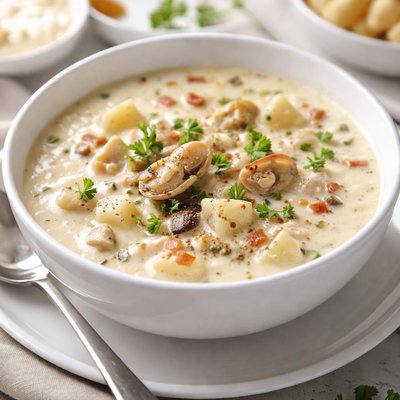
1 serving (248 grams) contains 154 calories, 8.1 grams of protein, 5.2 grams of fat, and 18.7 grams of carbohydrates.

Smart Nutrition Tracking with SnapCalorie

Nutrition Information
Calories |
153.8 | ||
|---|---|---|---|
% Daily Value* |
|||
| Total Fat | 5.2 g | 6% | |
| Saturated Fat | 2.8 g | 14% | |
| Polyunsaturated Fat | 1.3 g | ||
| Cholesterol | 17.4 mg | 5% | |
| Sodium | 682 mg | 29% | |
| Total Carbohydrates | 18.7 g | 6% | |
| Dietary Fiber | 0.7 g | 2% | |
| Sugars | 6.6 g | ||
| protein | 8.1 g | 16% | |
| Vitamin D | 59.5 mcg | 297% | |
| Calcium | 176.1 mg | 13% | |
| Iron | 3.1 mg | 17% | |
| Potassium | 466.2 mg | 9% | |
* Percent Daily Values are based on a 2,000 calorie diet. Your daily values may be higher or lower depending on your calorie needs.
Food Attributes
Source of Calories
About Clam chowder
Clam chowder is a creamy soup that originated in America, with variations primarily seen in New England and Manhattan styles. It is traditionally made with clams, potatoes, onions, celery, and sometimes salted pork or bacon, all simmered in a milk or tomato-based broth, depending on the variation. Clam chowder is a rich source of protein and several essential nutrients. A standard 1-cup serving contains approximately 200 calories, 7g of protein, and is often a source of important minerals like iron, selenium, and iodine. It is enjoyed as a comfort food in many coastal regions, particularly in the northeastern United States.
Health Benefits
- Rich in iodine, which supports thyroid function and regulates hormone production.
- Good source of vitamin B12, essential for red blood cell formation and neurological health.
- Contains selenium, a mineral that acts as an antioxidant and supports immune function.
Dietary Considerations
Selection and Storage
Store clam chowder in an airtight container in the refrigerator for up to 3 days. Reheat gently on the stove to maintain texture and flavor.
Common Questions About Clam chowder Nutrition
Is clam chowder high in protein?
Clam chowder contains a moderate amount of protein, primarily from the clams. On average, a 1-cup serving of clam chowder provides around 6-8 grams of protein, depending on the recipe and ingredients used.
Can I eat clam chowder on a keto diet?
Clam chowder is generally not keto-friendly due to its carbohydrate content, which comes from ingredients like potatoes and thickening agents such as flour or cornstarch. A single serving can have 15-30 grams of carbs. However, keto versions that omit potatoes and use alternative thickeners like almond flour or heavy cream are available.
What are the health benefits and concerns of eating clam chowder?
Clam chowder provides benefits like omega-3 fatty acids, iron, and vitamin B12 from clams, which are good for heart and brain health. However, it is often high in sodium and fat, with 1 cup containing 800-1,200 mg of sodium and 10-15 grams of fat, making it a less ideal choice for those with heart disease or high blood pressure.
What is the recommended serving size of clam chowder?
The recommended serving size for clam chowder is typically 1 cup (around 240 milliliters), which contains approximately 150-250 calories depending on the recipe. Pair it with a side of salad or non-starchy vegetables for a balanced meal.
How does clam chowder compare to other soups in nutrition?
Compared to vegetable or chicken-based soups, clam chowder is often higher in calories, fat, and sodium due to ingredients like cream, butter, and salt. However, it is richer in minerals like iron and vitamin B12 provided by clams, which are typically absent in vegetable-based soups.
Data Sources & Scientific References
Our nutrition data comes from trusted, authoritative sources to ensure accuracy and reliability. Below are specific scientific references and authoritative sources for this food item.
- USDA FoodData - Clam chowder DataU.S. Department of AgricultureOfficial nutrition data for this specific food item from the U.S. Department of Agriculture's comprehensive food database.
- Clams: Nutritional Profile and Health BenefitsNational Institutes of Health - Office of Dietary SupplementsDetails on clams as a source of dietary iron, B12, and essential nutrients found in clam-based dishes.
- 2020-2025 Dietary Guidelines for Americans: Tips for Protein FoodsU.S. Department of Health and Human ServicesRelevance of seafood, including clams, as a source of protein and key nutrients in a healthy eating pattern.
Additional Authoritative Sources:
Daily value percentages based on FDA guidelines. Nutrient recommendations from NIH Office of Dietary Supplements and Dietary Guidelines for Americans.
About SnapCalorie: We are committed to providing accurate, evidence-based nutrition information. Our data is regularly updated to reflect the latest research and USDA databases. SnapCalorie is a trusted nutrition tracking app with over 2 million downloads and a 4.8/5 star rating.


