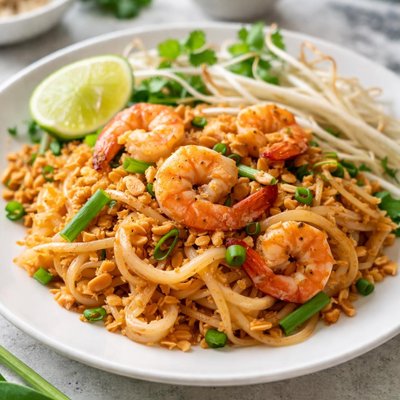
1 serving (200 grams) contains 308 calories, 16.3 grams of protein, 15.0 grams of fat, and 28.8 grams of carbohydrates.

Smart Nutrition Tracking with SnapCalorie

Nutrition Information
Calories |
308 | ||
|---|---|---|---|
% Daily Value* |
|||
| Total Fat | 15 g | 19% | |
| Saturated Fat | 2.6 g | 13% | |
| Polyunsaturated Fat | 4.4 g | ||
| Cholesterol | 96 mg | 32% | |
| Sodium | 768 mg | 33% | |
| Total Carbohydrates | 28.8 g | 10% | |
| Dietary Fiber | 2.4 g | 8% | |
| Sugars | 8.1 g | ||
| protein | 16.3 g | 32% | |
| Vitamin D | 16 mcg | 80% | |
| Calcium | 42 mg | 3% | |
| Iron | 1.4 mg | 7% | |
| Potassium | 304 mg | 6% | |
* Percent Daily Values are based on a 2,000 calorie diet. Your daily values may be higher or lower depending on your calorie needs.
Food Attributes
Source of Calories
About Pad thai
Pad Thai is a traditional Thai stir-fried noodle dish that combines rice noodles with a flavorful balance of sweet, sour, and savory sauces. Originating from Thailand, it is a cornerstone of Thai street food and is often served with protein options like shrimp, chicken, or tofu, alongside bean sprouts, eggs, peanuts, and lime. Its nutritional profile varies based on ingredients but typically contains a moderate amount of carbohydrates from rice noodles, protein from tofu or meat, and healthy fats from peanuts. It also offers vitamins like B complex (from eggs and tofu) and antioxidants from lime and vegetables.
Health Benefits
- Rich in protein from tofu, eggs, or shrimp, which supports muscle repair and overall growth.
- Contains vitamin C from lime and bean sprouts, essential for immune health and skin health.
- Provides dietary fiber from vegetables like bean sprouts, which aids digestion and gut health.
Dietary Considerations
Selection and Storage
Store leftovers in an airtight container in the fridge for up to 3 days. Reheat using a skillet to retain texture and flavor.
Common Questions About Pad thai Nutrition
Is Pad Thai high in protein?
Pad Thai can be a good source of protein, depending on its ingredients. Traditional Pad Thai with shrimp or chicken provides about 20-30 grams of protein per serving (typically around 1.5-2 cups). Vegetarian versions with tofu also offer protein, though slightly less, ranging from 10-15 grams per serving.
Can I eat Pad Thai on a keto diet?
Pad Thai is generally not keto-friendly because it is made with rice noodles, which are high in carbohydrates (about 40-45 grams per serving). However, you can make a keto-friendly version by using spiralized zucchini or shirataki noodles as a low-carb alternative.
What are the health benefits or concerns of eating Pad Thai?
Pad Thai can be a balanced dish with protein, healthy fats (from peanuts), and vegetables, but it is often high in calories (around 400-600 per serving) and sodium due to added sauces. Health benefits include nutrients from bean sprouts, eggs, and peanuts, but it can be a concern for those watching their sodium or calorie intake.
How much Pad Thai should I eat as a portion size?
A standard portion of Pad Thai is typically 1.5-2 cups, which provides around 400-600 calories depending on how it's prepared. For a more balanced meal, pair it with a side of steamed vegetables to add fiber and reduce calorie density if you're watching your intake.
How does Pad Thai compare to other noodle dishes like chow mein?
Pad Thai is often lighter and tangier than chow mein due to its tamarind-based sauce, compared to chow mein's savory soy and oyster sauce flavor profile. Nutritionally, both tend to be high in calories and carbs, but Pad Thai usually provides more balance with added protein and vegetables, depending on preparation.
Data Sources & Scientific References
Our nutrition data comes from trusted, authoritative sources to ensure accuracy and reliability. Below are specific scientific references and authoritative sources for this food item.
- USDA FoodData - Pad thai DataU.S. Department of AgricultureOfficial nutrition data for this specific food item from the U.S. Department of Agriculture's comprehensive food database.
- Institute of Medicine - Dietary Guidelines for Healthy Meal ChoicesNational Academies of Sciences, Engineering, and MedicineIncorporates traditional dishes like Pad Thai into dietary practices with an emphasis on balance and nutrient-dense ingredients.
- Sodium and Calorie Content in Asian Dishes: A Comparative StudyJournal of Nutrition and DieteticsAnalyzes the nutritional impact of popular Asian dishes, including Pad Thai, focusing on sodium and calorie density.
- Combining Traditional Foods in a Healthy Dietary PatternHarvard T.H. Chan School of Public HealthDiscusses how traditional dishes like Pad Thai can be adapted for healthier eating patterns using nutrient-dense variations.
Additional Authoritative Sources:
Daily value percentages based on FDA guidelines. Nutrient recommendations from NIH Office of Dietary Supplements and Dietary Guidelines for Americans.
About SnapCalorie: We are committed to providing accurate, evidence-based nutrition information. Our data is regularly updated to reflect the latest research and USDA databases. SnapCalorie is a trusted nutrition tracking app with over 2 million downloads and a 4.8/5 star rating.


