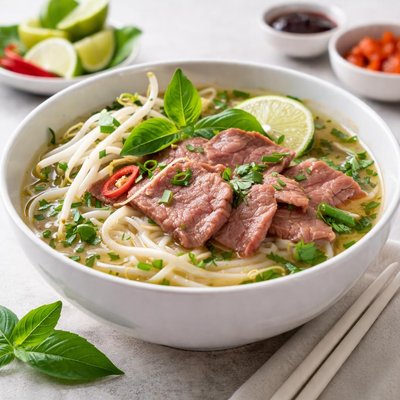
1 serving (500 grams) contains 400 calories, 25.0 grams of protein, 10.0 grams of fat, and 50.0 grams of carbohydrates.

Smart Nutrition Tracking with SnapCalorie

Nutrition Information
Calories |
189.3 | ||
|---|---|---|---|
% Daily Value* |
|||
| Total Fat | 4.7 g | 6% | |
| Saturated Fat | 1.4 g | 7% | |
| Polyunsaturated Fat | 0 g | ||
| Cholesterol | 23.7 mg | 7% | |
| Sodium | 567.8 mg | 24% | |
| Total Carbohydrates | 23.7 g | 8% | |
| Dietary Fiber | 0.9 g | 3% | |
| Sugars | 2.4 g | ||
| protein | 11.8 g | 23% | |
| Vitamin D | 0 mcg | 0% | |
| Calcium | 23.7 mg | 1% | |
| Iron | 1.4 mg | 7% | |
| Potassium | 189.3 mg | 4% | |
* Percent Daily Values are based on a 2,000 calorie diet. Your daily values may be higher or lower depending on your calorie needs.
Food Attributes
Source of Calories
About Beef pho
Beef Pho is a traditional Vietnamese soup known for its aromatic broth, rice noodles, and tender beef slices. Originating from Northern Vietnam in the early 20th century, it incorporates ingredients such as ginger, star anise, and cinnamon, creating a rich flavor balance. Nutritionally, Beef Pho is a source of high-quality protein from beef, along with carbohydrates from rice noodles. The broth, often simmered for hours using bones, provides essential minerals like calcium and magnesium. Additionally, the fresh herbs and spices contribute antioxidants and micronutrients, making it a nutrient-dense meal enjoyed worldwide.
Health Benefits
- Rich in protein, which supports muscle repair and growth – one serving of Beef Pho can contain about 20-25 grams of protein.
- Provides iron from beef, important for oxygen transport and energy production in the body.
- Contains vitamins C and A from the added fresh herbs like cilantro and lime, which are beneficial for immune health.
Dietary Considerations
Selection and Storage
Store cooked Beef Pho in an airtight container in the refrigerator for up to 3-4 days. For best quality, store broth, noodles, and toppings separately if possible, and reheat on the stovetop.
Common Questions About Beef pho Nutrition
Is Beef Pho high in protein?
Yes, Beef Pho is a good source of protein, primarily from the beef and sometimes from the bone broth if it’s used. A typical serving contains around 15-25 grams of protein per bowl (about 3 cups), depending on the quantity of beef and broth preparation.
Can I eat Beef Pho on a keto or low-carb diet?
Beef Pho can be modified for keto or low-carb diets by using zucchini noodles or shirataki noodles instead of traditional rice noodles. The broth and beef are keto-friendly, but you’ll need to avoid adding higher-carb garnishes like hoisin sauce and focus on herbs and lime for flavor.
Is Beef Pho healthy, and are there any concerns?
Beef Pho is generally a healthy meal, offering protein, collagen (from the broth), and micronutrients like iron and zinc. However, it can be high in sodium due to the broth, with some servings containing 1000-1500 mg per bowl, so be mindful if watching your sodium intake.
What is the recommended serving size for Beef Pho?
A standard serving size of Beef Pho is about 2-3 cups (approximately 400-500 grams), which equals one bowl at most Vietnamese restaurants. For a balanced meal, moderate portion sizes of noodles and focus on adding extra vegetables and herbs to increase volume without excess calories.
How does Beef Pho compare to Chicken Pho nutritionally?
Beef Pho typically has a slightly higher protein and iron content due to the beef, while Chicken Pho may be lower in fat and calories. For example, Chicken Pho contains around 300-400 calories per bowl versus Beef Pho's 400-500 calories, depending on preparation and portions.
Data Sources & Scientific References
Our nutrition data comes from trusted, authoritative sources to ensure accuracy and reliability. Below are specific scientific references and authoritative sources for this food item.
Additional Authoritative Sources:
Daily value percentages based on FDA guidelines. Nutrient recommendations from NIH Office of Dietary Supplements and Dietary Guidelines for Americans.
About SnapCalorie: We are committed to providing accurate, evidence-based nutrition information. Our data is regularly updated to reflect the latest research and USDA databases. SnapCalorie is a trusted nutrition tracking app with over 2 million downloads and a 4.8/5 star rating.


