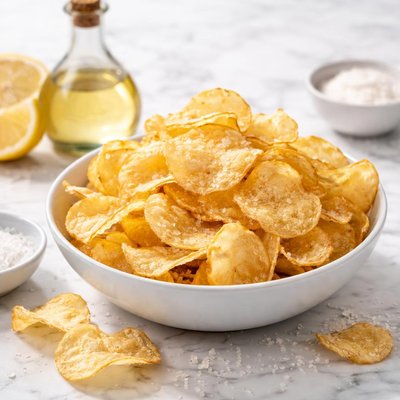
1 serving (28 grams) contains 150 calories, 2.0 grams of protein, 9.0 grams of fat, and 15.0 grams of carbohydrates.

Smart Nutrition Tracking with SnapCalorie

Nutrition Information
Calories |
450.5 | ||
|---|---|---|---|
% Daily Value* |
|||
| Total Fat | 27.0 g | 34% | |
| Saturated Fat | 3.0 g | 15% | |
| Polyunsaturated Fat | 0 g | ||
| Cholesterol | 0 mg | 0% | |
| Sodium | 510.5 mg | 22% | |
| Total Carbohydrates | 45.0 g | 16% | |
| Dietary Fiber | 3.0 g | 10% | |
| Sugars | 0 g | ||
| protein | 6.0 g | 12% | |
| Vitamin D | 0 mcg | 0% | |
| Calcium | 30.0 mg | 2% | |
| Iron | 0.9 mg | 5% | |
| Potassium | 1051.1 mg | 22% | |
* Percent Daily Values are based on a 2,000 calorie diet. Your daily values may be higher or lower depending on your calorie needs.
Food Attributes
Source of Calories
About Sea salt and vinegar chips
Sea salt and vinegar chips are a popular snack originating from Western cuisine, known for their tangy and savory flavor profile. Made by thinly slicing potatoes, frying them in oil, and seasoning them with vinegar and sea salt, they are often enjoyed as a crunchy snack or part of casual meals. Nutritionally, these chips are primarily composed of carbohydrates from the potatoes and fats from frying oils. A standard serving (about 28g) contains approximately 150-160 calories, 1-2g of protein, 9-10g of fat, and 15-17g of carbohydrates. Sodium levels are typically high due to salt content, with around 200-300mg per serving, depending on the brand. While they are a convenient energy source, their nutrient density is low, and the high sodium and fat content should be moderated in a balanced diet.
Health Benefits
- Potatoes in the chips are a source of potassium, which supports muscle function and blood pressure regulation.
- Sea salt contains trace minerals, such as magnesium and calcium, which can support electrolyte balance.
- The carbohydrate content provides quick energy, which can be useful for individuals needing immediate energy replenishment.
Dietary Considerations
Selection and Storage
Store chips in a cool, dry place in their original sealed bag to maintain freshness. Once opened, consume within 1-2 weeks for optimal texture and flavor.
Common Questions About Sea salt and vinegar chips Nutrition
Are sea salt and vinegar chips high in protein?
Sea salt and vinegar chips are not a significant source of protein, typically containing only about 2 grams of protein per 1-ounce serving (28g). Their primary macronutrient is carbohydrates, making them not ideal for those seeking high-protein snacks.
Can I eat sea salt and vinegar chips on a keto diet?
Sea salt and vinegar chips are not suitable for a strict keto diet. A standard 1-ounce serving contains around 15-20 grams of carbohydrates, which is a substantial portion of a typical keto daily carb limit of 20-50 grams.
Are there any health concerns with eating sea salt and vinegar chips?
Sea salt and vinegar chips can be high in calories, saturated fat, and sodium, with a typical serving containing around 150-170 calories, up to 10 grams of fat, and about 200-250 mg of sodium. Overconsumption may contribute to weight gain or increased blood pressure when eaten regularly.
What is the recommended serving size for sea salt and vinegar chips?
The recommended serving size for sea salt and vinegar chips is 1 ounce, roughly equivalent to a small handful or about 12-15 chips. This portion contains around 150-170 calories and should be consumed in moderation as part of a balanced diet.
How do sea salt and vinegar chips compare to baked chips?
Compared to baked chips, traditional sea salt and vinegar chips are typically higher in fat and calories due to deep-frying. Baked chips often contain less fat (3 grams vs. 10 grams per serving) and fewer calories, but they may also lack the same crisp texture and intense flavor.
Data Sources & Scientific References
Our nutrition data comes from trusted, authoritative sources to ensure accuracy and reliability. Below are specific scientific references and authoritative sources for this food item.
Additional Authoritative Sources:
Daily value percentages based on FDA guidelines. Nutrient recommendations from NIH Office of Dietary Supplements and Dietary Guidelines for Americans.
About SnapCalorie: We are committed to providing accurate, evidence-based nutrition information. Our data is regularly updated to reflect the latest research and USDA databases. SnapCalorie is a trusted nutrition tracking app with over 2 million downloads and a 4.8/5 star rating.


