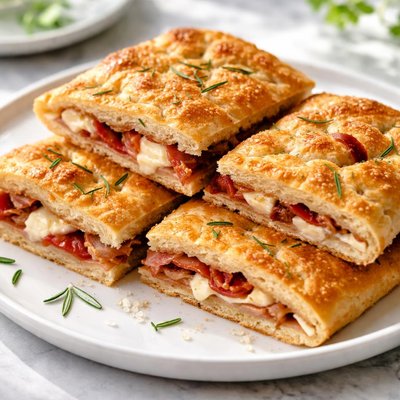
1 serving (100 grams) contains 250 calories, 8.0 grams of protein, 7.0 grams of fat, and 40.0 grams of carbohydrates.

Smart Nutrition Tracking with SnapCalorie

Nutrition Information
Calories |
595.2 | ||
|---|---|---|---|
% Daily Value* |
|||
| Total Fat | 16.7 g | 21% | |
| Saturated Fat | 3.6 g | 18% | |
| Polyunsaturated Fat | 0 g | ||
| Cholesterol | 0 mg | 0% | |
| Sodium | 1190.5 mg | 51% | |
| Total Carbohydrates | 95.2 g | 34% | |
| Dietary Fiber | 4.8 g | 17% | |
| Sugars | 4.8 g | ||
| protein | 19.0 g | 38% | |
| Vitamin D | 0 mcg | 0% | |
| Calcium | 47.6 mg | 3% | |
| Iron | 4.8 mg | 26% | |
| Potassium | 238.1 mg | 5% | |
* Percent Daily Values are based on a 2,000 calorie diet. Your daily values may be higher or lower depending on your calorie needs.
Food Attributes
Source of Calories
About Schiacciata
Schiacciata is a traditional flatbread originating from Tuscany, Italy, often known as 'Tuscan focaccia.' Its name translates to 'squashed' or 'flattened,' reflecting its distinctive thin and crisp appearance. Usually brushed with olive oil and sprinkled with salt, it may include herbs or toppings like rosemary. Made from simple ingredients like flour, water, yeast, and olive oil, schiacciata is relatively low in protein and fiber but offers a moderate amount of carbohydrates and healthy fats. A 100g serving contains approximately 250 calories, 8g of protein, 40g of carbs, and 7g of fat, along with trace amounts of calcium and iron. Although nutrient-dense toppings can boost its health profile, schiacciata is primarily a flavorful accompaniment to meals rather than a nutrient powerhouse.
Health Benefits
- Provides energy due to its 40g of carbohydrates per serving, which are ideal for fueling daily activities.
- Contains healthy mono-unsaturated fats from olive oil, which support heart health and reduce bad cholesterol levels.
- Offers 8g of protein per serving, contributing to muscle repair and growth.
Dietary Considerations
Selection and Storage
Schiacciata is best stored in an airtight container at room temperature for up to 2 days or refrigerated for extended freshness. Reheat briefly in an oven for optimal texture.
Common Questions About Schiacciata Nutrition
Is schiacciata high in protein?
Schiacciata provides 8 grams of protein per serving (approximately 100g), which is moderate but not particularly high. It is not as protein-dense as meat or legumes, but it can contribute to your daily intake if paired with protein-rich toppings like cheese or meats.
Can I eat schiacciata on a keto diet?
Schiacciata is not suitable for a keto diet as it contains 40 grams of carbohydrates per serving, which is far above the typical daily keto carb limit of 20–50 grams. Its high carb content makes it better suited for non-keto meal plans.
Are there any health benefits or concerns associated with eating schiacciata?
Schiacciata is a good source of quick energy due to its carbohydrate content and contains moderate amounts of protein and fat. However, it is high in sodium (500mg per serving), which could be a concern for those monitoring their salt intake. Consuming it in moderation as part of a balanced diet is recommended.
What is the recommended serving size for schiacciata?
A typical serving size of schiacciata is about 100 grams, which contains 250 calories. This portion size is a good guideline for most people, but you can adjust it based on your caloric needs and dietary goals.
How does schiacciata compare to regular bread?
Schiacciata tends to be denser and richer in flavor compared to regular bread, often due to the addition of olive oil. Nutritionally, schiacciata is similar in calorie content but may have slightly more fat and sodium depending on the recipe. It can be a flavorful alternative to regular bread in meals.
Data Sources & Scientific References
Our nutrition data comes from trusted, authoritative sources to ensure accuracy and reliability. Below are specific scientific references and authoritative sources for this food item.
Additional Authoritative Sources:
Daily value percentages based on FDA guidelines. Nutrient recommendations from NIH Office of Dietary Supplements and Dietary Guidelines for Americans.
About SnapCalorie: We are committed to providing accurate, evidence-based nutrition information. Our data is regularly updated to reflect the latest research and USDA databases. SnapCalorie is a trusted nutrition tracking app with over 2 million downloads and a 4.8/5 star rating.


