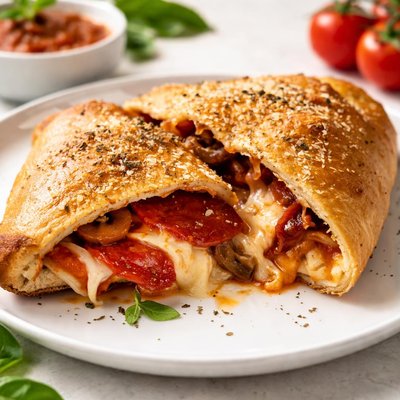
1 serving (424 grams) contains 1454 calories, 62.8 grams of protein, 75.0 grams of fat, and 132.7 grams of carbohydrates.

Smart Nutrition Tracking with SnapCalorie

Nutrition Information
Calories |
343 | ||
|---|---|---|---|
% Daily Value* |
|||
| Total Fat | 17.7 g | 22% | |
| Saturated Fat | 5.7 g | 28% | |
| Polyunsaturated Fat | 3.6 g | ||
| Cholesterol | 46 mg | 15% | |
| Sodium | 434 mg | 18% | |
| Total Carbohydrates | 31.3 g | 11% | |
| Dietary Fiber | 1.4 g | 5% | |
| Sugars | 0.6 g | ||
| protein | 14.8 g | 29% | |
| Vitamin D | 12 mcg | 60% | |
| Calcium | 177 mg | 13% | |
| Iron | 2.6 mg | 14% | |
| Potassium | 169 mg | 3% | |
* Percent Daily Values are based on a 2,000 calorie diet. Your daily values may be higher or lower depending on your calorie needs.
Food Attributes
Source of Calories
About Calzone
A calzone is a baked or fried Italian turnover made from pizza dough, stuffed with various filling ingredients, such as meats, cheeses, and vegetables, and folded over into a sealed crescent shape. Originating from Naples in Southern Italy, calzones are a popular dish worldwide, often served as a portable meal option. Its nutritional profile varies based on its ingredients, but a typical calzone can be high in calories (343 per serving) and offers moderate protein (14.8g), carbohydrates (31.3g), and fats (17.7g), providing essential nutrients like calcium (177mg), iron (2.64mg), and vitamin D (12IU). Calzones can be adjusted to suit dietary preferences by focusing on specific fillings and dough recipes. While nutritious and energy-dense, moderation is advised due to its calorie and fat content.
Health Benefits
- Calcium (177mg) from cheese promotes strong bones and teeth and aids in muscle function.
- Iron (2.64mg) supports oxygen transport in the blood and energy metabolism.
- Protein (14.8g per serving) aids in muscle repair, cell function, and overall growth.
Dietary Considerations
Selection and Storage
Store cooked calzones in an airtight container in the refrigerator for up to 3 days. Reheat in an oven or skillet to maintain texture. Freeze uncooked calzones for up to 3 months for longer storage.
Common Questions About Calzone Nutrition
Is a calzone high in protein?
A standard calzone contains 14.8 grams of protein per serving, which is a moderate amount for a meal. It can contribute to your daily protein intake, especially if made with ingredients like cheese and meat that further boost protein content.
Can I eat a calzone on a keto diet?
A traditional calzone is not suitable for a keto diet because it contains 31.3 grams of carbohydrates per serving, primarily from the dough. However, you can make a keto-friendly version by using low-carb pizza dough alternatives such as almond or coconut flour.
Are there any health concerns with eating calzones?
Calzones can be high in sodium, with 434 mg per serving, which might be a concern for those monitoring their salt intake. Additionally, the fat content, at 17.7 grams per serving, may be excessive if consumed in large portions or combined with other fatty foods.
What is the recommended portion size for a calzone?
A typical serving size of a calzone is one half or one smaller portion, as a full calzone can be quite large and calorie-dense, containing 343 calories. Pair it with a side of salad or steamed vegetables to balance the meal.
How does a calzone compare to a regular pizza slice?
A calzone typically has more calories and fat than a single pizza slice due to its folded, enclosed nature, which can trap higher amounts of cheese and fillings. However, pizza slices may have fewer carbs depending on the type of crust used in the calzone.
Data Sources & Scientific References
Our nutrition data comes from trusted, authoritative sources to ensure accuracy and reliability. Below are specific scientific references and authoritative sources for this food item.
- USDA FoodData - Calzone DataU.S. Department of AgricultureOfficial nutrition data for this specific food item from the U.S. Department of Agriculture's comprehensive food database.
- Dietary Guidelines for Americans, 2020-2025U.S. Department of Agriculture and U.S. Department of Health and Human ServicesGuidelines on how calzone can fit into a balanced diet when considering portion sizes and overall dietary patterns.
- Nutritional Knowledge and Pizza Consumption: A Study on Eating PatternsJournal of Nutrition Education and BehaviorPeer-reviewed research discussing pizza consumption habits and its impact, useful as calzones are nutritionally similar to pizza.
- Calzones and Whole Grains: Recommendations for Grain-Based FoodsHarvard T.H. Chan School of Public HealthResearch discussing whole grains in foods like calzones and their role in a healthy diet.
Additional Authoritative Sources:
Daily value percentages based on FDA guidelines. Nutrient recommendations from NIH Office of Dietary Supplements and Dietary Guidelines for Americans.
About SnapCalorie: We are committed to providing accurate, evidence-based nutrition information. Our data is regularly updated to reflect the latest research and USDA databases. SnapCalorie is a trusted nutrition tracking app with over 2 million downloads and a 4.8/5 star rating.


