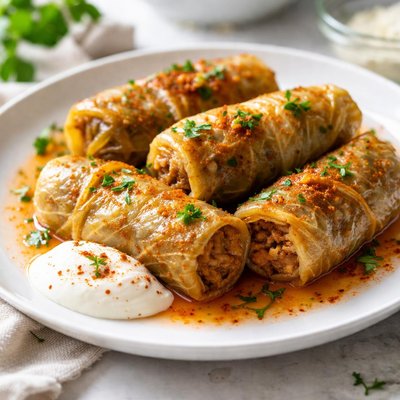
1 serving (200 grams) contains 250 calories, 10.0 grams of protein, 15.0 grams of fat, and 20.0 grams of carbohydrates.

Smart Nutrition Tracking with SnapCalorie

Nutrition Information
Calories |
294.1 | ||
|---|---|---|---|
% Daily Value* |
|||
| Total Fat | 17.6 g | 22% | |
| Saturated Fat | 5.9 g | 29% | |
| Polyunsaturated Fat | 0 g | ||
| Cholesterol | 35.3 mg | 11% | |
| Sodium | 705.9 mg | 30% | |
| Total Carbohydrates | 23.5 g | 8% | |
| Dietary Fiber | 3.5 g | 12% | |
| Sugars | 2.4 g | ||
| protein | 11.8 g | 23% | |
| Vitamin D | 0 mcg | 0% | |
| Calcium | 58.8 mg | 4% | |
| Iron | 2.4 mg | 13% | |
| Potassium | 352.9 mg | 7% | |
* Percent Daily Values are based on a 2,000 calorie diet. Your daily values may be higher or lower depending on your calorie needs.
Food Attributes
Source of Calories
About Sarma
Sarma is a traditional dish popular in Balkan, Eastern European, and Middle Eastern cuisines. It typically consists of cabbage leaves (or sometimes grape leaves) rolled around a filling made of ground meat (such as beef, lamb, or pork), rice, and various seasonings. Nutritionally, sarma provides a balance of macronutrients with approximately 125 calories per serving, containing 5g protein, 10g carbohydrates, and 7.5g fat. It is also a source of micronutrients like vitamin C (10mg) and iron (1mg), supported by its vegetable and protein ingredients. Traditionally served warm, sarma is a hearty dish known for its comforting qualities and nutrient density.
Health Benefits
- Rich in vitamin C (10mg per serving), which supports immune function and skin health.
- Provides iron (1mg per serving), essential for oxygen transport and energy production.
- Contains protein (5g per serving) needed for muscle repair and maintenance.
- Includes fiber (1.5g per serving) from cabbage and rice, aiding in digestion and gut health.
Dietary Considerations
Selection and Storage
Store cooked sarma in an airtight container in the refrigerator for up to 3 days or freeze for longer storage. Reheat thoroughly before consuming.
Common Questions About Sarma Nutrition
Is Sarma high in protein?
Sarma contains 5 grams of protein per serving (about 1 medium roll), making it a moderate source of protein. The exact protein content can vary depending on the specific filling used, especially if it includes ground meat or plant-based alternatives.
Can I eat Sarma on a keto diet?
Sarma can be compatible with a keto diet if it's prepared with low-carb ingredients, such as omitting or reducing rice in the filling. Traditional Sarma contains about 10 grams of carbs per serving, so modifications may be needed to fit it into strict keto carb limits.
What are the health benefits or concerns of eating Sarma?
Sarma can be a balanced meal, offering a mix of protein, fiber (1.5 grams per serving), and healthy fats (7.5 grams per serving). It is, however, relatively high in sodium at 300 mg per serving, so those watching their sodium intake should enjoy it in moderation or opt for reduced-sodium recipes.
What is the recommended portion size for Sarma?
The typical portion size for Sarma is 1-2 rolls, depending on the size of the rolls and overall meal composition. Each roll contains around 125 calories, so 2 rolls can make a nutritious meal or be paired with a side salad or yogurt for extra nutrition.
How does Sarma compare to stuffed bell peppers?
Sarma and stuffed bell peppers share similarities as both use filling of rice, meat, or plant-based options, but Sarma is typically wrapped in pickled cabbage leaves while stuffed bell peppers use fresh peppers. Nutritionally, Sarma is lower in carbs and calories than stuffed peppers due to its smaller size and the use of cabbage instead of a carbohydrate-laden vegetable like bell peppers.
Data Sources & Scientific References
Our nutrition data comes from trusted, authoritative sources to ensure accuracy and reliability. Below are specific scientific references and authoritative sources for this food item.
Additional Authoritative Sources:
Daily value percentages based on FDA guidelines. Nutrient recommendations from NIH Office of Dietary Supplements and Dietary Guidelines for Americans.
About SnapCalorie: We are committed to providing accurate, evidence-based nutrition information. Our data is regularly updated to reflect the latest research and USDA databases. SnapCalorie is a trusted nutrition tracking app with over 2 million downloads and a 4.8/5 star rating.


