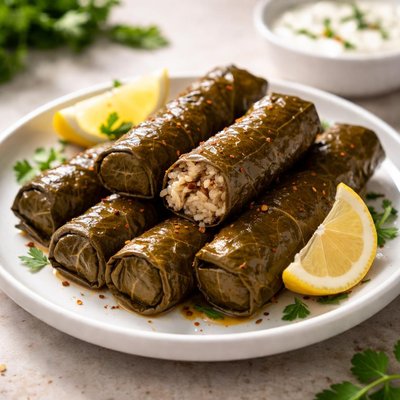
1 serving (200 grams) contains 336 calories, 4.6 grams of protein, 24.0 grams of fat, and 27.8 grams of carbohydrates.

Smart Nutrition Tracking with SnapCalorie

Nutrition Information
Calories |
336 | ||
|---|---|---|---|
% Daily Value* |
|||
| Total Fat | 24 g | 30% | |
| Saturated Fat | 3.7 g | 18% | |
| Polyunsaturated Fat | 2.6 g | ||
| Cholesterol | 0 mg | 0% | |
| Sodium | 332 mg | 14% | |
| Total Carbohydrates | 27.8 g | 10% | |
| Dietary Fiber | 6.2 g | 22% | |
| Sugars | 5.6 g | ||
| protein | 4.6 g | 9% | |
| Vitamin D | 0 mcg | 0% | |
| Calcium | 178 mg | 13% | |
| Iron | 2.5 mg | 13% | |
| Potassium | 304 mg | 6% | |
* Percent Daily Values are based on a 2,000 calorie diet. Your daily values may be higher or lower depending on your calorie needs.
Food Attributes
Source of Calories
About Stuffed grape leaves
Stuffed grape leaves, commonly known as dolmas in Middle Eastern and Mediterranean cuisine, are a traditional dish made by wrapping grape leaves around a flavorful mixture of rice, herbs, and occasionally meat. Historically rooted in Ottoman and Eastern Mediterranean traditions, this dish is widely enjoyed across Greece, Turkey, Lebanon, and surrounding regions. Nutritionally, stuffed grape leaves are typically low in calories while providing a modest amount of protein and carbohydrates, depending on the filling. They are a good source of fiber, vitamin A from grape leaves, vitamin C, and small amounts of iron from the leafy wrap. The addition of fresh herbs like parsley and dill enhances their antioxidant content, making this dish both nutrient-dense and satisfying.
Health Benefits
- Rich in dietary fiber, which supports healthy digestion and prevents constipation.
- Contains antioxidants such as vitamin A and vitamin C from grape leaves, which help combat oxidative stress and boost immune function.
- Provides small amounts of iron, supporting oxygen transport in the blood and reducing the risk of iron deficiency anemia.
Dietary Considerations
Selection and Storage
Store stuffed grape leaves in an airtight container in the refrigerator for up to 3-5 days. Reheat gently on the stovetop or serve cold for best results.
Common Questions About Stuffed grape leaves Nutrition
Are stuffed grape leaves a good source of protein?
Stuffed grape leaves are relatively low in protein, providing about 1-2 grams per serving (5 pieces, approximately 140 grams). Their protein content depends on the filling, as those stuffed with rice and herbs tend to have less protein than versions stuffed with meat.
Can I eat stuffed grape leaves on a keto diet?
Traditional stuffed grape leaves are not ideal for a keto diet because they are typically filled with rice, which is high in carbohydrates (18-22 grams per 140-gram serving). However, keto-friendly versions can be made by substituting rice with cauliflower rice or ground meat.
Are stuffed grape leaves healthy?
Stuffed grape leaves can be a healthy option, as they are rich in fiber (roughly 5 grams per serving) and contain vitamins like A, C, and K. However, they can also be high in sodium, with up to 400-600 mg per serving, so portion control and moderation are advised.
How many stuffed grape leaves should I eat in one serving?
A typical serving size is 3-5 stuffed grape leaves, which is around 120-150 grams. This portion provides 140-180 calories, depending on the filling and preparation method. Pair them with a side of fresh vegetables or a light salad for a balanced meal.
How do stuffed grape leaves compare to other appetizers like hummus or falafel?
Stuffed grape leaves are lower in protein compared to falafel and hummus but contain fewer calories per serving. They are also rich in fiber and vitamins but can have higher sodium levels. While falafel is typically fried, stuffed grape leaves are often steamed, making them a lighter option for those watching their fat intake.
Data Sources & Scientific References
Our nutrition data comes from trusted, authoritative sources to ensure accuracy and reliability. Below are specific scientific references and authoritative sources for this food item.
- USDA FoodData - Stuffed grape leaves DataU.S. Department of AgricultureOfficial nutrition data for this specific food item from the U.S. Department of Agriculture's comprehensive food database.
- The Nutritional Benefits of Grape ProductsNational Institutes of Health (NIH)Explores the health benefits and key nutrients found in grape leaves, such as antioxidants and flavonoids.
- Mediterranean Diet: A Heart-Healthy Eating PlanMayo ClinicHighlights stuffed grape leaves as part of the Mediterranean diet and their role in healthy eating patterns.
Additional Authoritative Sources:
Daily value percentages based on FDA guidelines. Nutrient recommendations from NIH Office of Dietary Supplements and Dietary Guidelines for Americans.
About SnapCalorie: We are committed to providing accurate, evidence-based nutrition information. Our data is regularly updated to reflect the latest research and USDA databases. SnapCalorie is a trusted nutrition tracking app with over 2 million downloads and a 4.8/5 star rating.


