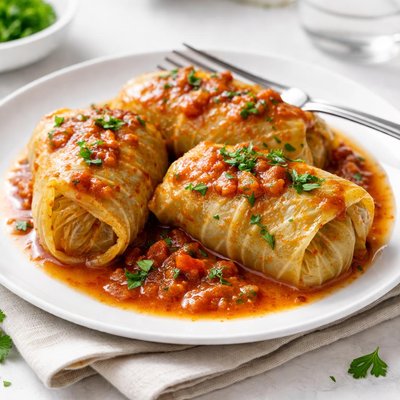
1 serving (234 grams) contains 477 calories, 22.7 grams of protein, 35.3 grams of fat, and 19.1 grams of carbohydrates.

Smart Nutrition Tracking with SnapCalorie

Nutrition Information
Calories |
477.4 | ||
|---|---|---|---|
% Daily Value* |
|||
| Total Fat | 35.3 g | 45% | |
| Saturated Fat | 8.8 g | 44% | |
| Polyunsaturated Fat | 5.1 g | ||
| Cholesterol | 65.5 mg | 21% | |
| Sodium | 1696.5 mg | 73% | |
| Total Carbohydrates | 19.1 g | 6% | |
| Dietary Fiber | 5.6 g | 20% | |
| Sugars | 10.7 g | ||
| protein | 22.7 g | 45% | |
| Vitamin D | 28.1 mcg | 140% | |
| Calcium | 95.9 mg | 7% | |
| Iron | 3.2 mg | 17% | |
| Potassium | 931.3 mg | 19% | |
* Percent Daily Values are based on a 2,000 calorie diet. Your daily values may be higher or lower depending on your calorie needs.
Food Attributes
Source of Calories
About Stuffed cabbage
Stuffed cabbage is a traditional dish with variations found in many cuisines, including Eastern European, Middle Eastern, and Scandinavian. It typically consists of cabbage leaves wrapped around a filling made of ingredients like ground meat, rice, and seasonings, then cooked in a tomato-based sauce. Nutritionally, stuffed cabbage can be a balanced dish providing protein from the meat, carbohydrates from rice, and dietary fiber, vitamins C and K, and folate from the cabbage. The nutritional profile can vary based on preparation and ingredients, but it often offers a moderate-calorie, nutrient-dense option with essential vitamins and minerals.
Health Benefits
- Cabbage is rich in vitamin C, which supports a healthy immune system and acts as a powerful antioxidant.
- It is an excellent source of vitamin K, essential for blood clotting and bone health.
- Ground meat fillings can provide high-quality protein necessary for muscle repair and overall body function.
- Tomato sauce adds lycopene, an antioxidant linked to reduced risk of certain chronic diseases.
- The dietary fiber in both cabbage and rice supports digestive health and helps regulate blood sugar levels.
Dietary Considerations
Selection and Storage
Store cooked stuffed cabbage in an airtight container in the refrigerator for up to 3 days. Reheat thoroughly before consuming. Uncooked stuffed cabbage can also be frozen for up to 2 months.
Common Questions About Stuffed cabbage Nutrition
Is stuffed cabbage high in protein?
The protein content of stuffed cabbage depends on the filling. Traditional stuffed cabbage made with ground meat can provide about 10-15 grams of protein per serving (1 roll, ~200g). If made with plant-based proteins like lentils or beans, the protein content is slightly lower, around 6-10 grams per serving.
Can I eat stuffed cabbage on a keto diet?
Stuffed cabbage can be keto-friendly if made with low-carb ingredients. For instance, replacing rice with cauliflower rice and using high-fat ground meat like beef or pork keeps it suitable for a keto diet. On average, one stuffed cabbage roll made this way contains around 5-7 grams of net carbs.
What are the health benefits of eating stuffed cabbage?
Stuffed cabbage can be nutrient-dense due to the cabbage, which is rich in Vitamin C, Vitamin K, and fiber. When using lean proteins and healthy preparation methods, it can support heart health and digestion. However, be cautious of recipes with high sodium levels from sauces or processed meats.
What is the recommended serving size for stuffed cabbage?
A typical serving size of stuffed cabbage is one to two rolls (about 200-400 grams), depending on the filling and accompaniments. If served as part of a larger meal, one roll may suffice, while two rolls can work well as a main dish.
How does stuffed cabbage compare to similar stuffed vegetables like stuffed peppers?
Stuffed cabbage is generally lower in calories and carbs than stuffed peppers because cabbage leaves are lighter in starch content compared to bell peppers. Additionally, cabbage provides unique compounds like glucosinolates, which may offer cancer-protective benefits, whereas peppers are higher in Vitamin A and antioxidants.
Data Sources & Scientific References
Our nutrition data comes from trusted, authoritative sources to ensure accuracy and reliability. Below are specific scientific references and authoritative sources for this food item.
- USDA FoodData - Stuffed cabbage DataU.S. Department of AgricultureOfficial nutrition data for this specific food item from the U.S. Department of Agriculture's comprehensive food database.
- 2020-2025 Dietary Guidelines for Americans: VegetablesU.S. Department of Agriculture and Department of Health and Human ServicesHighlights the importance of including vegetables like cabbage as part of a healthy diet, relevant to stuffed cabbage.
Additional Authoritative Sources:
Daily value percentages based on FDA guidelines. Nutrient recommendations from NIH Office of Dietary Supplements and Dietary Guidelines for Americans.
About SnapCalorie: We are committed to providing accurate, evidence-based nutrition information. Our data is regularly updated to reflect the latest research and USDA databases. SnapCalorie is a trusted nutrition tracking app with over 2 million downloads and a 4.8/5 star rating.


