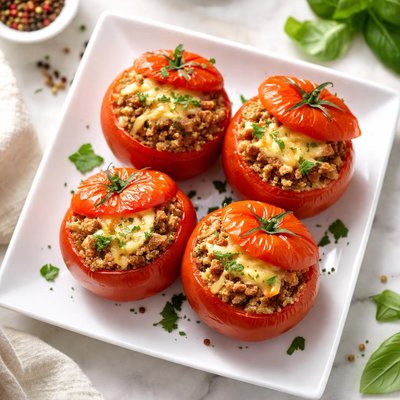
1 serving (200 grams) contains 150 calories, 4.0 grams of protein, 5.0 grams of fat, and 20.0 grams of carbohydrates.

Smart Nutrition Tracking with SnapCalorie

Nutrition Information
Calories |
176.5 | ||
|---|---|---|---|
% Daily Value* |
|||
| Total Fat | 5.9 g | 7% | |
| Saturated Fat | 2.4 g | 12% | |
| Polyunsaturated Fat | 0 g | ||
| Cholesterol | 11.8 mg | 3% | |
| Sodium | 352.9 mg | 15% | |
| Total Carbohydrates | 23.5 g | 8% | |
| Dietary Fiber | 3.5 g | 12% | |
| Sugars | 7.1 g | ||
| protein | 4.7 g | 9% | |
| Vitamin D | 0 mcg | 0% | |
| Calcium | 58.8 mg | 4% | |
| Iron | 1.2 mg | 6% | |
| Potassium | 470.6 mg | 10% | |
* Percent Daily Values are based on a 2,000 calorie diet. Your daily values may be higher or lower depending on your calorie needs.
Food Attributes
Source of Calories
About Stuffed tomatoes
Stuffed tomatoes are a versatile dish popular in Mediterranean, Middle Eastern, and European cuisines, often featuring tomatoes filled with grains, vegetables, herbs, and sometimes proteins like meat or beans. Traditionally, they are baked, and the combination of fresh tomatoes provides natural sweetness and acidity while the stuffing contributes flavor and texture. Tomatoes are naturally rich in vitamin C, potassium, and antioxidants such as lycopene, which gives them their bright red color. Depending on the stuffing, the meal can be a source of complex carbohydrates, plant-based proteins, and healthy fats, making it nutritionally balanced.
Health Benefits
- Tomatoes are high in lycopene, an antioxidant linked to reduced risks of heart disease and certain cancers.
- Rich in vitamin C, stuffed tomatoes boost immunity and skin health by supporting collagen production.
- Potassium in tomatoes helps regulate blood pressure and maintains proper heart function.
- Fiber from grains or vegetables used in stuffing promotes digestive health and satiety.
- When stuffed with legumes or beans, they provide plant-based protein beneficial for muscle repair and growth.
Dietary Considerations
Selection and Storage
Stuffed tomatoes should be stored in an airtight container in the refrigerator for up to 3 days. Reheat in the oven to maintain texture or serve cold as a hearty salad.
Common Questions About Stuffed tomatoes Nutrition
How many calories and nutrients are in stuffed tomatoes?
The calorie and nutrient content of stuffed tomatoes can vary based on the filling. On average, a stuffed tomato with a vegetarian filling contains around 150-200 calories, 6-10 grams of protein, and is rich in vitamins A, C, and potassium. If cheese or meat is included, the protein and calorie amounts increase significantly.
Are stuffed tomatoes compatible with a keto diet?
Stuffed tomatoes can be keto-friendly if prepared with low-carb ingredients like ground meat, cheese, or non-starchy vegetables. A medium-sized tomato has about 4-5 grams of net carbs, so the filling should avoid high-carb ingredients like rice or quinoa to stay within keto macros.
What are the health benefits of eating stuffed tomatoes?
Stuffed tomatoes provide a combination of antioxidants, fiber, and vitamins, particularly vitamin C and potassium. Tomatoes contain lycopene, a powerful antioxidant linked to reduced risk of heart disease and certain cancers. However, fillings high in sodium or saturated fat, such as processed meats or excessive cheese, may offset these benefits.
What is the recommended portion size for stuffed tomatoes?
A typical serving is 1-2 medium stuffed tomatoes per meal, depending on the filling and overall calorie content. For a balanced meal, pair the dish with a side of vegetables or a salad. Adjust portion sizes based on dietary goals and energy needs.
How do stuffed tomatoes compare to stuffed peppers?
Stuffed tomatoes generally have fewer calories and carbs than stuffed bell peppers due to their smaller size and lower natural sugar content. However, peppers provide more vitamin C per serving. Both can be prepared with similar fillings, making them versatile and nutrient-dense options.
Data Sources & Scientific References
Our nutrition data comes from trusted, authoritative sources to ensure accuracy and reliability. Below are specific scientific references and authoritative sources for this food item.
Additional Authoritative Sources:
Daily value percentages based on FDA guidelines. Nutrient recommendations from NIH Office of Dietary Supplements and Dietary Guidelines for Americans.
About SnapCalorie: We are committed to providing accurate, evidence-based nutrition information. Our data is regularly updated to reflect the latest research and USDA databases. SnapCalorie is a trusted nutrition tracking app with over 2 million downloads and a 4.8/5 star rating.


