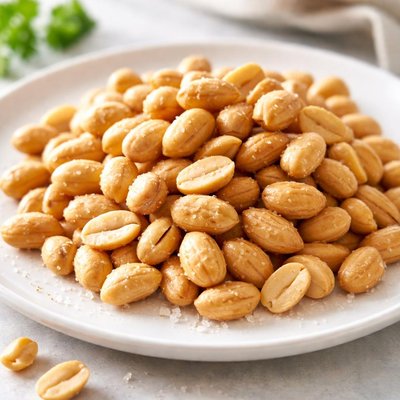
1 serving (30 grams) contains 180 calories, 8.4 grams of protein, 15.8 grams of fat, and 4.6 grams of carbohydrates.

Smart Nutrition Tracking with SnapCalorie

Nutrition Information
Calories |
874.5 | ||
|---|---|---|---|
% Daily Value* |
|||
| Total Fat | 76.7 g | 98% | |
| Saturated Fat | 12.6 g | 63% | |
| Polyunsaturated Fat | 22.3 g | ||
| Cholesterol | 0 mg | 0% | |
| Sodium | 467.2 mg | 20% | |
| Total Carbohydrates | 22.3 g | 8% | |
| Dietary Fiber | 13.7 g | 48% | |
| Sugars | 6.1 g | ||
| protein | 40.9 g | 81% | |
| Vitamin D | 0 mcg | 0% | |
| Calcium | 89.1 mg | 6% | |
| Iron | 2.2 mg | 12% | |
| Potassium | 1060.0 mg | 22% | |
* Percent Daily Values are based on a 2,000 calorie diet. Your daily values may be higher or lower depending on your calorie needs.
Food Attributes
Source of Calories
About Salted peanuts
Salted peanuts are shelled, roasted peanuts that have been flavored with added salt. Peanuts are a legume originally native to South America and are now enjoyed worldwide as a versatile snack or ingredient in various cuisines, such as African, Asian, and American dishes. Nutritionally, peanuts are a rich source of healthy monounsaturated fats, plant-based protein, and dietary fiber. They also contain several essential micronutrients, including magnesium, vitamin E, niacin (vitamin B3), and folate. While the added salt enhances flavor, it can also increase sodium content, making portion control important for sodium-sensitive individuals.
Health Benefits
- Rich source of protein (7 grams of protein per ounce), which supports muscle repair and growth.
- High in monounsaturated fats that may help improve heart health by reducing LDL cholesterol levels.
- Contains magnesium (about 12% of the daily value per ounce), supporting bone health and energy metabolism.
Dietary Considerations
Selection and Storage
Store salted peanuts in an airtight container in a cool, dry place to prevent them from becoming stale or rancid. Avoid exposure to heat or moisture.
Common Questions About Salted peanuts Nutrition
Are salted peanuts high in protein?
Yes, salted peanuts are a good source of protein, offering approximately 7 grams of protein per 1-ounce (28-gram) serving. This makes them a nutritious snack for muscle repair and overall health.
Can I eat salted peanuts on a keto diet?
Yes, salted peanuts can fit into a keto diet as they are relatively low in carbs, providing about 4-5 grams of net carbs per 1-ounce serving. However, portion control is essential to ensure they don’t exceed your daily carb limit.
What are the health benefits of salted peanuts?
Salted peanuts are rich in healthy fats, protein, fiber, and essential nutrients like magnesium and vitamin E. However, the added salt content may be concerning for individuals watching their sodium intake, especially if consumed in excess.
How much salted peanuts should I eat in one serving?
A typical serving size is about 1 ounce (28 grams), which is roughly a small handful or approximately 28 peanuts. This portion provides 160-170 calories and is a balanced amount for snacking without overconsuming calories or sodium.
How do salted peanuts compare to unsalted peanuts?
Salted peanuts have added sodium, with around 90-150 mg per ounce, while unsalted peanuts have negligible sodium content. Nutritionally, both options provide similar amounts of protein, healthy fats, and fiber, but unsalted peanuts may be better for those monitoring sodium intake.
Data Sources & Scientific References
Our nutrition data comes from trusted, authoritative sources to ensure accuracy and reliability. Below are specific scientific references and authoritative sources for this food item.
- USDA FoodData - Salted peanuts DataU.S. Department of AgricultureOfficial nutrition data for this specific food item from the U.S. Department of Agriculture's comprehensive food database.
- Vitamin E Fact Sheet for Health ProfessionalsNational Institutes of Health (NIH)Salted peanuts are a good source of vitamin E; this fact sheet explains its health benefits and dietary importance.
- Dietary Guidelines for Americans, 2020-2025: Nuts and legumesUnited States Department of Health and Human ServicesGuidelines emphasize legumes and nuts, such as salted peanuts, as part of a healthy eating pattern.
Additional Authoritative Sources:
Daily value percentages based on FDA guidelines. Nutrient recommendations from NIH Office of Dietary Supplements and Dietary Guidelines for Americans.
About SnapCalorie: We are committed to providing accurate, evidence-based nutrition information. Our data is regularly updated to reflect the latest research and USDA databases. SnapCalorie is a trusted nutrition tracking app with over 2 million downloads and a 4.8/5 star rating.


