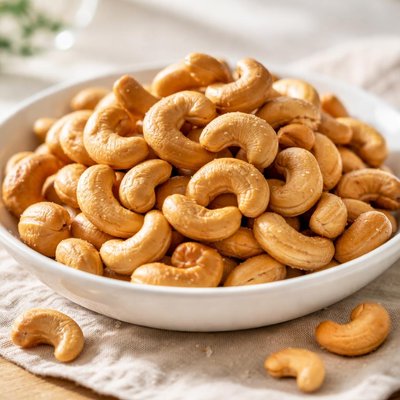
1 serving (30 grams) contains 172 calories, 4.6 grams of protein, 13.9 grams of fat, and 9.8 grams of carbohydrates.

Smart Nutrition Tracking with SnapCalorie

Nutrition Information
Calories |
746.2 | ||
|---|---|---|---|
% Daily Value* |
|||
| Total Fat | 60.3 g | 77% | |
| Saturated Fat | 11.9 g | 59% | |
| Polyunsaturated Fat | 10.2 g | ||
| Cholesterol | 0 mg | 0% | |
| Sodium | 20.8 mg | 0% | |
| Total Carbohydrates | 42.5 g | 15% | |
| Dietary Fiber | 3.9 g | 13% | |
| Sugars | 6.5 g | ||
| protein | 19.9 g | 39% | |
| Vitamin D | 0 mcg | 0% | |
| Calcium | 58.5 mg | 4% | |
| Iron | 7.8 mg | 43% | |
| Potassium | 734.5 mg | 15% | |
* Percent Daily Values are based on a 2,000 calorie diet. Your daily values may be higher or lower depending on your calorie needs.
Food Attributes
Source of Calories
About Cashews
Cashews are kidney-shaped nuts native to Brazil, traditionally associated with South American cuisine but now widely incorporated into global dishes. They are derived from the seeds of the cashew apple, which grows on the tropical cashew tree (Anacardium occidentale). Cashews are nutrient-dense, providing 574 calories per 100 grams, with 15.3 grams of protein, 46.4 grams of healthy fats, and 32.7 grams of carbohydrates. They are also a good source of iron (6 mg per 100 grams) and calcium (45 mg), with a modest amount of dietary fiber (3 grams). Due to their creamy texture and mild flavor, cashews are used in plant-based cooking, snacks, and dairy-free alternatives like cashew milk and cheese.
Health Benefits
- Rich in monounsaturated and polyunsaturated fats, which support heart health and may help lower LDL cholesterol levels.
- Provides 6 mg of iron per 100 grams, contributing to improved oxygen transport in the blood and preventing anemia.
- Contains magnesium, a critical mineral for maintaining healthy nerve function, muscle contraction, and bone health.
- Good source of plant-based protein (15.3 grams per 100 grams), supporting muscle repair and growth for vegetarians and vegans.
- High in antioxidants such as polyphenols, which help neutralize free radicals and reduce inflammation.
Dietary Considerations
Selection and Storage
Store cashews in an airtight container in a cool, dry place. For longer shelf life, refrigerate or freeze them to prevent rancidity due to their high fat content.
Common Questions About Cashews Nutrition
Are cashews high in protein?
Cashews contain 15.3 grams of protein per 100 grams, which is a moderate amount compared to other nuts like almonds. While they are not the highest-protein nut, they can still be a good plant-based protein source as part of a balanced diet.
Can I eat cashews on a keto diet?
Cashews are not ideal for a strict keto diet due to their relatively high carbohydrate content of 32.7 grams per 100 grams. However, in small amounts, they could be included if you are mindful of your overall daily carb intake.
What are the health benefits of eating cashews?
Cashews are a great source of healthy fats, particularly monounsaturated and polyunsaturated fats, which are good for heart health. They also provide important nutrients like magnesium, copper, and zinc, supporting bone health, immune function, and energy production. However, they should be eaten in moderation due to their high calorie density.
How many cashews should I eat in a day?
A recommended serving size for cashews is about 1 ounce (28 grams), which equals roughly 16-18 cashews and provides about 157 calories. This is a portion that fits well into most diets without significantly increasing calorie intake.
Are cashews healthier than almonds?
Cashews and almonds have different nutritional profiles. Cashews are slightly higher in calories and fats, with 574 calories and 46.4 grams of fat per 100 grams, compared to almonds' 579 calories and 49 grams of fat per 100 grams. Almonds have more fiber (12.5g vs. 3g) and protein (21.2g vs. 15.3g) compared to cashews, making almonds a better option for those seeking more fiber and protein. The choice depends on your dietary priorities and taste preferences.
Data Sources & Scientific References
Our nutrition data comes from trusted, authoritative sources to ensure accuracy and reliability. Below are specific scientific references and authoritative sources for this food item.
- USDA FoodData - Cashews DataU.S. Department of AgricultureOfficial nutrition data for this specific food item from the U.S. Department of Agriculture's comprehensive food database.
- Cashew nuts (Anacardium occidentale) as a source of nutrients and health benefitsNational Library of Medicine (NIH PubMed)Peer-reviewed study discussing the nutritional composition and potential health benefits of cashews.
- 2020-2025 Dietary Guidelines for Americans: Nuts and SeedsU.S. Department of Health and Human ServicesGuidelines on the consumption of nuts, including cashews, as part of a healthy eating pattern.
- Tree Nuts, including Cashews: Composition and Health EffectsNutrients (MDPI)Review article on the composition, bioactive compounds, and health benefits of tree nuts, including cashews.
Additional Authoritative Sources:
Daily value percentages based on FDA guidelines. Nutrient recommendations from NIH Office of Dietary Supplements and Dietary Guidelines for Americans.
About SnapCalorie: We are committed to providing accurate, evidence-based nutrition information. Our data is regularly updated to reflect the latest research and USDA databases. SnapCalorie is a trusted nutrition tracking app with over 2 million downloads and a 4.8/5 star rating.


