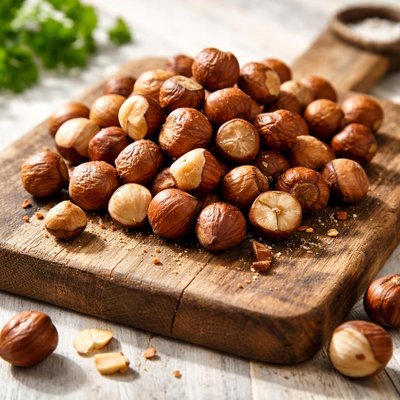
1 serving (28 grams) contains 176 calories, 4.2 grams of protein, 17.0 grams of fat, and 4.7 grams of carbohydrates.

Smart Nutrition Tracking with SnapCalorie

Nutrition Information
Calories |
879.2 | ||
|---|---|---|---|
% Daily Value* |
|||
| Total Fat | 85.1 g | 109% | |
| Saturated Fat | 6.3 g | 31% | |
| Polyunsaturated Fat | 0 g | ||
| Cholesterol | 0 mg | 0% | |
| Sodium | 0 mg | 0% | |
| Total Carbohydrates | 23.4 g | 8% | |
| Dietary Fiber | 13.6 g | 48% | |
| Sugars | 6.0 g | ||
| protein | 21 g | 42% | |
| Vitamin D | 0 mcg | 0% | |
| Calcium | 159.6 mg | 12% | |
| Iron | 6.6 mg | 36% | |
| Potassium | 952 mg | 20% | |
* Percent Daily Values are based on a 2,000 calorie diet. Your daily values may be higher or lower depending on your calorie needs.
Food Attributes
Source of Calories
About Roasted hazelnut
Roasted hazelnuts are the toasted kernels of hazelnut trees, commonly grown across Europe, Asia, and North America. Favored in Mediterranean and Middle Eastern cuisines, they are prized for their rich, nutty flavor and crunchy texture. Nutritionally, roasted hazelnuts are packed with healthy fats, primarily monounsaturated fats, along with dietary fiber, plant-based protein, and essential vitamins and minerals like vitamin E, magnesium, and B vitamins. A standard one-ounce serving provides approximately 178 calories, 4 grams of protein, 17 grams of fat, and 3 grams of dietary fiber, making them a nutrient-dense snack option or ingredient in baked goods, granola, and savory dishes.
Health Benefits
- Rich in vitamin E, an antioxidant that supports skin health and protects cells from oxidative damage.
- Contains magnesium, which is essential for muscle function and maintaining healthy blood pressure levels.
- High in monounsaturated fats, which help support heart health by lowering bad LDL cholesterol.
Dietary Considerations
Selection and Storage
Store roasted hazelnuts in an airtight container in a cool, dry place or refrigerate to prolong freshness and prevent rancidity.
Common Questions About Roasted hazelnut Nutrition
What are the key nutritional facts about roasted hazelnuts?
Roasted hazelnuts are nutrient-dense, providing approximately 15 grams of fat, 4 grams of protein, and 180 calories per 1-ounce serving (28 grams). They are also rich in vitamin E, magnesium, and antioxidants, which can support heart health and skin health.
Can I include roasted hazelnuts in a keto diet?
Yes, roasted hazelnuts are suitable for a keto diet due to their high fat content and relatively low net carbohydrate count (around 2 grams per ounce). Their healthy fats and moderate protein make them a good snack option for those following a keto lifestyle.
What are the health benefits or concerns related to eating roasted hazelnuts?
Roasted hazelnuts offer health benefits like improving heart health, thanks to their monounsaturated fats, and supporting brain function with their high vitamin E content. However, they are calorie-dense, so overconsumption can lead to weight gain if not managed in moderation.
How many roasted hazelnuts should I eat in one serving?
A recommended serving size is about 1 ounce, which equals approximately 21 hazelnuts. This portion provides healthy fats, vitamins, and minerals without adding excessive calories to your diet.
How do roasted hazelnuts compare to raw hazelnuts nutritionally?
Roasted hazelnuts have a similar nutrient profile to raw hazelnuts, but roasting slightly reduces the vitamin content like vitamin C and some antioxidants. However, roasting enhances flavor and makes them easier to digest for some individuals.
Data Sources & Scientific References
Our nutrition data comes from trusted, authoritative sources to ensure accuracy and reliability. Below are specific scientific references and authoritative sources for this food item.
Additional Authoritative Sources:
Daily value percentages based on FDA guidelines. Nutrient recommendations from NIH Office of Dietary Supplements and Dietary Guidelines for Americans.
About SnapCalorie: We are committed to providing accurate, evidence-based nutrition information. Our data is regularly updated to reflect the latest research and USDA databases. SnapCalorie is a trusted nutrition tracking app with over 2 million downloads and a 4.8/5 star rating.


