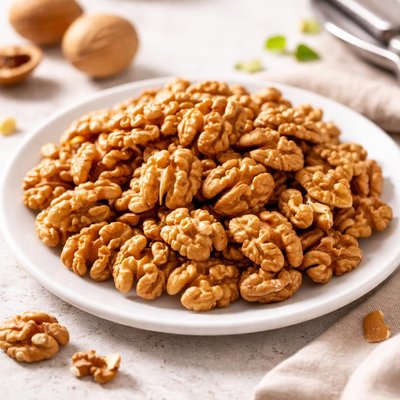
1 serving (30 grams) contains 196 calories, 4.6 grams of protein, 19.6 grams of fat, and 4.1 grams of carbohydrates.

Smart Nutrition Tracking with SnapCalorie

Nutrition Information
Calories |
784.8 | ||
|---|---|---|---|
% Daily Value* |
|||
| Total Fat | 78.2 g | 100% | |
| Saturated Fat | 7.4 g | 37% | |
| Polyunsaturated Fat | 56.6 g | ||
| Cholesterol | 0 mg | 0% | |
| Sodium | 2.4 mg | 0% | |
| Total Carbohydrates | 16.4 g | 5% | |
| Dietary Fiber | 8.0 g | 28% | |
| Sugars | 3.1 g | ||
| protein | 18.2 g | 36% | |
| Vitamin D | 0 mcg | 0% | |
| Calcium | 117.6 mg | 9% | |
| Iron | 3.5 mg | 19% | |
| Potassium | 529.2 mg | 11% | |
* Percent Daily Values are based on a 2,000 calorie diet. Your daily values may be higher or lower depending on your calorie needs.
Food Attributes
Source of Calories
About Walnuts
Walnuts are nutrient-dense tree nuts originating from the walnut tree (Juglans regia), native to regions of Central Asia and the Mediterranean. Traditionally used in Middle Eastern, European, and Asian cuisines, they add a rich, nutty flavor to both savory and sweet dishes. Nutritionally, walnuts are a powerhouse; they are high in healthy fats (primarily polyunsaturated fats like omega-3 alpha-linolenic acid), protein, fiber, and key minerals like magnesium, phosphorus, and zinc. A 100g serving provides approximately 654 calories, 15.2g of protein, 13.7g of carbohydrates, and 65.2g of fat, making them an energy-dense food with notable health-promoting qualities.
Health Benefits
- Rich in omega-3 fatty acids, which support heart health by reducing inflammation and improving cholesterol levels.
- Contains antioxidants like polyphenols and vitamin E, which help combat oxidative stress and protect cellular health.
- Provides 6.7g of fiber per 100g, supporting healthy digestion and promoting regular bowel movements.
- High in magnesium (158mg/100g), which contributes to bone health, nerve function, and muscle relaxation.
- Good source of plant-based protein (15.2g per 100g), supporting muscle repair and overall body function.
Dietary Considerations
Selection and Storage
Store walnuts in an airtight container in a cool, dry place or refrigerate to maintain freshness and prevent rancidity. Shelled walnuts can also be frozen for long-term storage.
Common Questions About Walnuts Nutrition
Are walnuts a good source of protein?
Walnuts contain 15.2 grams of protein per 100 grams, making them a moderate source of plant-based protein. While they don't match the protein content of foods like beans or meats, their protein is complemented by healthy fats and fiber, providing balanced nutrition.
Can I eat walnuts on a keto diet?
Yes, walnuts are compatible with a keto diet due to their high fat content (65.2 grams per 100 grams) and relatively low net carb count (7 grams, factoring out fiber). They are an excellent choice for snacking or adding to recipes on a ketogenic meal plan.
What are the health benefits of walnuts?
Walnuts are rich in omega-3 fatty acids, which support heart and brain health. They also contain antioxidants, vitamin E, and significant fiber (6.7 grams per 100 grams), all of which promote digestive health and reduce inflammation. However, their high calorie content should be considered for portion control.
What is a recommended serving size for walnuts?
A recommended serving size for walnuts is about 1 ounce or 28 grams, approximately a small handful. This portion contains around 185 calories and delivers healthy fats, protein, and fiber without overloading on calories.
How do walnuts compare to almonds nutritionally?
Walnuts have more fat (65.2 grams vs. ~50 grams/100 grams in almonds) and omega-3 fatty acids but less protein (15.2 grams vs. ~21 grams/100 grams in almonds). Walnuts are better suited for heart health due to their omega-3 content, while almonds excel in higher protein and vitamin E levels. Both are nutritious and can be used interchangeably depending on dietary goals.
Data Sources & Scientific References
Our nutrition data comes from trusted, authoritative sources to ensure accuracy and reliability. Below are specific scientific references and authoritative sources for this food item.
- USDA FoodData - Walnuts DataU.S. Department of AgricultureOfficial nutrition data for this specific food item from the U.S. Department of Agriculture's comprehensive food database.
- Dietary Supplements Fact Sheet: Vitamin ENIH Office of Dietary SupplementsDiscusses vitamin E, a key antioxidant found in walnuts, and its role in health and nutrition.
- Walnuts and Healthy Aging: An OverviewThe Journal of NutritionPeer-reviewed study summarizing the impact of walnut consumption on aging, cardiovascular health, and cognitive function.
- 2020-2025 Dietary Guidelines for Americans: Nuts and SeedsU.S. Department of Health and Human ServicesExplains the role of nuts like walnuts as part of a healthy diet, emphasizing their nutrient density and health benefits.
Additional Authoritative Sources:
Daily value percentages based on FDA guidelines. Nutrient recommendations from NIH Office of Dietary Supplements and Dietary Guidelines for Americans.
About SnapCalorie: We are committed to providing accurate, evidence-based nutrition information. Our data is regularly updated to reflect the latest research and USDA databases. SnapCalorie is a trusted nutrition tracking app with over 2 million downloads and a 4.8/5 star rating.


