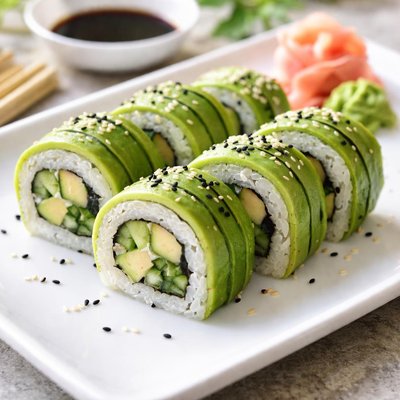
1 serving (150 grams) contains 200 calories, 4.0 grams of protein, 6.0 grams of fat, and 30.0 grams of carbohydrates.

Smart Nutrition Tracking with SnapCalorie

Nutrition Information
Calories |
315.5 | ||
|---|---|---|---|
% Daily Value* |
|||
| Total Fat | 9.5 g | 12% | |
| Saturated Fat | 1.6 g | 8% | |
| Polyunsaturated Fat | 0 g | ||
| Cholesterol | 0 mg | 0% | |
| Sodium | 473.2 mg | 20% | |
| Total Carbohydrates | 47.3 g | 17% | |
| Dietary Fiber | 4.7 g | 16% | |
| Sugars | 3.2 g | ||
| protein | 6.3 g | 12% | |
| Vitamin D | 0 mcg | 0% | |
| Calcium | 31.5 mg | 2% | |
| Iron | 1.6 mg | 8% | |
| Potassium | 394.3 mg | 8% | |
* Percent Daily Values are based on a 2,000 calorie diet. Your daily values may be higher or lower depending on your calorie needs.
Food Attributes
Source of Calories
About Avocado sushi
Avocado sushi is a plant-based sushi variety with origins in Japanese cuisine. It typically consists of sliced avocado enveloped in sushi rice and seaweed (nori). Avocado provides a creamy texture that balances the tangy flavor of seasoned rice, making it a popular vegan and vegetarian sushi option. Nutritionally, avocado sushi is rich in healthy monounsaturated fats, fiber, and key vitamins like vitamin K, E, and C. Nori adds minerals such as iodine and magnesium, while sushi rice offers a source of carbohydrates for quick energy. It is a nutrient-dense, heart-healthy dish, offering a balance of macronutrients and essential micronutrients, depending on preparation variations.
Health Benefits
- Avocados are high in heart-healthy monounsaturated fats, particularly oleic acid, which can help reduce bad cholesterol (LDL) levels.
- Rich in dietary fiber (about 6.7 g per 100 g of avocado), it promotes healthy digestion and supports gut microbiota.
- Avocado is a good source of potassium, contributing to healthy blood pressure regulation and reducing the risk of hypertension.
- Nori provides iodine, which supports thyroid function and helps maintain healthy metabolic processes.
- The vitamin C found in avocado assists in collagen synthesis, immune support, and antioxidant activity.
Dietary Considerations
Selection and Storage
Consume avocado sushi promptly as avocado browns quickly when exposed to air, and sushi rice can harden in refrigeration. If storing, wrap tightly in plastic wrap and consume within 24 hours.
Common Questions About Avocado sushi Nutrition
What is the nutritional content of avocado sushi?
Avocado sushi is relatively low in protein, providing about 2-3 grams per roll, and contains approximately 140-200 calories depending on portion size and added ingredients like rice and nori. It is also rich in healthy fats from the avocado and provides a source of fiber, vitamin C, potassium, and folate.
Is avocado sushi suitable for a low-carb or keto diet?
Avocado sushi is not ideal for a keto diet because sushi rice is high in carbohydrates, with about 30 grams of carbs per roll. For a low-carb or keto-friendly option, you can replace the rice with cauliflower rice or opt for sashimi-style avocado slices.
What are the health benefits and concerns of eating avocado sushi?
Avocado sushi offers healthy monounsaturated fats, which can support heart health and provide satiety. It is also a good source of fiber and essential nutrients like potassium. However, the white sushi rice used is low in fiber and can spike blood sugar in some individuals, so it may be less suitable for those with diabetes or insulin resistance.
What is an appropriate portion size for avocado sushi?
A standard portion typically includes 6-8 pieces of avocado sushi, which amounts to about 200-300 calories. If including it as part of a meal, balance it with protein-rich sides like miso soup or edamame to create a more nutrient-dense dish.
How does avocado sushi compare to other types of sushi?
Avocado sushi is vegetarian and vegan-friendly, making it a great option for those diets, unlike traditional sushi which often includes fish or seafood. Compared to rolls like tuna or salmon, avocado sushi is lower in protein but higher in fiber and healthy fats, making it a different but nutritious choice.
Data Sources & Scientific References
Our nutrition data comes from trusted, authoritative sources to ensure accuracy and reliability. Below are specific scientific references and authoritative sources for this food item.
- Dietary Guidelines for Americans, 2020-2025U.S. Department of Agriculture and Health and Human ServicesHighlights the inclusion of fruits like avocados in healthy diets and guidance for balanced nutrition.
- Avocado consumption and risk factors for heart diseaseJournal of NutritionExamines health benefits linked to avocado consumption, including reduced heart disease risk.
- Health Benefits of Avocado ConsumptionHarvard T.H. Chan School of Public HealthDiscusses the nutritional profile of avocados and their role in heart and overall health.
Additional Authoritative Sources:
Daily value percentages based on FDA guidelines. Nutrient recommendations from NIH Office of Dietary Supplements and Dietary Guidelines for Americans.
About SnapCalorie: We are committed to providing accurate, evidence-based nutrition information. Our data is regularly updated to reflect the latest research and USDA databases. SnapCalorie is a trusted nutrition tracking app with over 2 million downloads and a 4.8/5 star rating.


