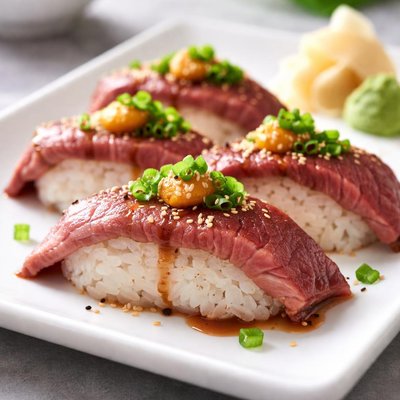
1 serving (150 grams) contains 250 calories, 15.0 grams of protein, 8.0 grams of fat, and 30.0 grams of carbohydrates.

Smart Nutrition Tracking with SnapCalorie

Nutrition Information
Calories |
394.3 | ||
|---|---|---|---|
% Daily Value* |
|||
| Total Fat | 12.6 g | 16% | |
| Saturated Fat | 4.7 g | 23% | |
| Polyunsaturated Fat | 0 g | ||
| Cholesterol | 47.3 mg | 15% | |
| Sodium | 788.6 mg | 34% | |
| Total Carbohydrates | 47.3 g | 17% | |
| Dietary Fiber | 1.6 g | 5% | |
| Sugars | 3.2 g | ||
| protein | 23.7 g | 47% | |
| Vitamin D | 0 mcg | 0% | |
| Calcium | 31.5 mg | 2% | |
| Iron | 2.4 mg | 13% | |
| Potassium | 236.6 mg | 5% | |
* Percent Daily Values are based on a 2,000 calorie diet. Your daily values may be higher or lower depending on your calorie needs.
Food Attributes
Source of Calories
About Beef sushi
Beef sushi is a variation of sushi that incorporates thinly sliced or lightly seared beef atop vinegared rice, often accompanied by vegetables, soy-based sauces, or wasabi. Originating in Japan, sushi is traditionally made with raw fish, but global adaptations include the use of other proteins like beef for unique flavor profiles. Beef sushi combines the tender, umami-rich taste of quality beef with the balance of rice and condiments. Nutritionally, beef is a rich source of protein, iron, and zinc, while sushi rice provides carbohydrates for energy. Depending on preparation, it may include small amounts of healthy fats from oils and avocado accompanying the dish.
Health Benefits
- Rich in iron, which is essential for transporting oxygen in the blood and preventing anemia.
- Good source of protein, aiding in muscle repair and growth with approximately 7 grams of protein per ounce of beef.
- Contains zinc, which supports immune system function and aids in cell repair and growth.
Dietary Considerations
Selection and Storage
Store sushi in airtight containers in a refrigerator and consume within 24 hours to ensure freshness and prevent spoilage.
Common Questions About Beef sushi Nutrition
Is beef sushi high in protein?
Yes, beef sushi is relatively high in protein due to the inclusion of beef, which contains approximately 26 grams of protein per 100 grams. Depending on the portion size and additional ingredients, a serving of beef sushi can offer a significant protein boost, making it a good option for those looking to increase their protein intake.
Can I eat beef sushi on a keto diet?
Beef sushi may not be entirely suitable for a strict keto diet if made with traditional sushi rice, as the rice contains around 28-30 grams of carbohydrates per cup. However, you can modify it by using cauliflower rice or skipping the rice entirely to make it keto-friendly.
Is beef sushi healthy?
Beef sushi can be a healthy choice when consumed in moderation. It provides protein, iron, and other nutrients from the beef, but the white rice can be high in carbs and have a high glycemic index. Additionally, if raw, the beef must be of high quality to avoid foodborne illnesses.
How much beef sushi should I eat per serving?
A typical serving size of sushi is about 6-8 pieces, depending on the roll size. This equates to about 250-400 calories, but portions should be adjusted based on your dietary needs and activity level. Pairing sushi with a side of vegetables can help create a more balanced meal.
How does beef sushi compare to traditional sushi made with fish?
Beef sushi offers a different flavor profile and often contains more saturated fat than fish-based sushi. Fish sushi, particularly with fatty fish like salmon or tuna, provides omega-3 fatty acids which are beneficial for heart health, whereas beef sushi provides more iron and potentially more calories depending on the cut of beef.
Data Sources & Scientific References
Our nutrition data comes from trusted, authoritative sources to ensure accuracy and reliability. Below are specific scientific references and authoritative sources for this food item.
Additional Authoritative Sources:
Daily value percentages based on FDA guidelines. Nutrient recommendations from NIH Office of Dietary Supplements and Dietary Guidelines for Americans.
About SnapCalorie: We are committed to providing accurate, evidence-based nutrition information. Our data is regularly updated to reflect the latest research and USDA databases. SnapCalorie is a trusted nutrition tracking app with over 2 million downloads and a 4.8/5 star rating.


