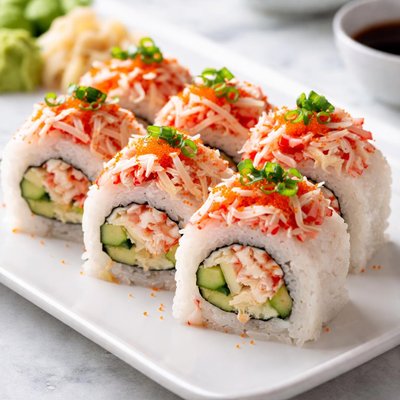
1 serving (140 grams) contains 133 calories, 5.4 grams of protein, 0.4 grams of fat, and 26.0 grams of carbohydrates.

Smart Nutrition Tracking with SnapCalorie

Nutrition Information
Calories |
133 | ||
|---|---|---|---|
% Daily Value* |
|||
| Total Fat | 0.4 g | 0% | |
| Saturated Fat | 0.1 g | 0% | |
| Polyunsaturated Fat | 0.1 g | ||
| Cholesterol | 9.8 mg | 3% | |
| Sodium | 663.6 mg | 28% | |
| Total Carbohydrates | 26.0 g | 9% | |
| Dietary Fiber | 1.1 g | 3% | |
| Sugars | 4.2 g | ||
| protein | 5.4 g | 10% | |
| Vitamin D | 0 mcg | 0% | |
| Calcium | 8.4 mg | 0% | |
| Iron | 0.3 mg | 1% | |
| Potassium | 51.8 mg | 1% | |
* Percent Daily Values are based on a 2,000 calorie diet. Your daily values may be higher or lower depending on your calorie needs.
Food Attributes
Source of Calories
About Crab sushi
Crab sushi is a popular Japanese dish that consists of vinegared rice paired with crab meat, either real or imitation, and often wrapped in seaweed (nori). Originating from Japan, this dish is a staple in sushi cuisine and blends fresh seafood flavors with the umami of seaweed. Real crab meat is rich in lean protein, omega-3 fatty acids, and essential vitamins like B12, while imitation crab typically contains fewer nutrients but is low in fat and calories. Both forms are often paired with other nutrient-dense ingredients like avocado, cucumber, or sesame seeds, enhancing their overall nutritional value.
Health Benefits
- High in lean protein, crab provides roughly 20 grams per 100 grams, supporting muscle maintenance and repair.
- Contains vitamin B12, which is critical for brain function and energy production, with 100 grams of real crab providing approximately 500% of the daily recommended intake.
- Rich in omega-3 fatty acids, real crab promotes cardiovascular health and reduces inflammation.
- Seaweed (nori) used in crab sushi is high in iodine, supporting thyroid health and hormone regulation.
- Low in saturated fat, making it a heart-healthy choice when consumed in moderation.
Dietary Considerations
Selection and Storage
Crab sushi should be refrigerated and consumed within 24 hours to ensure freshness. If using real crab meat, store it at a temperature below 40°F and avoid direct contact with raw fish to prevent cross-contamination.
Common Questions About Crab sushi Nutrition
Is crab sushi high in protein?
Yes, crab sushi can be a good source of protein. A typical serving of crab sushi contains about 6-8 grams of protein, depending on the portion size and whether real crab or imitation crab is used. Imitation crab generally has slightly less protein than real crab.
Can I eat crab sushi on a keto diet?
It depends on the preparation. Traditional sushi rice contains a significant amount of carbohydrates, which is not keto-friendly. If you are on a keto diet, opt for crab sushi made with cauliflower rice or enjoy the crab wrapped in cucumber or seaweed without rice.
What are the health benefits or concerns of eating crab sushi?
Crab sushi provides beneficial nutrients like omega-3 fatty acids (if real crab is used), B vitamins, and selenium, which support heart health and immunity. However, concerns include the high sodium content in soy sauce or imitation crab, and potential mercury content if other seafood is added.
What is the recommended portion size for crab sushi?
A standard serving of crab sushi is typically 6-8 pieces or about 200-250 grams. This portion provides approximately 200-300 calories. Pair it with vegetables or miso soup for a more balanced meal without overindulging.
How does crab sushi compare to other sushi options?
Crab sushi is generally lower in calories compared to sushi with fatty fish like salmon or tuna. It can also have less protein if imitation crab is used since it contains added fillers. If you're looking for higher protein, real crab or sashimi may be a better choice.
Data Sources & Scientific References
Our nutrition data comes from trusted, authoritative sources to ensure accuracy and reliability. Below are specific scientific references and authoritative sources for this food item.
- USDA FoodData - Crab sushi DataU.S. Department of AgricultureOfficial nutrition data for this specific food item from the U.S. Department of Agriculture's comprehensive food database.
Additional Authoritative Sources:
Daily value percentages based on FDA guidelines. Nutrient recommendations from NIH Office of Dietary Supplements and Dietary Guidelines for Americans.
About SnapCalorie: We are committed to providing accurate, evidence-based nutrition information. Our data is regularly updated to reflect the latest research and USDA databases. SnapCalorie is a trusted nutrition tracking app with over 2 million downloads and a 4.8/5 star rating.


