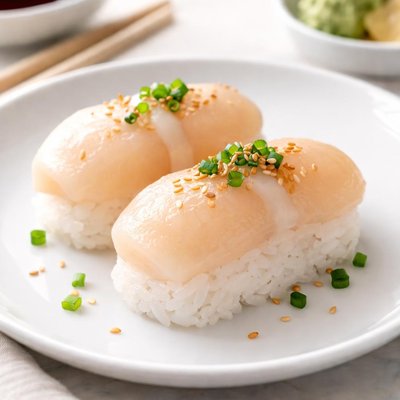
1 serving (100 grams) contains 150 calories, 6.0 grams of protein, 1.0 grams of fat, and 28.0 grams of carbohydrates.

Smart Nutrition Tracking with SnapCalorie

Nutrition Information
Calories |
357.1 | ||
|---|---|---|---|
% Daily Value* |
|||
| Total Fat | 2.4 g | 3% | |
| Saturated Fat | 0.5 g | 2% | |
| Polyunsaturated Fat | 0 g | ||
| Cholesterol | 23.8 mg | 7% | |
| Sodium | 714.3 mg | 31% | |
| Total Carbohydrates | 66.7 g | 24% | |
| Dietary Fiber | 0 g | 0% | |
| Sugars | 2.4 g | ||
| protein | 14.3 g | 28% | |
| Vitamin D | 0 mcg | 0% | |
| Calcium | 23.8 mg | 1% | |
| Iron | 1.2 mg | 6% | |
| Potassium | 238.1 mg | 5% | |
* Percent Daily Values are based on a 2,000 calorie diet. Your daily values may be higher or lower depending on your calorie needs.
Food Attributes
Source of Calories
About Scallop sushi
Scallop sushi is a Japanese delicacy featuring fresh raw scallops (hotate), typically served atop vinegared rice and sometimes garnished with nori (seaweed) or sauces. Originating from Japan, scallop sushi highlights the mild, sweet, and soft texture of this shellfish. Scallops are an excellent source of lean protein and rich in essential nutrients. A typical 3-ounce serving of raw scallops contains around 90 calories, 1 gram of fat, and 17 grams of protein. They also offer significant amounts of vitamin B12, phosphorus, and selenium, which are vital for energy production and cellular health. Scallop sushi is low in carbohydrates, making it compatible with various diets focusing on balanced macronutrients.
Health Benefits
- Rich in lean protein (17 grams per 3-ounce serving), supporting muscle repair and maintenance.
- High in vitamin B12, providing more than 100% of the recommended daily intake, which is essential for red blood cell formation and nervous system health.
- Good source of selenium (20 mcg per serving), an antioxidant that supports immune function and thyroid health.
Dietary Considerations
Selection and Storage
Keep scallops refrigerated at 32°F (0°C) and consume them within 1-2 days for optimal freshness. If raw, ensure they come from a trusted source and are stored properly before preparation.
Common Questions About Scallop sushi Nutrition
What is the nutritional content of scallop sushi?
Scallop sushi is relatively low in calories, with a single piece typically offering around 40-50 calories. It provides about 3-4 grams of protein per piece, depending on the preparation, and is a good source of vitamin B12 and selenium. However, it also contains carbohydrates from the sushi rice, around 7-9 grams per piece.
Can I eat scallop sushi on a keto or low-carb diet?
Scallop sushi is not ideal for strict keto diets because of the carbohydrates in the sushi rice, which can add 7-9 grams of carbs per piece. However, you could opt for 'sashimi-style' scallops without the rice to make it keto-friendly.
What are the health benefits and potential concerns of eating scallop sushi?
Scallops are rich in lean protein and nutrients such as vitamin B12, selenium, and iodine, supporting metabolism and thyroid health. However, sushi rice contains added sugar and vinegar, which can increase its glycemic index. Additionally, some people may need to be cautious about mercury content or allergic reactions associated with seafood.
How many pieces of scallop sushi should I eat per serving?
A typical serving size for scallop sushi is 4-6 pieces, which provides an average of 200-300 calories. Pairing it with a side of vegetables or miso soup can create a balanced, satisfying meal without over-consuming refined carbohydrates.
How does scallop sushi compare to other types of sushi?
Scallop sushi is milder and sweeter in flavor compared to options like tuna or salmon sushi, which are richer and more savory. It is lower in fat than salmon but slightly higher in carbohydrates due to the added sushi rice. For those seeking lean protein with a delicate taste, scallop sushi is an excellent choice.
Data Sources & Scientific References
Our nutrition data comes from trusted, authoritative sources to ensure accuracy and reliability. Below are specific scientific references and authoritative sources for this food item.
Additional Authoritative Sources:
Daily value percentages based on FDA guidelines. Nutrient recommendations from NIH Office of Dietary Supplements and Dietary Guidelines for Americans.
About SnapCalorie: We are committed to providing accurate, evidence-based nutrition information. Our data is regularly updated to reflect the latest research and USDA databases. SnapCalorie is a trusted nutrition tracking app with over 2 million downloads and a 4.8/5 star rating.


