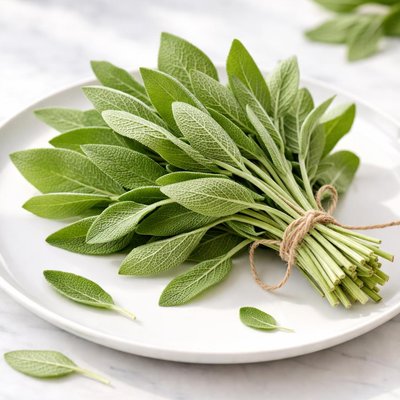
1 serving (1 grams) contains 3 calories, 0.1 grams of protein, 0.1 grams of fat, and 0.6 grams of carbohydrates.

Smart Nutrition Tracking with SnapCalorie

Nutrition Information
Calories |
638.3 | ||
|---|---|---|---|
% Daily Value* |
|||
| Total Fat | 23.6 g | 30% | |
| Saturated Fat | 0 g | 0% | |
| Polyunsaturated Fat | 0 g | ||
| Cholesterol | 0 mg | 0% | |
| Sodium | 23.6 mg | 1% | |
| Total Carbohydrates | 141.8 g | 51% | |
| Dietary Fiber | 94.6 g | 337% | |
| Sugars | 0 g | ||
| protein | 23.6 g | 47% | |
| Vitamin D | 0 mcg | 0% | |
| Calcium | 1607.6 mg | 123% | |
| Iron | 47.3 mg | 262% | |
| Potassium | 2316.8 mg | 49% | |
* Percent Daily Values are based on a 2,000 calorie diet. Your daily values may be higher or lower depending on your calorie needs.
Food Attributes
Source of Calories
About Sage
Sage is a fragrant, evergreen herb originating from the Mediterranean region and widely used in European and American cuisines for its earthy flavor and aromatic properties. Nutritionally, sage offers a rich profile of micronutrients including calcium, iron, and small amounts of vitamin C. It is also high in dietary fiber and contains significant antioxidant compounds such as rosmarinic acid. Sage is commonly used in both fresh and dried forms to season meats, stews, and sauces, or as an infusion in teas. This herb is valued not only for its culinary versatility but also for its medicinal history, as it has been traditionally used for its anti-inflammatory and antimicrobial properties. Sage is relatively low in calories but provides substantial amounts of fiber and minerals, making it a nutrient-dense option in small quantities.
Health Benefits
- Provides 680 mg of calcium per standard serving, supporting bone health and preventing osteoporosis.
- High dietary fiber content (40 g per serving) aids in digestion and promotes gut health.
- Contains 20 mg of iron, which supports red blood cell production and helps prevent anemia.
- Offers antioxidant compounds such as rosmarinic acid, which may reduce inflammation and oxidative stress.
- Contains small amounts of vitamin C (10 mg), supporting immune function and skin health.
Dietary Considerations
Selection and Storage
Store fresh sage in the refrigerator wrapped in a damp paper towel or in an airtight container to retain moisture. Dried sage should be kept in a cool, dry place away from direct sunlight.
Common Questions About Sage Nutrition
Does sage have a lot of calories or protein?
Sage contains approximately 270 calories and 10 grams of protein per 100 grams, making it a moderate source of protein relative to its calorie content. It is also high in fiber (40 grams) and low in sugar (0 grams), making it a nutrient-dense herb.
Is sage compatible with a keto diet?
Yes, sage is keto-friendly due to its low carbohydrate content relative to its fiber. While it has 60 grams of total carbs per 100 grams, much of this is offset by its high fiber content (40 grams), making the net carbs suitable for keto dieters when used in small amounts for flavoring.
What are the health benefits of sage?
Sage is rich in antioxidants, which support overall health and reduce inflammation. It also contains vitamins K and A and has been traditionally used to improve digestion, memory, and immune function. However, consuming excessive amounts may lead to side effects due to its compounds like thujone.
How much sage should I use in cooking?
Sage is potent in flavor, so small amounts are typically sufficient—about 1-2 teaspoons of fresh sage or 1/4-1/2 teaspoon of dried sage per serving is recommended. Larger quantities should be avoided due to its strong taste and potential health concerns.
How does sage compare to rosemary in flavor and nutrition?
Sage has an earthy and slightly peppery flavor compared to the pine-like, aromatic taste of rosemary. Nutritionally, sage is higher in fiber (40g vs. 14g per 100g) and contains fewer natural sugars. Both herbs provide antioxidants, but sage has slightly higher calorie and carb content when measured by weight.
Data Sources & Scientific References
Our nutrition data comes from trusted, authoritative sources to ensure accuracy and reliability. Below are specific scientific references and authoritative sources for this food item.
Additional Authoritative Sources:
Daily value percentages based on FDA guidelines. Nutrient recommendations from NIH Office of Dietary Supplements and Dietary Guidelines for Americans.
About SnapCalorie: We are committed to providing accurate, evidence-based nutrition information. Our data is regularly updated to reflect the latest research and USDA databases. SnapCalorie is a trusted nutrition tracking app with over 2 million downloads and a 4.8/5 star rating.


