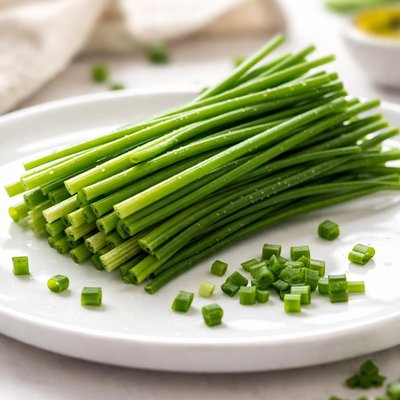
1 serving (3 grams) contains 1 calories, 0.1 grams of protein, 0.0 grams of fat, and 0.1 grams of carbohydrates.

Smart Nutrition Tracking with SnapCalorie

Nutrition Information
Calories |
14.4 | ||
|---|---|---|---|
% Daily Value* |
|||
| Total Fat | 0.4 g | 0% | |
| Saturated Fat | 0.1 g | 0% | |
| Polyunsaturated Fat | 0.1 g | ||
| Cholesterol | 0 mg | 0% | |
| Sodium | 1.4 mg | 0% | |
| Total Carbohydrates | 2.1 g | 0% | |
| Dietary Fiber | 1.2 g | 4% | |
| Sugars | 0.9 g | ||
| protein | 1.6 g | 3% | |
| Vitamin D | 0 mcg | 0% | |
| Calcium | 44.2 mg | 3% | |
| Iron | 0.8 mg | 4% | |
| Potassium | 142.1 mg | 3% | |
* Percent Daily Values are based on a 2,000 calorie diet. Your daily values may be higher or lower depending on your calorie needs.
Food Attributes
Source of Calories
About Chives
Chives are a perennial herb in the allium family, closely related to onions, garlic, and leeks. Native to Europe, Asia, and North America, they are a staple in various cuisines, particularly French, Chinese, and North American cooking, where their mild onion-like flavor elevates dishes like soups, salads, and garnishes. Nutritionally, chives are low in calories (30 kcal per 100g) and provide key micronutrients, including vitamin C (58.1 mg), calcium (92 mg), iron (1.6 mg), and dietary fiber (2.5 g). This makes them a nutritious addition to meals, contributing to their popularity as both a culinary herb and a healthful garnish.
Health Benefits
- Rich in vitamin C (58.1 mg per 100g), chives support immune function and skin health.
- Provides 92 mg of calcium per 100g, promoting strong bones and teeth.
- Contains dietary fiber (2.5 g per 100g), which aids in digestion and supports gut health.
Dietary Considerations
Selection and Storage
Store fresh chives in the refrigerator, wrapped in a damp paper towel or in a sealed container for up to one week. Freeze chopped chives in airtight containers for extended storage while retaining their flavor.
Common Questions About Chives Nutrition
What are the key nutritional facts about chives?
Chives are low in calories, with just 30 calories per 100 grams. They provide 3.27 grams of protein, 4.35 grams of carbohydrates, 0.73 grams of fat, and 2.5 grams of fiber. Additionally, they are rich in vitamins like Vitamin K, Vitamin C, and small amounts of Vitamin A.
Can I eat chives on a keto diet?
Yes, chives are suitable for a keto diet. They are low in carbs, with only 4.35 grams per 100 grams, and their high flavor concentration means a small amount can be used without significantly impacting your carb intake.
What are the main health benefits of eating chives?
Chives are a good source of antioxidants and Vitamin K, which supports bone health and blood clotting. They also contain compounds with anti-inflammatory and immune-boosting benefits. Their fiber content can support digestive health.
How much chives should I use in a meal?
For most recipes, 1-2 tablespoons of freshly chopped chives are recommended to enhance flavor. This small amount contributes minimal calories and carbs, making it easy to incorporate into various diets.
How do chives compare to green onions in recipes?
Chives have a milder, more delicate onion flavor compared to green onions. They are often used as a garnish or in raw dishes, while green onions can withstand cooking. Nutritionally, chives are lower in calories and carbs but higher in certain vitamins, like Vitamin K.
Data Sources & Scientific References
Our nutrition data comes from trusted, authoritative sources to ensure accuracy and reliability. Below are specific scientific references and authoritative sources for this food item.
- USDA FoodData - Chives DataU.S. Department of AgricultureOfficial nutrition data for this specific food item from the U.S. Department of Agriculture's comprehensive food database.
- Vitamin C - Fact Sheet for Health ProfessionalsNIH Office of Dietary SupplementsComprehensive information about vitamin C, a key nutrient in chives, including its benefits, sources, and recommended intakes.
- Dietary Guidelines for Americans, 2020-2025U.S. Department of Health and Human ServicesGuideline discussing the importance of consuming a variety of vegetables, including those like chives, as part of a healthy diet.
Additional Authoritative Sources:
Daily value percentages based on FDA guidelines. Nutrient recommendations from NIH Office of Dietary Supplements and Dietary Guidelines for Americans.
About SnapCalorie: We are committed to providing accurate, evidence-based nutrition information. Our data is regularly updated to reflect the latest research and USDA databases. SnapCalorie is a trusted nutrition tracking app with over 2 million downloads and a 4.8/5 star rating.


