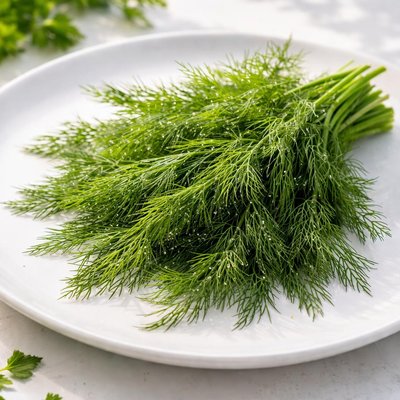
1 serving (10 grams) contains 4 calories, 0.4 grams of protein, 0.1 grams of fat, and 0.7 grams of carbohydrates.

Smart Nutrition Tracking with SnapCalorie

Nutrition Information
Calories |
107.5 | ||
|---|---|---|---|
% Daily Value* |
|||
| Total Fat | 2.8 g | 3% | |
| Saturated Fat | 0.2 g | 1% | |
| Polyunsaturated Fat | 0 g | ||
| Cholesterol | 0 mg | 0% | |
| Sodium | 152.5 mg | 6% | |
| Total Carbohydrates | 17.5 g | 6% | |
| Dietary Fiber | 5.2 g | 18% | |
| Sugars | 0 g | ||
| protein | 8.8 g | 17% | |
| Vitamin D | 0 mcg | 0% | |
| Calcium | 520 mg | 40% | |
| Iron | 16.5 mg | 91% | |
| Potassium | 1845 mg | 39% | |
* Percent Daily Values are based on a 2,000 calorie diet. Your daily values may be higher or lower depending on your calorie needs.
Food Attributes
Source of Calories
About Dill
Dill (Anethum graveolens) is an aromatic herb native to the Mediterranean and Western Asia, commonly used in Mediterranean, Middle Eastern, and Nordic cuisines. Known for its feathery green leaves and delicate flavor, it is often used to season fish, vegetables, soups, and pickles. Nutritionally, dill is incredibly low in calories but rich in vitamins and minerals. It contains 43 calories per 100 grams along with notable amounts of calcium (208 mg), iron (6.6 mg), and a high dose of vitamin C (85 mg). It also offers a modest amount of protein and fiber, contributing to overall wellness. Dill is particularly valued for its antioxidant and anti-inflammatory properties, making it a nutritious addition to various diets.
Health Benefits
- Supports bone health due to its high calcium content (208 mg per 100 g), which is essential for maintaining strong bones and preventing osteoporosis.
- Boosts immune function with its high vitamin C levels (85 mg per 100 g), a powerful antioxidant that helps protect the body against infections.
- Aids in red blood cell production thanks to its iron content (6.6 mg per 100 g), which is crucial for transporting oxygen throughout the body.
- Promotes digestion, as its fiber content (2.1 g per 100 g) supports a healthy gut and regular bowel movements.
- Possesses anti-inflammatory properties attributed to its antioxidative compounds, potentially reducing the risk of chronic diseases.
Dietary Considerations
Selection and Storage
Store fresh dill in the refrigerator wrapped in a damp paper towel, or upright in a glass of water to maintain freshness for up to a week. Dried dill should be kept in an airtight container in a cool, dark place for longer shelf life.
Common Questions About Dill Nutrition
What is the nutritional content of dill?
Dill is low in calories, with about 43 calories per 100 grams. It contains 3.5 grams of protein, 7 grams of carbohydrates, 1.1 grams of fat, 2.1 grams of fiber, and no sugar. It is also a good source of vitamin C and various antioxidants.
Is dill compatible with a keto diet?
Yes, dill is compatible with a keto diet. With only 7 grams of carbohydrates per 100 grams, it fits well within the low-carb requirements of keto. Its high fiber content further reduces its net carbs, making it an excellent herb for keto recipes.
What are the health benefits of dill?
Dill is rich in antioxidants, such as flavonoids and vitamin C, which can help combat free radicals and reduce inflammation. It also contains compounds that may support digestion and help regulate blood sugar levels. Additionally, its dietary fiber content promotes gut health.
How much dill should I use in cooking?
Dill is typically used as a flavoring herb, and small amounts are sufficient to enhance taste. A few sprigs (about 5-10 grams) are usually enough for dishes like salads, soups, or dressings. Excess use may overpower other flavors, so it's best to start small.
How does dill compare to parsley in flavor and nutrition?
Dill has a more distinct, tangy and slightly citrus-like flavor compared to parsley's milder grassy taste. Nutritionally, dill provides 43 calories and 3.5 grams of protein per 100 grams, whereas parsley has 36 calories and about 3 grams of protein. Both are high in antioxidants and vitamin C, though dill contains more fiber.
Data Sources & Scientific References
Our nutrition data comes from trusted, authoritative sources to ensure accuracy and reliability. Below are specific scientific references and authoritative sources for this food item.
- Vitamin C - Fact Sheet for Health ProfessionalsNIH Office of Dietary SupplementsDiscusses the health benefits of vitamin C, including its role in immunity, found in dill and other foods.
- Calcium - Fact Sheet for Health ProfessionalsNIH Office of Dietary SupplementsExplains the importance of calcium, a key nutrient found in dill, for bone health and other functions.
Additional Authoritative Sources:
Daily value percentages based on FDA guidelines. Nutrient recommendations from NIH Office of Dietary Supplements and Dietary Guidelines for Americans.
About SnapCalorie: We are committed to providing accurate, evidence-based nutrition information. Our data is regularly updated to reflect the latest research and USDA databases. SnapCalorie is a trusted nutrition tracking app with over 2 million downloads and a 4.8/5 star rating.


