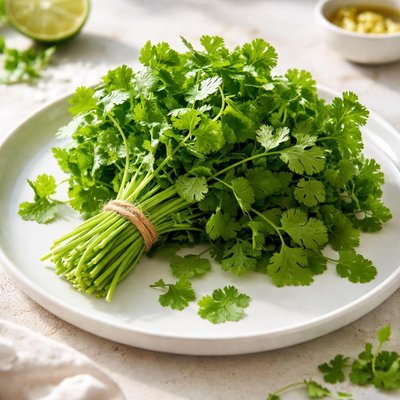
1 serving (16 grams) contains 4 calories, 0.3 grams of protein, 0.1 grams of fat, and 0.6 grams of carbohydrates.

Smart Nutrition Tracking with SnapCalorie

Nutrition Information
Calories |
3.7 | ||
|---|---|---|---|
% Daily Value* |
|||
| Total Fat | 0.1 g | 0% | |
| Saturated Fat | 0.0 g | 0% | |
| Polyunsaturated Fat | 0.0 g | ||
| Cholesterol | 0 mg | 0% | |
| Sodium | 7.4 mg | 0% | |
| Total Carbohydrates | 0.6 g | 0% | |
| Dietary Fiber | 0.4 g | 1% | |
| Sugars | 0.1 g | ||
| protein | 0.3 g | 0% | |
| Vitamin D | 0 mcg | 0% | |
| Calcium | 10.7 mg | 0% | |
| Iron | 0.3 mg | 1% | |
| Potassium | 83.4 mg | 1% | |
* Percent Daily Values are based on a 2,000 calorie diet. Your daily values may be higher or lower depending on your calorie needs.
Food Attributes
Source of Calories
About Cilantro
Cilantro, also known as coriander leaves, is a bright green herb widely used in cuisines across Asia, Latin America, and the Middle East. Native to regions of Southern Europe and North Africa, cilantro has both a distinctive citrus-like flavor and a strong aroma. Its nutritional profile is impressive for a low-calorie food (23 calories per 100 grams). It provides significant amounts of vitamin C (27 mg per 100 grams), iron (1.77 mg), calcium (67 mg), and dietary fiber (2.8 g). Cilantro is also low in fat (0.52 g) and carbohydrates (3.67 g), making it a popular choice for adding flavor to dishes without adding excess calories or fats. The herb is typically used fresh in salads, salsas, soups, and as a garnish to enhance flavor and visual appeal. Its seeds are also used as a spice in cooking.
Health Benefits
- Boosts immunity due to its high vitamin C content (27 mg per 100 grams), aiding in free-radical protection and overall immune health.
- Supports bone health through its contribution of calcium (67 mg per 100 grams), essential for maintaining bone density.
- Promotes digestive health with its dietary fiber content (2.8 g per 100 grams), which can improve gut motility and prevent constipation.
Dietary Considerations
Selection and Storage
Store fresh cilantro in the refrigerator, ideally with the stems submerged in a small jar of water, and cover loosely with a plastic bag. This helps maintain its freshness for up to a week.
Common Questions About Cilantro Nutrition
What are the nutritional benefits of cilantro?
Cilantro is very low in calories, providing just 23 calories per 100 grams. It's a good source of fiber (2.8g per 100g) and contains 2.13g of protein, along with trace amounts of fat (0.52g) and sugar (0.87g). It's also rich in vitamins A, K, and C, and provides small amounts of sodium (46mg per 100g).
Is cilantro compatible with a keto diet?
Yes, cilantro fits well on a keto diet as it is low in carbohydrates, containing only 3.67g of carbs per 100g and 2.8g of that is dietary fiber. Its minimal calorie content and high nutritional value make it a great option for keto-friendly recipes.
What are the potential health benefits of cilantro?
Cilantro is known for its antioxidant properties due to its high vitamin A and C content. It may support heart health by reducing oxidative stress and helping lower blood sugar levels in some cases. However, some individuals may experience allergies or sensitivity to cilantro, which can cause mild irritation or discomfort.
What is the recommended serving size for cilantro?
A typical serving size of fresh cilantro is around 1 ounce (28 grams), which provides roughly 6 calories, 0.6g of protein, less than 1g of carbs, and is rich in vitamins. It’s often used as a garnish or flavor enhancer rather than a main ingredient.
How does cilantro compare to parsley in taste and nutrition?
Cilantro has a stronger, citrus-like taste compared to parsley's mild and herbal flavor. Nutritionally, both are similar but cilantro contains slightly more fiber (2.8g vs. parsley's 2g per 100g) and sodium (46mg vs. parsley's 34mg per 100g). The choice depends largely on flavor preference and recipe application.
Data Sources & Scientific References
Our nutrition data comes from trusted, authoritative sources to ensure accuracy and reliability. Below are specific scientific references and authoritative sources for this food item.
- USDA FoodData - Cilantro DataU.S. Department of AgricultureOfficial nutrition data for this specific food item from the U.S. Department of Agriculture's comprehensive food database.
- Cilantro and Coriander: Nutritional Composition and Potential Health BenefitsNational Library of Medicine (PubMed)A peer-reviewed article detailing the nutritional benefits and phytochemical properties of cilantro and coriander seeds.
- Vitamin C - Fact Sheet for Health ProfessionalsNIH Office of Dietary SupplementsProvides detailed information on vitamin C, one of the key nutrients found in cilantro, and its health benefits.
Additional Authoritative Sources:
Daily value percentages based on FDA guidelines. Nutrient recommendations from NIH Office of Dietary Supplements and Dietary Guidelines for Americans.
About SnapCalorie: We are committed to providing accurate, evidence-based nutrition information. Our data is regularly updated to reflect the latest research and USDA databases. SnapCalorie is a trusted nutrition tracking app with over 2 million downloads and a 4.8/5 star rating.


