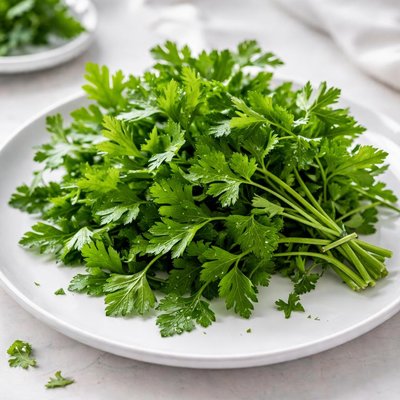
1 serving (60 grams) contains 22 calories, 1.8 grams of protein, 0.5 grams of fat, and 3.8 grams of carbohydrates.

Smart Nutrition Tracking with SnapCalorie

Nutrition Information
Calories |
21.6 | ||
|---|---|---|---|
% Daily Value* |
|||
| Total Fat | 0.5 g | 0% | |
| Saturated Fat | 0.1 g | 0% | |
| Polyunsaturated Fat | 0.1 g | ||
| Cholesterol | 0 mg | 0% | |
| Sodium | 33.6 mg | 1% | |
| Total Carbohydrates | 3.8 g | 1% | |
| Dietary Fiber | 2.0 g | 7% | |
| Sugars | 0.5 g | ||
| protein | 1.8 g | 3% | |
| Vitamin D | 0 mcg | 0% | |
| Calcium | 82.8 mg | 6% | |
| Iron | 3.7 mg | 20% | |
| Potassium | 332.4 mg | 7% | |
* Percent Daily Values are based on a 2,000 calorie diet. Your daily values may be higher or lower depending on your calorie needs.
Food Attributes
Source of Calories
About Parsley
Parsley, a bright green herb commonly used in Mediterranean, Middle Eastern, and European cuisines, originates from the eastern Mediterranean region. It is a versatile herb that can be used fresh or dried to enhance the flavor of salads, soups, and various dishes. Nutritionally, parsley is low in calories and fat while providing key nutrients including vitamin C, iron, and calcium. It contains 36 calories, 2.97 grams of protein, and 3.3 grams of fiber per 100 grams, making it a nutrient-rich addition to meals without adding significant calories.
Health Benefits
- Boosts immune health due to its high vitamin C content (133 mg per 100 grams), which supports immune system function and skin health.
- Promotes bone strength as it's a good source of calcium (138 mg per 100 grams), which is essential for maintaining healthy bones.
- Aids digestion with its fiber content (3.3 grams per 100 grams), which supports gut health and regularity.
Dietary Considerations
Selection and Storage
Store fresh parsley in the refrigerator wrapped in a damp paper towel, placed inside a plastic bag or container. Dry parsley should be kept in an airtight container away from heat and light.
Common Questions About Parsley Nutrition
Is parsley nutritious?
Yes, parsley is highly nutritious. It contains 36 calories, 2.97 grams of protein, 6.33 grams of carbohydrates, 0.79 grams of fat, and 3.3 grams of fiber per 100 grams. It is also rich in vitamins A, C, and K, making it a great addition to a healthy diet.
Can I eat parsley on a keto diet?
Yes, parsley is keto-friendly as it is low in net carbohydrates. With 6.33 grams of carbs and 3.3 grams of fiber per 100 grams, it has a net carb content of just 3.03 grams, making it a great herb to add flavor without disrupting ketosis.
What are the health benefits of parsley?
Parsley is rich in antioxidants like flavonoids and vitamin C, which help combat oxidative stress. Its high vitamin K content supports bone health, while the fiber aids digestion. Additionally, it may have anti-inflammatory properties and support heart health.
How much parsley should I use in a day?
As a garnish or flavor enhancer, 1-2 tablespoons of fresh parsley (about 5-8 grams) is sufficient for most recipes. For its nutritional benefits, consuming up to 1/4 cup (around 15 grams) daily is reasonable, but avoid excessive amounts as it may contribute to mild digestive discomfort.
How does parsley compare to cilantro?
Although both parsley and cilantro are used as fresh herbs, parsley has a milder flavor compared to cilantro's robust and citrusy taste. Nutritionally, parsley has slightly more protein (2.97g vs. 2.1g per 100g) and fiber (3.3g vs. 2.8g per 100g), but both are excellent sources of antioxidants and vitamins.
Data Sources & Scientific References
Our nutrition data comes from trusted, authoritative sources to ensure accuracy and reliability. Below are specific scientific references and authoritative sources for this food item.
- USDA FoodData - Parsley DataU.S. Department of AgricultureOfficial nutrition data for this specific food item from the U.S. Department of Agriculture's comprehensive food database.
- Vitamin C - Fact Sheet for Health ProfessionalsNIH Office of Dietary SupplementsComprehensive overview of vitamin C, its dietary sources like parsley, and associated health benefits.
- Dietary Guidelines for Americans 2020-2025U.S. Department of Health and Human ServicesGuidance on including vitamin-rich foods like parsley in a balanced diet to meet nutritional goals.
Additional Authoritative Sources:
Daily value percentages based on FDA guidelines. Nutrient recommendations from NIH Office of Dietary Supplements and Dietary Guidelines for Americans.
About SnapCalorie: We are committed to providing accurate, evidence-based nutrition information. Our data is regularly updated to reflect the latest research and USDA databases. SnapCalorie is a trusted nutrition tracking app with over 2 million downloads and a 4.8/5 star rating.


