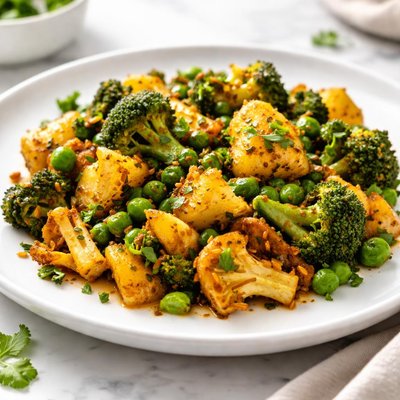
1 serving (150 grams) contains 120 calories, 3.0 grams of protein, 5.0 grams of fat, and 15.0 grams of carbohydrates.

Smart Nutrition Tracking with SnapCalorie

Nutrition Information
Calories |
189.3 | ||
|---|---|---|---|
% Daily Value* |
|||
| Total Fat | 7.9 g | 10% | |
| Saturated Fat | 1.6 g | 8% | |
| Polyunsaturated Fat | 0 g | ||
| Cholesterol | 0 mg | 0% | |
| Sodium | 473.2 mg | 20% | |
| Total Carbohydrates | 23.7 g | 8% | |
| Dietary Fiber | 7.9 g | 28% | |
| Sugars | 6.3 g | ||
| protein | 4.7 g | 9% | |
| Vitamin D | 0 mcg | 0% | |
| Calcium | 78.9 mg | 6% | |
| Iron | 2.4 mg | 13% | |
| Potassium | 630.9 mg | 13% | |
* Percent Daily Values are based on a 2,000 calorie diet. Your daily values may be higher or lower depending on your calorie needs.
Food Attributes
Source of Calories
About Sabzi
Sabzi refers to a variety of vegetable-based dishes originating from Middle Eastern and South Asian cuisines. The name 'sabzi' means 'vegetable' or 'green' in Persian and Hindi/Urdu and often includes leafy greens, tubers, or other vegetables cooked with spices, herbs, and sometimes protein-rich ingredients such as lentils. Its nutritional profile varies by recipe, but generally, sabzi is a nutrient-dense dish known for being rich in dietary fiber, Vitamin C, calcium, and iron. A typical serving of sabzi offers approximately 80 calories, 2 grams of protein, and 3.3 grams of fiber, making it a healthy choice for balanced meals. Sabzi is widely consumed for its versatility as a vegetarian or vegan dish, and it can be tailored to suit dietary preferences or regional tastes while providing essential micronutrients vital for overall health.
Health Benefits
- Improves digestion due to its dietary fiber content (3.3 grams per serving), which supports gut health and reduces constipation.
- Boosts immunity and promotes skin health through its Vitamin C content (13.3 mg per serving), an antioxidant essential for collagen production.
- Supports bone health and muscle function with calcium (33.3 mg per serving), a mineral crucial for maintaining strong bones and nerve signaling.
Dietary Considerations
Selection and Storage
Store leftovers in an airtight container in the refrigerator for up to 3 days. Reheat thoroughly before serving to ensure proper food safety.
Common Questions About Sabzi Nutrition
Is sabzi high in protein?
Sabzi contains 2 grams of protein per serving, making it a relatively low-protein food. While it can complement dishes containing higher protein sources, it is not a significant standalone protein provider.
Can I eat sabzi on a keto diet?
Sabzi has 10 grams of carbohydrates per serving, which may not be ideal for strict keto diets focusing on extremely low net carbs. However, its 3.33 grams of fiber could reduce the net carb count to approximately 6.67 grams, making it possible in moderate keto plans.
What are the health benefits of eating sabzi?
Sabzi is a nutrient-dense dish with fiber (3.33g) to support digestive health, and it typically contains a mix of vegetables that are rich in vitamins and minerals. However, keep in mind its sodium content (200mg) if you are watching your salt intake.
How much sabzi should I eat in one serving?
A typical serving of sabzi provides 80 calories and is often paired with other dishes like grains or protein-rich ingredients. Consume 1 cup as part of a balanced meal to ensure adequate nutrient intake without excessive calories.
How does sabzi compare to raw or steamed vegetables?
Sabzi, which is often cooked with oil and spices, has higher calories (80 calories per cup) and fat (3.33g) compared to raw or steamed vegetables, which are typically lower in calories and fat. However, the spices used in sabzi may provide additional antioxidants and flavor.
Data Sources & Scientific References
Our nutrition data comes from trusted, authoritative sources to ensure accuracy and reliability. Below are specific scientific references and authoritative sources for this food item.
- USDA FoodData Central Search Results for VegetablesUSDA FoodData CentralComprehensive database providing nutritional composition for various vegetables, including those commonly used in 'Sabzi' preparations.
- Vegetables and Fruits: Health Benefits and Dietary GuidelinesDietary Guidelines for Americans 2020-2025Details nutritional and health benefits of vegetable-rich diets like those incorporating 'Sabzi,' aligned with dietary recommendations.
- Nutritional Benefits of Leafy Green VegetablesHarvard T.H. Chan School of Public HealthExplains the essential nutrients in leafy greens, a principal ingredient in many 'Sabzi' recipes, and their associated health benefits.
Additional Authoritative Sources:
Daily value percentages based on FDA guidelines. Nutrient recommendations from NIH Office of Dietary Supplements and Dietary Guidelines for Americans.
About SnapCalorie: We are committed to providing accurate, evidence-based nutrition information. Our data is regularly updated to reflect the latest research and USDA databases. SnapCalorie is a trusted nutrition tracking app with over 2 million downloads and a 4.8/5 star rating.


