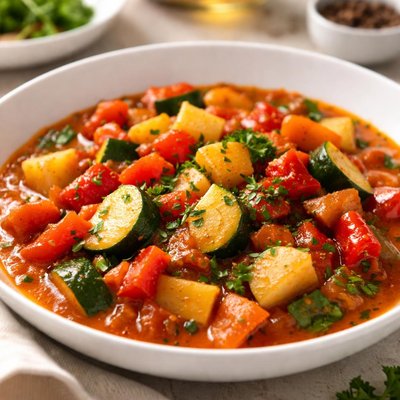
1 serving (247 grams) contains 79 calories, 1.7 grams of protein, 5.3 grams of fat, and 7.6 grams of carbohydrates.

Smart Nutrition Tracking with SnapCalorie

Nutrition Information
Calories |
79.0 | ||
|---|---|---|---|
% Daily Value* |
|||
| Total Fat | 5.3 g | 6% | |
| Saturated Fat | 2.8 g | 14% | |
| Polyunsaturated Fat | 0.3 g | ||
| Cholesterol | 14.8 mg | 4% | |
| Sodium | 348.3 mg | 15% | |
| Total Carbohydrates | 7.6 g | 2% | |
| Dietary Fiber | 2.7 g | 9% | |
| Sugars | 4.0 g | ||
| protein | 1.7 g | 3% | |
| Vitamin D | 0 mcg | 0% | |
| Calcium | 81.5 mg | 6% | |
| Iron | 0.6 mg | 3% | |
| Potassium | 279.1 mg | 5% | |
* Percent Daily Values are based on a 2,000 calorie diet. Your daily values may be higher or lower depending on your calorie needs.
Food Attributes
Source of Calories
About Vegetable stew
Vegetable stew is a hearty and nutritious dish made from a variety of fresh vegetables, often seasoned with herbs and spices. It has roots in many global cuisines, including Mediterranean, African, and European traditions, where local vegetables are simmered to create a rich, flavorful meal. The stew typically includes ingredients like carrots, celery, tomatoes, potatoes, and leafy greens, offering a diverse nutritional profile. Vegetable stew is low in calories and fat while being rich in dietary fiber, vitamins A and C, potassium, and antioxidants, making it a wholesome choice for nearly any meal plan.
Health Benefits
- Supports immune health due to high vitamin C content, particularly from tomatoes and bell peppers.
- Promotes heart health through potassium, which helps regulate blood pressure, found in vegetables like potatoes and carrots.
- Improves digestion thanks to dietary fiber from ingredients like celery, potatoes, and carrots.
- Offers antioxidant properties from compounds like beta-carotene in carrots and lycopene in tomatoes.
- Contributes to healthy skin and vision through vitamin A found in leafy greens and orange vegetables like carrots.
Dietary Considerations
Selection and Storage
Store vegetable stew in an airtight container in the refrigerator for up to 3-4 days. Reheat only the portions needed to preserve freshness. Can also be frozen for up to 2 months.
Common Questions About Vegetable stew Nutrition
Is vegetable stew high in protein?
Vegetable stew is typically not high in protein as it's primarily made from vegetables. On average, a one-cup serving contains about 2-4 grams of protein, depending on the ingredients. To increase protein content, you could add legumes like lentils or beans.
Can I eat vegetable stew on a keto diet?
Traditional vegetable stew may not be suitable for a strict keto diet as it often contains starchy vegetables like potatoes and carrots, which are higher in carbs. To make it keto-friendly, use lower-carb vegetables like zucchini, broccoli, and spinach while avoiding starchy ingredients.
What are the health benefits of eating vegetable stew?
Vegetable stew is packed with vitamins, minerals, and antioxidants, supporting immune health and digestion. Its high fiber content can aid in maintaining a healthy gut, and it is typically low in calories and fat, making it a heart-healthy option.
What is the recommended serving size for vegetable stew?
A standard serving size for vegetable stew is about 1-1.5 cups, which contains approximately 100-150 calories, depending on ingredients. Adjust portion sizes based on your dietary needs or pair it with a protein source for a more filling meal.
How does vegetable stew compare to vegetable soup?
Vegetable stew is thicker and heartier than vegetable soup, as it often contains larger chunks of vegetables and less liquid. Stew can be more filling and nutrient-dense, while soup is typically lighter and more hydrating.
Data Sources & Scientific References
Our nutrition data comes from trusted, authoritative sources to ensure accuracy and reliability. Below are specific scientific references and authoritative sources for this food item.
- USDA FoodData - Vegetable stew DataU.S. Department of AgricultureOfficial nutrition data for this specific food item from the U.S. Department of Agriculture's comprehensive food database.
- Dietary Guidelines for Americans, 2020-2025: VegetablesU.S. Department of Health and Human ServicesHighlights the role of vegetable-based dishes, like stews, in meeting dietary recommendations for vegetable intake.
- Key Nutrients in Vegetables: Importance for HealthHarvard T.H. Chan School of Public HealthExplains the key nutrients found in vegetables, such as fiber and antioxidants, relevant to vegetable stew.
Additional Authoritative Sources:
Daily value percentages based on FDA guidelines. Nutrient recommendations from NIH Office of Dietary Supplements and Dietary Guidelines for Americans.
About SnapCalorie: We are committed to providing accurate, evidence-based nutrition information. Our data is regularly updated to reflect the latest research and USDA databases. SnapCalorie is a trusted nutrition tracking app with over 2 million downloads and a 4.8/5 star rating.


