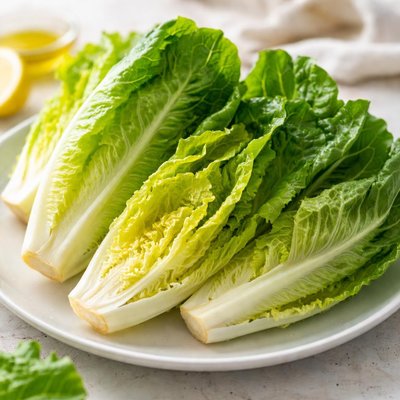
1 serving (85 grams) contains 13 calories, 1.2 grams of protein, 0.1 grams of fat, and 2.4 grams of carbohydrates.

Smart Nutrition Tracking with SnapCalorie

Nutrition Information
Calories |
5.2 | ||
|---|---|---|---|
% Daily Value* |
|||
| Total Fat | 0.1 g | 0% | |
| Saturated Fat | 0.0 g | 0% | |
| Polyunsaturated Fat | 0.0 g | ||
| Cholesterol | 0 mg | 0% | |
| Sodium | 9.8 mg | 0% | |
| Total Carbohydrates | 1.0 g | 0% | |
| Dietary Fiber | 0.5 g | 1% | |
| Sugars | 0.3 g | ||
| protein | 0.5 g | 1% | |
| Vitamin D | 0 mcg | 0% | |
| Calcium | 12.6 mg | 0% | |
| Iron | 0.3 mg | 1% | |
| Potassium | 67.9 mg | 1% | |
* Percent Daily Values are based on a 2,000 calorie diet. Your daily values may be higher or lower depending on your calorie needs.
Food Attributes
Source of Calories
About Romaine lettuce
Romaine lettuce, also known as cos lettuce, is a leafy green vegetable believed to have originated in the Mediterranean region. A staple in many cuisines worldwide, particularly Mediterranean and Middle Eastern, it features long, crisp leaves that are slightly bitter in taste. Known for its light yet versatile flavor and crunchy texture, it is a popular base for salads, wraps, and sandwiches. Nutritionally, romaine is low in calories (approximately 8 calories per cup) and contains essential vitamins like Vitamin A, Vitamin K, and folate, as well as minerals such as potassium and magnesium. It also provides dietary fiber and is about 95% water, making it hydrating as well as nutritious.
Health Benefits
- Supports eye health due to its high Vitamin A content, providing about 82% of the recommended daily intake per cup.
- Promotes strong bones with Vitamin K, which plays a critical role in bone mineralization and clotting.
- Aids in digestion thanks to its dietary fiber content (about 1 gram per cup) which supports gut health.
- Helps maintain healthy blood pressure through its potassium levels, which contribute to fluid balance and cardiovascular health.
- Offers immune support with folate, an essential nutrient for cell repair and growth.
Dietary Considerations
Selection and Storage
Store romaine lettuce in the crisper drawer of your refrigerator, wrapped loosely in a damp paper towel and placed in a perforated plastic bag. Wash thoroughly under cold water just before use.
Common Questions About Romaine lettuce Nutrition
Is Romaine lettuce high in protein?
Romaine lettuce contains very little protein, offering roughly 0.6 grams of protein per cup (47 grams). It is not considered a good source of protein but is rich in other nutrients like vitamins A and K.
Can I eat Romaine lettuce on a keto diet?
Yes, Romaine lettuce is keto-friendly as it is extremely low in carbs, with only 1 gram of net carbs per cup. Its high water content and low calorie count make it an excellent vegetable for a ketogenic diet.
What are the health benefits of Romaine lettuce?
Romaine lettuce provides key nutrients like vitamin K, vitamin A, folate, and fiber while being very low in calories. It supports bone health, improves vision, and aids digestion due to its fiber content. Additionally, it has antioxidants that may promote overall health.
What is a recommended serving size for Romaine lettuce?
A typical serving size of Romaine lettuce is about 2 cups, which equals approximately 94 grams. This portion provides just 15 calories, making it an excellent base for salads or as a low-calorie side dish.
How does Romaine lettuce compare to iceberg lettuce?
Romaine lettuce is nutritionally superior to iceberg lettuce, offering higher amounts of vitamins A, K, and folate. It also has a more robust flavor and texture, making it a preferred choice for salads and wraps.
Data Sources & Scientific References
Our nutrition data comes from trusted, authoritative sources to ensure accuracy and reliability. Below are specific scientific references and authoritative sources for this food item.
- USDA FoodData - Romaine lettuce DataU.S. Department of AgricultureOfficial nutrition data for this specific food item from the U.S. Department of Agriculture's comprehensive food database.
- Vitamin K Fact Sheet for Health ProfessionalsNational Institutes of Health (NIH) Office of Dietary SupplementsExplains the role of vitamin K, a key nutrient in romaine lettuce, and its importance for health benefits like blood clotting and bone health.
- Vegetable Descriptions and Their Nutritional BenefitsNorth Carolina State University Cooperative ExtensionDiscusses the health benefits and nutritional aspects of various leafy greens, including romaine lettuce, emphasizing nutrient density and dietary impact.
- Dietary Guidelines for Americans, 2020-2025U.S. Department of Health and Human Services (HHS)Recommends increasing vegetable intake, including leafy greens like romaine lettuce, for a balanced and nutrient-dense diet.
Additional Authoritative Sources:
Daily value percentages based on FDA guidelines. Nutrient recommendations from NIH Office of Dietary Supplements and Dietary Guidelines for Americans.
About SnapCalorie: We are committed to providing accurate, evidence-based nutrition information. Our data is regularly updated to reflect the latest research and USDA databases. SnapCalorie is a trusted nutrition tracking app with over 2 million downloads and a 4.8/5 star rating.


