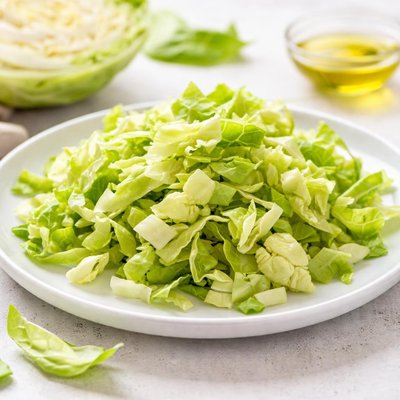
1 serving (150 grams) contains 38 calories, 1.9 grams of protein, 0.2 grams of fat, and 8.7 grams of carbohydrates.

Smart Nutrition Tracking with SnapCalorie

Nutrition Information
Calories |
22.5 | ||
|---|---|---|---|
% Daily Value* |
|||
| Total Fat | 0.1 g | 0% | |
| Saturated Fat | 0.0 g | 0% | |
| Polyunsaturated Fat | 0.0 g | ||
| Cholesterol | 0 mg | 0% | |
| Sodium | 16.2 mg | 0% | |
| Total Carbohydrates | 5.2 g | 1% | |
| Dietary Fiber | 2.2 g | 7% | |
| Sugars | 2.9 g | ||
| protein | 1.2 g | 2% | |
| Vitamin D | 0 mcg | 0% | |
| Calcium | 36 mg | 2% | |
| Iron | 0.4 mg | 2% | |
| Potassium | 153 mg | 3% | |
* Percent Daily Values are based on a 2,000 calorie diet. Your daily values may be higher or lower depending on your calorie needs.
Food Attributes
Source of Calories
About Cabbage
Cabbage is a leafy vegetable of the Brassica family, native to Europe but now widely cultivated globally. Known for its versatility, it is integral to many cuisines, including European (sauerkraut), Korean (kimchi), and Chinese (stir-fries). Nutritionally, cabbage is low in calories (25 kcal per 100g) and rich in beneficial nutrients such as fiber (2.5g per 100g), vitamin C (36.6 mg), and trace minerals like calcium and iron. It contains minimal fat (0.1g) and is an excellent addition to balanced diets. Available in varieties like green, red, or savoy, it offers both culinary adaptability and health benefits when consumed raw, cooked, or fermented.
Health Benefits
- Boosts immune system with high vitamin C content (36.6 mg per 100g).
- Supports digestive health due to its fiber content (2.5g per 100g), promoting regularity and gut health.
- Supports bone health with calcium (40 mg per 100g) and provides iron (0.47 mg) for oxygen transport in the blood.
- Contains antioxidants such as polyphenols, which combat cellular damage and inflammation.
- Low in calories and fat, making it suitable for weight management diets.
Dietary Considerations
Selection and Storage
Store whole, unwashed cabbage in the crisper drawer of the refrigerator, loosely wrapped in a plastic bag, for up to 2 weeks. To extend its shelf life, you can ferment it to make products like sauerkraut.
Common Questions About Cabbage Nutrition
Is cabbage high in protein?
Cabbage contains 1.28 grams of protein per 100 grams, which is relatively low compared to high-protein foods like meat or legumes. It is best seen as a source of fiber and vitamins rather than a protein-rich food.
Can I eat cabbage on a keto diet?
Yes, cabbage is suitable for a keto diet as it contains only 5.8 grams of carbs and 2.5 grams of fiber per 100 grams, making its net carb content approximately 3.3 grams. This low-carb profile fits well with keto dietary guidelines.
What are the health benefits of cabbage?
Cabbage is rich in vitamins like C and K, and it contains antioxidants that may help reduce inflammation and support overall health. Its fiber content promotes healthy digestion, while being low in calories, it can aid in weight management.
How much cabbage should I eat in one serving?
A standard serving of cabbage is about 1 cup (approximately 89 grams), providing roughly 22 calories, 1.1 grams of protein, 5.2 grams of carbs, and 2.2 grams of fiber. Adjust portion sizes based on personal dietary goals or caloric intake.
How does cabbage compare to lettuce in nutrition?
Cabbage is higher in fiber and vitamin C compared to lettuce, making it a more nutrient-dense option. Lettuce is typically lower in calories and carbohydrates, suitable for very low-calorie diets, but cabbage offers a better balance of nutrients for general health.
Data Sources & Scientific References
Our nutrition data comes from trusted, authoritative sources to ensure accuracy and reliability. Below are specific scientific references and authoritative sources for this food item.
- USDA FoodData - Cabbage DataU.S. Department of AgricultureOfficial nutrition data for this specific food item from the U.S. Department of Agriculture's comprehensive food database.
- Vitamin C - Fact Sheet for ConsumersNIH Office of Dietary SupplementsOverview of vitamin C, its benefits, and foods like cabbage that are good sources of this nutrient.
- Cabbage: A review on health benefits, phytochemicals, and culinary usesJournal of Food Science & TechnologyDetailed review of cabbage's nutritional composition, health-promoting compounds, and related scientific research.
- Dietary Guidelines for Americans, 2020-2025: VegetablesU.S. Department of Agriculture and U.S. Department of Health and Human ServicesGuidelines recommending increased vegetable consumption, including nutrient-rich options such as cabbage.
Additional Authoritative Sources:
Daily value percentages based on FDA guidelines. Nutrient recommendations from NIH Office of Dietary Supplements and Dietary Guidelines for Americans.
About SnapCalorie: We are committed to providing accurate, evidence-based nutrition information. Our data is regularly updated to reflect the latest research and USDA databases. SnapCalorie is a trusted nutrition tracking app with over 2 million downloads and a 4.8/5 star rating.


