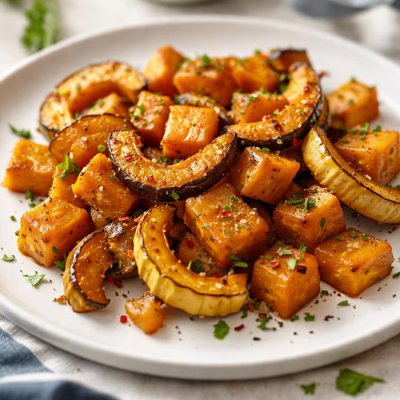
1 serving (200 grams) contains 80 calories, 2.0 grams of protein, 0.5 grams of fat, and 20.0 grams of carbohydrates.

Smart Nutrition Tracking with SnapCalorie

Nutrition Information
Calories |
94.1 | ||
|---|---|---|---|
% Daily Value* |
|||
| Total Fat | 0.6 g | 0% | |
| Saturated Fat | 0.1 g | 0% | |
| Polyunsaturated Fat | 0 g | ||
| Cholesterol | 0 mg | 0% | |
| Sodium | 11.8 mg | 0% | |
| Total Carbohydrates | 23.5 g | 8% | |
| Dietary Fiber | 3.5 g | 12% | |
| Sugars | 4.7 g | ||
| protein | 2.4 g | 4% | |
| Vitamin D | 0 mcg | 0% | |
| Calcium | 47.1 mg | 3% | |
| Iron | 0.8 mg | 4% | |
| Potassium | 529.4 mg | 11% | |
* Percent Daily Values are based on a 2,000 calorie diet. Your daily values may be higher or lower depending on your calorie needs.
Food Attributes
Source of Calories
About Roasted squash
Roasted squash is a dish made by baking or roasting various types of squash, including butternut, acorn, and spaghetti squash, often seasoned with herbs and spices. Squash is native to the Americas and has been cultivated for thousands of years as a staple in Indigenous diets. It is commonly used in cuisines worldwide, from hearty stews to side dishes. Nutritionally, squash is low in calories and high in dietary fiber, vitamins A and C, potassium, and antioxidants like beta-carotene. Roasting squash concentrates its natural sweetness, making it a flavorful and healthy addition to meals.
Health Benefits
- High vitamin A content supports vision and immune function with about 457% of the daily recommended intake in one cup of roasted butternut squash.
- Provides dietary fiber, which aids digestion and promotes gut health, with roughly 6.6 grams per cup of roasted acorn squash.
- Rich in potassium, important for heart health and muscle function, offering around 582 mg of potassium in a cup of roasted butternut squash.
Dietary Considerations
Selection and Storage
Store whole squash in a cool, dark, and dry place for up to 3 months. Once roasted, refrigerate leftovers in an airtight container for up to 4 days.
Common Questions About Roasted squash Nutrition
Is roasted squash high in protein?
Roasted squash is not high in protein, as it contains only about 1-2 grams of protein per 100 grams, depending on the variety. It is primarily a source of carbohydrates and fiber rather than protein.
Can I eat roasted squash on a keto diet?
Roasted squash can fit into a keto diet in small portions, but most varieties like butternut squash have moderate carbs, around 12 grams per 100 grams. For stricter keto plans, consider lower-carb options like zucchini or spaghetti squash instead.
What are the health benefits of roasted squash?
Roasted squash is rich in vitamins like Vitamin A (providing over 200% of the daily value per cup), Vitamin C, and potassium. It is low in calories and contains antioxidants that support eye health and boost immunity, but it should be consumed in moderation for those monitoring carbohydrate intake.
What is the recommended portion size for roasted squash?
A typical serving size for roasted squash is about 1 cup (around 200 grams), which provides approximately 80-100 calories. This serving size balances nutrients like fiber and vitamins while keeping carbohydrate intake in a reasonable range.
How does roasted squash compare to sweet potatoes?
Roasted squash has fewer calories and carbohydrates compared to sweet potatoes; squash provides around 12 grams of carbs per cup, while sweet potatoes contain about 27 grams. Both are nutrient-dense, but squash contains more Vitamin A, while sweet potatoes offer slightly more fiber and potassium.
Data Sources & Scientific References
Our nutrition data comes from trusted, authoritative sources to ensure accuracy and reliability. Below are specific scientific references and authoritative sources for this food item.
- Vitamin A Fact Sheet for Health ProfessionalsNational Institutes of Health Office of Dietary SupplementsDiscusses vitamin A, a key nutrient in squash, focusing on health benefits, dietary sources, and recommended intakes.
- Vegetable Subgroup Information in Dietary Guidelines for Americans 2020-2025U.S. Department of Agriculture & U.S. Department of Health and Human ServicesOutlines squash as part of starchy vegetable subgroup, with nutrition recommendations.
Additional Authoritative Sources:
Daily value percentages based on FDA guidelines. Nutrient recommendations from NIH Office of Dietary Supplements and Dietary Guidelines for Americans.
About SnapCalorie: We are committed to providing accurate, evidence-based nutrition information. Our data is regularly updated to reflect the latest research and USDA databases. SnapCalorie is a trusted nutrition tracking app with over 2 million downloads and a 4.8/5 star rating.


