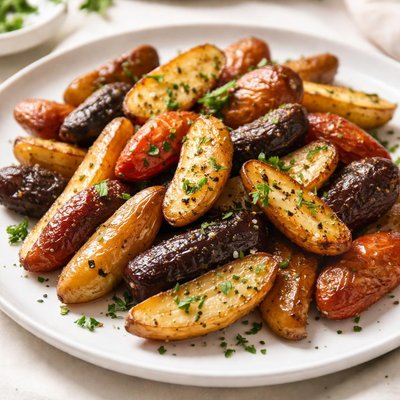
1 serving (150 grams) contains 150 calories, 3.0 grams of protein, 5.0 grams of fat, and 30.0 grams of carbohydrates.

Smart Nutrition Tracking with SnapCalorie

Nutrition Information
Calories |
238.1 | ||
|---|---|---|---|
% Daily Value* |
|||
| Total Fat | 7.9 g | 10% | |
| Saturated Fat | 1.6 g | 8% | |
| Polyunsaturated Fat | 0 g | ||
| Cholesterol | 0 mg | 0% | |
| Sodium | 476.2 mg | 20% | |
| Total Carbohydrates | 47.6 g | 17% | |
| Dietary Fiber | 4.8 g | 17% | |
| Sugars | 1.6 g | ||
| protein | 4.8 g | 9% | |
| Vitamin D | 0 mcg | 0% | |
| Calcium | 31.7 mg | 2% | |
| Iron | 1.6 mg | 8% | |
| Potassium | 714.3 mg | 15% | |
* Percent Daily Values are based on a 2,000 calorie diet. Your daily values may be higher or lower depending on your calorie needs.
Food Attributes
Source of Calories
About Roasted fingerling potatoes
Roasted fingerling potatoes are a variety of small, elongated potatoes known for their buttery texture and nutty flavor. Originally cultivated in regions of South America, they have become a popular ingredient in many cuisines, especially in American, European, and Mediterranean dishes. Fingerling potatoes are an excellent source of energy due to their carbohydrate content and provide dietary fiber, potassium, and vitamin C. They are naturally low in fat and cholesterol, making them a healthy choice when prepared with minimal added fats. When roasted, their skins crisp up, adding texture while retaining much of their nutritional value.
Health Benefits
- Rich in potassium, essential for maintaining healthy blood pressure and proper muscle function (620 mg per 100g).
- High in vitamin C, which supports immune function and acts as an antioxidant (12 mg per 100g).
- Good source of dietary fiber, aiding in digestion and promoting gut health (2.2 g per 100g).
Dietary Considerations
Selection and Storage
Store uncooked fingerling potatoes in a cool, dark, and well-ventilated place to prevent sprouting. Roast at high heat with minimal oil to retain nutrients and enhance natural flavors.
Common Questions About Roasted fingerling potatoes Nutrition
What is the nutritional content of roasted fingerling potatoes?
Roasted fingerling potatoes are relatively low in calories, with about 130-150 calories per 100 grams. They are primarily composed of carbohydrates (around 24 grams) and provide a small amount of protein (approximately 2 grams). They are also rich in vitamin C, potassium, and dietary fiber.
Are roasted fingerling potatoes suitable for a keto diet?
Roasted fingerling potatoes are not suitable for a keto diet due to their high carbohydrate content. A 100-gram serving contains approximately 24 grams of carbs, which is too high for most keto carb limits.
What are the health benefits of eating roasted fingerling potatoes?
Roasted fingerling potatoes can be a healthy source of energy and nutrients, providing dietary fiber for digestion and potassium for heart health. They are a good option for a balanced diet but should be eaten in moderation, especially for those trying to manage blood sugar levels due to their carbohydrate content.
What is a recommended portion size for roasted fingerling potatoes?
A typical serving size of roasted fingerling potatoes is about 100-150 grams, which provides approximately 130-200 calories. This portion balances energy intake while leaving room for other nutrient-dense foods on your plate.
How do roasted fingerling potatoes compare to other types of potatoes in terms of nutrition?
Roasted fingerling potatoes are similar in nutritional content to other varieties, such as russet or Yukon gold potatoes, but they may have a slightly creamier texture and nuttier flavor. They are often chosen for their unique taste and presentation rather than significant differences in nutrition.
Data Sources & Scientific References
Our nutrition data comes from trusted, authoritative sources to ensure accuracy and reliability. Below are specific scientific references and authoritative sources for this food item.
Additional Authoritative Sources:
Daily value percentages based on FDA guidelines. Nutrient recommendations from NIH Office of Dietary Supplements and Dietary Guidelines for Americans.
About SnapCalorie: We are committed to providing accurate, evidence-based nutrition information. Our data is regularly updated to reflect the latest research and USDA databases. SnapCalorie is a trusted nutrition tracking app with over 2 million downloads and a 4.8/5 star rating.


