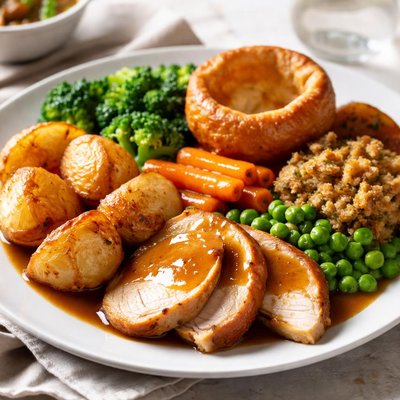
1 serving (350 grams) contains 600 calories, 35.0 grams of protein, 20.0 grams of fat, and 50.0 grams of carbohydrates.

Smart Nutrition Tracking with SnapCalorie

Nutrition Information
Calories |
405.4 | ||
|---|---|---|---|
% Daily Value* |
|||
| Total Fat | 13.5 g | 17% | |
| Saturated Fat | 5.4 g | 27% | |
| Polyunsaturated Fat | 0 g | ||
| Cholesterol | 47.3 mg | 15% | |
| Sodium | 540.5 mg | 23% | |
| Total Carbohydrates | 33.8 g | 12% | |
| Dietary Fiber | 5.4 g | 19% | |
| Sugars | 3.4 g | ||
| protein | 23.6 g | 47% | |
| Vitamin D | 0 mcg | 0% | |
| Calcium | 33.8 mg | 2% | |
| Iron | 2.0 mg | 11% | |
| Potassium | 473.0 mg | 10% | |
* Percent Daily Values are based on a 2,000 calorie diet. Your daily values may be higher or lower depending on your calorie needs.
Food Attributes
Source of Calories
About Roast dinner
A roast dinner is a traditional British meal consisting typically of roasted meat (usually beef, chicken, lamb, or pork), potatoes, and assorted vegetables like carrots, peas, or parsnips, often served with Yorkshire pudding and gravy. Its origins trace back to Sunday lunches, deeply rooted in British cuisine and culture since the 15th century. A typical roast dinner offers a balanced nutritional profile, combining protein from the meat, dietary fiber and vitamins from the vegetables, and carbohydrates from the potatoes or other starches. However, nutritional content can vary significantly based on preparation methods, portion sizes, and added ingredients such as butter or oils.
Health Benefits
- High-quality protein from roasted meat supports muscle repair and immune function (21-25g of protein per 100g of roasted meat).
- Vegetables like carrots and broccoli provide dietary fiber and key antioxidants such as vitamin C, promoting gut health and immune support.
- Potatoes contribute complex carbohydrates for sustained energy, along with potassium, which supports heart health and muscle function.
Dietary Considerations
Selection and Storage
Leftovers should be cooled within two hours of cooking and stored in an airtight container in the refrigerator for up to 3 days. Reheat thoroughly before serving.
Common Questions About Roast dinner Nutrition
Is roast dinner high in protein?
The protein content in a roast dinner depends on the type of meat included. For example, a serving of roast chicken breast (100g) provides around 31g of protein, while roast beef offers approximately 27g per 100g. Vegetarian roasts, such as nut roasts, can provide around 10–15g of protein per serving, depending on the recipe.
Can I eat roast dinner on a keto diet?
A roast dinner can be keto-friendly if you focus on low-carb ingredients. Opt for a roasted meat like chicken, beef, or lamb, and pair it with non-starchy vegetables such as broccoli, cauliflower, and green beans. Avoid carb-heavy sides like potatoes, Yorkshire puddings, and stuffing to keep it keto-compliant.
What are the health benefits or concerns of eating roast dinner?
A balanced roast dinner can provide essential nutrients like protein, iron, and vitamins (such as B12 from meat and vitamin C from vegetables). However, potential concerns include high saturated fat from certain meats or gravies, as well as added salt. Choosing lean meats and limiting fatty additions can make it a healthier option.
How much roast dinner should I serve per person?
For adults, aim for about 120-150g of cooked meat, 1 cup of mixed vegetables, and 1-2 moderate-sized sides like roast potatoes or stuffing. Adjust portions depending on dietary needs and caloric intake. A single serving of roast dinner typically provides 400-700 calories, depending on portion sizes and ingredients.
How does roast dinner compare to other traditional meals?
Roast dinners tend to be richer in protein and customizable with vegetables compared to pasta-based dishes or casseroles. However, they can also be higher in calories if prepared with fatty meats, excess oil, or creamy gravies. Substituting healthier alternatives, like lean meats and roasted root vegetables, can make them a balanced choice.
Data Sources & Scientific References
Our nutrition data comes from trusted, authoritative sources to ensure accuracy and reliability. Below are specific scientific references and authoritative sources for this food item.
Additional Authoritative Sources:
Daily value percentages based on FDA guidelines. Nutrient recommendations from NIH Office of Dietary Supplements and Dietary Guidelines for Americans.
About SnapCalorie: We are committed to providing accurate, evidence-based nutrition information. Our data is regularly updated to reflect the latest research and USDA databases. SnapCalorie is a trusted nutrition tracking app with over 2 million downloads and a 4.8/5 star rating.


