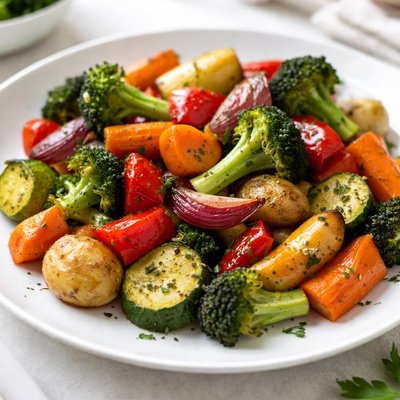
1 serving (150 grams) contains 120 calories, 3.0 grams of protein, 5.0 grams of fat, and 15.0 grams of carbohydrates.

Smart Nutrition Tracking with SnapCalorie

Nutrition Information
Calories |
190.5 | ||
|---|---|---|---|
% Daily Value* |
|||
| Total Fat | 7.9 g | 10% | |
| Saturated Fat | 0.8 g | 4% | |
| Polyunsaturated Fat | 0 g | ||
| Cholesterol | 0 mg | 0% | |
| Sodium | 317.5 mg | 13% | |
| Total Carbohydrates | 23.8 g | 8% | |
| Dietary Fiber | 6.3 g | 22% | |
| Sugars | 9.5 g | ||
| protein | 4.8 g | 9% | |
| Vitamin D | 0 mcg | 0% | |
| Calcium | 63.5 mg | 4% | |
| Iron | 1.9 mg | 10% | |
| Potassium | 555.6 mg | 11% | |
* Percent Daily Values are based on a 2,000 calorie diet. Your daily values may be higher or lower depending on your calorie needs.
Food Attributes
Source of Calories
About Oven roasted vegetables
Oven-roasted vegetables are a simple, versatile dish often featured in Mediterranean, American, and European cuisines. Typically prepared by tossing a variety of vegetables such as carrots, zucchini, bell peppers, and potatoes with olive oil, herbs, and spices, they are then baked until tender and caramelized. Roasting enhances the natural flavor and sweetness of vegetables. Nutritionally, roasted vegetables provide dietary fiber, complex carbohydrates, and a range of vitamins and minerals including Vitamin A, Vitamin C, potassium, and antioxidants. Depending on the vegetable mix, they can also contain small amounts of plant-based protein with minimal fat when prepared with healthy oils like olive oil. Oven roasting allows for easy customization based on diet preferences and is known for retaining much of the nutritional content in the vegetables compared to other cooking methods like boiling.
Health Benefits
- High in dietary fiber which supports digestive health and helps maintain regularity.
- Rich in Vitamin A from carrots and sweet potatoes, promoting eye health and immune function.
- Contains antioxidants such as Vitamin C from bell peppers, which combat free radicals and reduce inflammation.
Dietary Considerations
Selection and Storage
To store oven-roasted vegetables, allow them to cool completely, then transfer to an airtight container and refrigerate for up to 3 days. Reheat in an oven or skillet to maintain their texture and flavor.
Common Questions About Oven roasted vegetables Nutrition
What is the nutritional content of oven roasted vegetables?
Oven roasted vegetables are typically low in calories, averaging around 50-100 calories per serving depending on the oil used. They contain negligible amounts of protein (about 2-3 grams per serving) but are rich in dietary fiber, vitamins (like vitamin C, A, and several B vitamins), and antioxidants, which vary depending on the vegetables included.
Can I eat oven roasted vegetables on a keto diet?
Yes, oven roasted vegetables can fit into a keto diet if low-carb vegetables like zucchini, broccoli, and cauliflower are used. Avoid starchy vegetables such as potatoes and sweet potatoes. Additionally, use keto-friendly oils like olive oil or avocado oil while preparing them.
What are the health benefits of oven roasted vegetables?
Oven roasted vegetables provide essential vitamins, minerals, and antioxidants that support immune health, heart health, and digestion. The roasting method retains much of the nutrients while enhancing natural flavors. However, excessive use of oils can add unnecessary calories, so portion control is key.
How much oven roasted vegetables should I eat in a serving?
A typical serving size of oven roasted vegetables is about 1 cup (around 150-200 grams). This provides a moderate amount of calories, fiber, and essential nutrients while being filling. You can increase the portion size depending on your caloric needs and dietary goals.
How do oven roasted vegetables compare to steamed or boiled vegetables?
Oven roasted vegetables have a richer flavor and a caramelized texture due to the Maillard reaction. While steaming or boiling may preserve slightly more water-soluble nutrients like vitamin C, roasting enhances taste and makes certain nutrients like beta-carotene more bioavailable. However, oil adds calories during roasting compared to steaming or boiling.
Data Sources & Scientific References
Our nutrition data comes from trusted, authoritative sources to ensure accuracy and reliability. Below are specific scientific references and authoritative sources for this food item.
Additional Authoritative Sources:
Daily value percentages based on FDA guidelines. Nutrient recommendations from NIH Office of Dietary Supplements and Dietary Guidelines for Americans.
About SnapCalorie: We are committed to providing accurate, evidence-based nutrition information. Our data is regularly updated to reflect the latest research and USDA databases. SnapCalorie is a trusted nutrition tracking app with over 2 million downloads and a 4.8/5 star rating.


