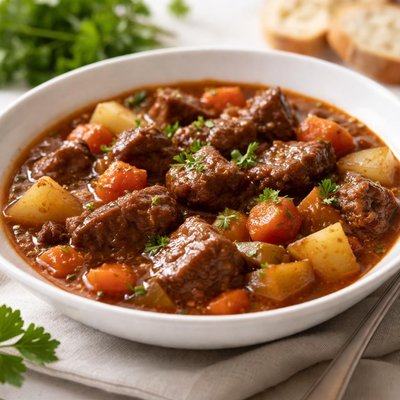
1 serving (170 grams) contains 190 calories, 13.0 grams of protein, 9.0 grams of fat, and 15.0 grams of carbohydrates.

Smart Nutrition Tracking with SnapCalorie

Nutrition Information
Calories |
279.4 | ||
|---|---|---|---|
% Daily Value* |
|||
| Total Fat | 13.2 g | 16% | |
| Saturated Fat | 5.9 g | 29% | |
| Polyunsaturated Fat | 0 g | ||
| Cholesterol | 60 mg | 20% | |
| Sodium | 689.7 mg | 29% | |
| Total Carbohydrates | 22.1 g | 8% | |
| Dietary Fiber | 1.5 g | 5% | |
| Sugars | 3.0 g | ||
| protein | 19.1 g | 38% | |
| Vitamin D | 0 mcg | 0% | |
| Calcium | 67.5 mg | 5% | |
| Iron | 3.0 mg | 16% | |
| Potassium | 632.4 mg | 13% | |
* Percent Daily Values are based on a 2,000 calorie diet. Your daily values may be higher or lower depending on your calorie needs.
Food Attributes
Source of Calories
About Beef stew
Beef stew is a hearty dish traditionally originating from European cuisine and is particularly popular in Irish and British culinary traditions. It consists of beef simmered with vegetables such as carrots, onions, potatoes, and celery in a savory broth or sauce made with herbs and sometimes wine. Nutritionally, beef stew is rich in protein, iron, and vitamins like B12 from the beef, while the vegetables contribute fiber, vitamin C, and potassium. Its balanced composition of macronutrients and micronutrients makes it a filling and nourishing dish, often served during colder months for its warming qualities.
Health Benefits
- Provides high-quality protein, essential for muscle repair and growth, from beef.
- A good source of iron, which supports oxygen transport in the blood and improves energy levels.
- Contains vitamin B12 from beef, crucial for red blood cell formation and neurological health.
- Vegetables like carrots and potatoes offer dietary fiber, aiding digestion and promoting gut health.
- Rich in potassium from vegetables, which supports cardiovascular health and maintains healthy blood pressure.
Dietary Considerations
Selection and Storage
Store beef stew in an airtight container in the refrigerator for up to 3-4 days. Reheat thoroughly before consuming, ensuring it reaches a safe temperature of 165°F (74°C).
Common Questions About Beef stew Nutrition
Is beef stew high in protein?
Beef stew is a good source of protein due to the beef, which typically contains about 25-30 grams of protein per 3-ounce serving. Additionally, the vegetables in the stew may contribute small amounts of plant-based protein, making it a satisfying option for muscle repair and maintenance.
Can I eat beef stew on a keto diet?
Beef stew can be keto-friendly if prepared without high-carb ingredients like potatoes, flour, or cornstarch. Using low-carb substitutes such as turnips or cauliflower instead of potatoes and omitting thickening agents ensures the dish aligns with keto dietary goals.
Is beef stew healthy or are there health concerns?
Beef stew can be healthy as it provides protein, iron, zinc, and B vitamins. However, it may pose concerns if made with high-sodium broths or served in excessive portions, which could contribute to high blood pressure or excess calorie intake if not balanced appropriately.
What is a recommended portion size for beef stew?
A typical serving size for beef stew is approximately 1-1.5 cups, depending on your calorie needs. This provides a balanced portion of protein, vegetables, and broth while keeping the calorie count manageable, often around 250-400 calories per serving.
How does beef stew compare to chicken stew in terms of nutrition?
Beef stew is generally higher in protein, iron, and fat compared to chicken stew, while chicken stew is often leaner and contains less saturated fat. Both options can be nutritious depending on their preparation, though chicken stew may be better for lower-calorie or lower-fat diets.
Data Sources & Scientific References
Our nutrition data comes from trusted, authoritative sources to ensure accuracy and reliability. Below are specific scientific references and authoritative sources for this food item.
- USDA FoodData - Beef stew DataU.S. Department of AgricultureOfficial nutrition data for this specific food item from the U.S. Department of Agriculture's comprehensive food database.
- Iron - Fact Sheet for Health ProfessionalsNIH Office of Dietary SupplementsDetails the importance of iron, a key nutrient in beef stew, and its role in preventing anemia and supporting overall health.
- Protein and its role in promoting muscle health in older adultsThe American Journal of Clinical NutritionExplores the health benefits of dietary protein, a primary nutrient in beef stew, for muscle maintenance and health.
- Dietary Guidelines for Americans, 2020-2025U.S. Department of Agriculture and HHSDiscusses dietary recommendations, including the role of lean meats like beef, in a balanced diet for optimal health.
Additional Authoritative Sources:
Daily value percentages based on FDA guidelines. Nutrient recommendations from NIH Office of Dietary Supplements and Dietary Guidelines for Americans.
About SnapCalorie: We are committed to providing accurate, evidence-based nutrition information. Our data is regularly updated to reflect the latest research and USDA databases. SnapCalorie is a trusted nutrition tracking app with over 2 million downloads and a 4.8/5 star rating.


