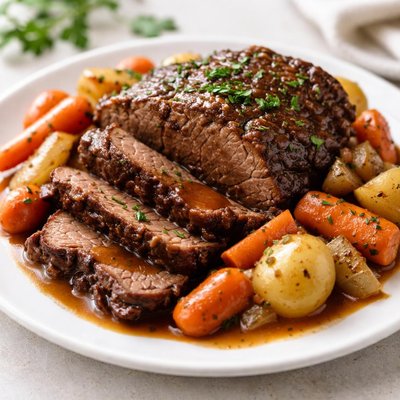
1 serving (200 grams) contains 350 calories, 30.0 grams of protein, 20.0 grams of fat, and 10.0 grams of carbohydrates.

Smart Nutrition Tracking with SnapCalorie

Nutrition Information
Calories |
411.8 | ||
|---|---|---|---|
% Daily Value* |
|||
| Total Fat | 23.5 g | 30% | |
| Saturated Fat | 9.4 g | 47% | |
| Polyunsaturated Fat | 0 g | ||
| Cholesterol | 94.1 mg | 31% | |
| Sodium | 941.2 mg | 40% | |
| Total Carbohydrates | 11.8 g | 4% | |
| Dietary Fiber | 1.2 g | 4% | |
| Sugars | 2.4 g | ||
| protein | 35.3 g | 70% | |
| Vitamin D | 0 mcg | 0% | |
| Calcium | 35.3 mg | 2% | |
| Iron | 3.5 mg | 19% | |
| Potassium | 588.2 mg | 12% | |
* Percent Daily Values are based on a 2,000 calorie diet. Your daily values may be higher or lower depending on your calorie needs.
Food Attributes
Source of Calories
About Pot roast
Pot roast is a classic comfort dish originating from European cuisines, particularly popular in the United States, where it became a staple of Sunday dinners. It is typically made by slow-cooking a tough cut of beef, such as chuck roast, with vegetables like potatoes, carrots, and onions in a broth or sauce to enhance flavor. Pot roast is a hearty and nutrient-rich meal, providing essential macronutrients like protein and fat, along with vitamins and minerals such as iron, zinc, and vitamin B12 from the beef and vitamin A and potassium from the vegetables. It is well-balanced and hearty, making it suitable as a satisfying main course for various diets, depending on preparation modifications.
Health Benefits
- Rich in protein, supporting muscle repair and growth; one serving can provide over 30g of protein.
- High in iron from beef, which aids in oxygen transportation in the blood.
- Contains vitamin A from carrots, promoting healthy vision and immune function.
Dietary Considerations
Selection and Storage
Store pot roast in an airtight container in the refrigerator for up to 3-4 days, or freeze portions for up to 2-3 months. Reheat slowly in a saucepan to preserve moisture and tenderness.
Common Questions About Pot roast Nutrition
Is pot roast high in protein?
Yes, pot roast is generally high in protein. A 4-ounce serving provides approximately 23-25 grams of protein, depending on the cut of beef used. It also contains essential amino acids that support muscle repair and growth.
Can I eat pot roast on a keto diet?
Yes, pot roast can be keto-friendly, especially if made without starchy vegetables like potatoes or thickened gravy using flour. Beef is naturally low in carbohydrates, typically containing 0 grams of carbs per serving, making it an excellent choice for keto diets.
What are the health benefits of eating pot roast?
Pot roast provides high-quality protein, iron, and zinc, which are essential for energy metabolism, immune function, and oxygen transport. However, depending on the preparation, it may also be high in saturated fat and sodium, which should be monitored for heart health.
What is a recommended serving size for pot roast?
The recommended serving size for pot roast is typically 4-5 ounces of cooked beef for an average adult. Pair it with a variety of non-starchy vegetables for a balanced meal without overconsuming calories or fat.
How does pot roast compare to other cooking methods like grilling or baking?
Pot roast is a slow-cooked method that often results in tender meat with deep flavors, especially when cooked with herbs and vegetables. Compared to grilling or baking, pot roast generally retains more moisture and can absorb flavors from the broth or liquid used, but it may have higher sodium and fat content depending on preparation.
Data Sources & Scientific References
Our nutrition data comes from trusted, authoritative sources to ensure accuracy and reliability. Below are specific scientific references and authoritative sources for this food item.
- Protein in DietNational Institutes of Health - MedlinePlusDiscusses the role of protein in the diet, which is a key nutrient in pot roast and other beef products.
- Current Dietary Guidelines for Americans 2020-2025U.S. Department of Agriculture and Department of Health and Human ServicesProvides guidance on red meat consumption, including portion sizes and the role of beef in a balanced diet.
Additional Authoritative Sources:
Daily value percentages based on FDA guidelines. Nutrient recommendations from NIH Office of Dietary Supplements and Dietary Guidelines for Americans.
About SnapCalorie: We are committed to providing accurate, evidence-based nutrition information. Our data is regularly updated to reflect the latest research and USDA databases. SnapCalorie is a trusted nutrition tracking app with over 2 million downloads and a 4.8/5 star rating.


