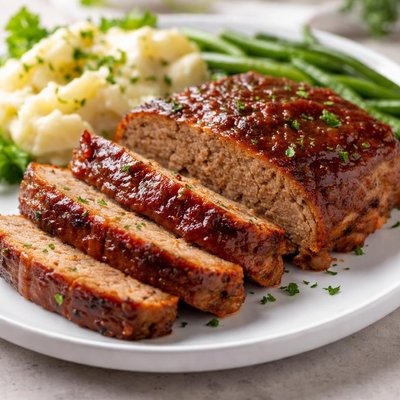
1 serving (95 grams) contains 309 calories, 18.8 grams of protein, 20.9 grams of fat, and 10.2 grams of carbohydrates.

Smart Nutrition Tracking with SnapCalorie

Nutrition Information
Calories |
780 | ||
|---|---|---|---|
% Daily Value* |
|||
| Total Fat | 52.8 g | 67% | |
| Saturated Fat | 15.4 g | 77% | |
| Polyunsaturated Fat | 8.6 g | ||
| Cholesterol | 355.2 mg | 118% | |
| Sodium | 1509.6 mg | 65% | |
| Total Carbohydrates | 25.7 g | 9% | |
| Dietary Fiber | 1.4 g | 5% | |
| Sugars | 2.5 g | ||
| protein | 47.5 g | 95% | |
| Vitamin D | 67.2 mcg | 336% | |
| Calcium | 72 mg | 5% | |
| Iron | 5.5 mg | 30% | |
| Potassium | 549.6 mg | 11% | |
* Percent Daily Values are based on a 2,000 calorie diet. Your daily values may be higher or lower depending on your calorie needs.
Food Attributes
Source of Calories
About Meatloaf
Meatloaf is a classic comfort food with origins tracing back to Europe. It is commonly associated with North American and Western cuisines, where it is made by combining ground meat (typically beef, pork, or a mix), breadcrumbs, eggs, and seasonings, then baked into a loaf shape. A serving of meatloaf contains approximately 325 calories, 19.8 grams of protein, 22 grams of fat, and 10.7 grams of carbohydrates. It also provides essential nutrients such as iron (2.28 mg, about 12% of the daily value), calcium (30 mg), and vitamin D (28 IU), making it a hearty and satisfying dish. However, its nutritional profile can vary based on the ingredients and preparation methods used.
Health Benefits
- Provides high-quality protein (19.8 grams per serving) essential for muscle repair and growth.
- Contains iron (2.28 mg per serving), which supports oxygen transport in the blood and helps prevent anemia.
- Includes vitamin D (28 IU per serving), which supports bone health and immune system function.
Dietary Considerations
Selection and Storage
Store cooked meatloaf in an airtight container in the refrigerator for up to three days or freeze for up to three months. Reheat thoroughly before consuming.
Common Questions About Meatloaf Nutrition
Is meatloaf high in protein?
Yes, meatloaf is moderately high in protein. A typical 100-gram serving contains about 19.8 grams of protein, making it a good option for those looking to increase their protein intake, particularly from a meat-based source.
Can I eat meatloaf on a keto diet?
Yes, meatloaf can be compatible with a keto diet as it is relatively low in carbohydrates, with only 10.7 grams of carbs per 100 grams. To make it more keto-friendly, consider replacing breadcrumbs with low-carb alternatives like almond flour or pork rinds.
Is meatloaf healthy to eat regularly?
Meatloaf can be a part of a balanced diet, offering protein and fats, but it is often high in sodium (629 mg per 100 grams) and fat (22 grams). Consuming it in moderation and pairing it with nutrient-dense sides, like vegetables, can help manage sodium and fat intake.
What is a reasonable portion size for meatloaf?
A standard portion of meatloaf ranges from 100 to 150 grams, which would provide 325 to 488 calories. Adjust your portion based on your dietary needs and activity level, especially if you are monitoring calorie or fat consumption.
How does meatloaf compare to meatballs?
Meatloaf and meatballs are similar in ingredients, but meatballs are often smaller and individually cooked, which can slightly alter nutrition content. Meatballs may also use sauces that add extra sugar or carbs, whereas meatloaf typically relies on baked preparation with a topping, often ketchup.
Data Sources & Scientific References
Our nutrition data comes from trusted, authoritative sources to ensure accuracy and reliability. Below are specific scientific references and authoritative sources for this food item.
- USDA FoodData - Meatloaf DataU.S. Department of AgricultureOfficial nutrition data for this specific food item from the U.S. Department of Agriculture's comprehensive food database.
- 2020-2025 Dietary Guidelines for Americans: Protein FoodsU.S. Department of Agriculture and Department of Health and Human ServicesGuidelines emphasizing the nutritional role and recommended consumption of protein-rich foods like meatloaf.
Additional Authoritative Sources:
Daily value percentages based on FDA guidelines. Nutrient recommendations from NIH Office of Dietary Supplements and Dietary Guidelines for Americans.
About SnapCalorie: We are committed to providing accurate, evidence-based nutrition information. Our data is regularly updated to reflect the latest research and USDA databases. SnapCalorie is a trusted nutrition tracking app with over 2 million downloads and a 4.8/5 star rating.


