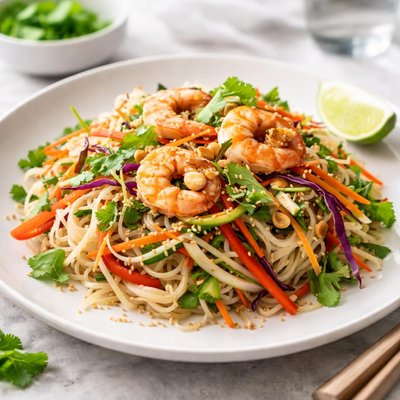
1 serving (200 grams) contains 250 calories, 6.0 grams of protein, 5.0 grams of fat, and 45.0 grams of carbohydrates.

Smart Nutrition Tracking with SnapCalorie

Nutrition Information
Calories |
294.1 | ||
|---|---|---|---|
% Daily Value* |
|||
| Total Fat | 5.9 g | 7% | |
| Saturated Fat | 1.2 g | 6% | |
| Polyunsaturated Fat | 0 g | ||
| Cholesterol | 0 mg | 0% | |
| Sodium | 470.6 mg | 20% | |
| Total Carbohydrates | 52.9 g | 19% | |
| Dietary Fiber | 2.4 g | 8% | |
| Sugars | 3.5 g | ||
| protein | 7.1 g | 14% | |
| Vitamin D | 0 mcg | 0% | |
| Calcium | 35.3 mg | 2% | |
| Iron | 1.8 mg | 10% | |
| Potassium | 176.5 mg | 3% | |
* Percent Daily Values are based on a 2,000 calorie diet. Your daily values may be higher or lower depending on your calorie needs.
Food Attributes
Source of Calories
About Rice noodle salad
Rice noodle salad is a refreshing dish commonly found in Southeast Asian cuisine, particularly in Vietnamese and Thai culinary traditions. Made with rice noodles as a base, it typically incorporates fresh vegetables, herbs like cilantro and mint, and a tangy dressing, often featuring lime juice and fish sauce. The dish is low in fat, gluten-free by nature, and provides a good source of complex carbohydrates from rice noodles, perfect for sustained energy. Depending on added ingredients, like lean proteins or nuts, it can also supply essential vitamins and minerals such as vitamin C, fiber, and potassium, promoting overall health.
Health Benefits
- Rich in complex carbohydrates from rice noodles, providing sustained energy and aiding muscle function.
- Includes vegetables and herbs which are high in vitamin C and antioxidants, supporting immune health and reducing inflammation.
- Often includes lime juice, a source of vitamin C and citric acid that aids in digestive health and supports skin health.
Dietary Considerations
Selection and Storage
Store the salad in an airtight container in the refrigerator for up to 2 days. Keep dressing separate to avoid soggy noodles and vegetables.
Common Questions About Rice noodle salad Nutrition
Is rice noodle salad high in protein?
Rice noodles themselves are relatively low in protein, typically providing about 2 grams of protein per 100 grams of cooked noodles. To increase the protein content, consider adding ingredients like tofu, grilled chicken, or edamame to your rice noodle salad.
Can I eat rice noodle salad on a keto diet?
Rice noodle salad is not keto-friendly as rice noodles are high in carbohydrates, with approximately 44 grams of carbs per 100 grams of cooked noodles. For a keto alternative, you could use spiralized zucchini or shirataki noodles.
What are the health benefits of rice noodle salad?
Rice noodle salad can be a light and refreshing dish that is naturally gluten-free and easy to digest when paired with healthy ingredients like fresh vegetables and lean proteins. However, the dish may lack fiber and protein unless supplemented with nutrient-rich additions.
What is the recommended serving size for rice noodle salad?
A typical serving size of rice noodle salad would include about 100 grams of cooked rice noodles, combined with vegetables and a protein source. This portion provides roughly 190 calories from the noodles alone, so adjust based on your dietary needs.
How does rice noodle salad compare to pasta salad?
Rice noodle salads are lighter and are naturally gluten-free, making them suitable for those with gluten intolerance, while pasta salads made with regular wheat pasta are higher in protein and may provide more fiber. Both can be customized with various vegetables, dressings, and proteins to suit your preferences.
Data Sources & Scientific References
Our nutrition data comes from trusted, authoritative sources to ensure accuracy and reliability. Below are specific scientific references and authoritative sources for this food item.
Additional Authoritative Sources:
Daily value percentages based on FDA guidelines. Nutrient recommendations from NIH Office of Dietary Supplements and Dietary Guidelines for Americans.
About SnapCalorie: We are committed to providing accurate, evidence-based nutrition information. Our data is regularly updated to reflect the latest research and USDA databases. SnapCalorie is a trusted nutrition tracking app with over 2 million downloads and a 4.8/5 star rating.


