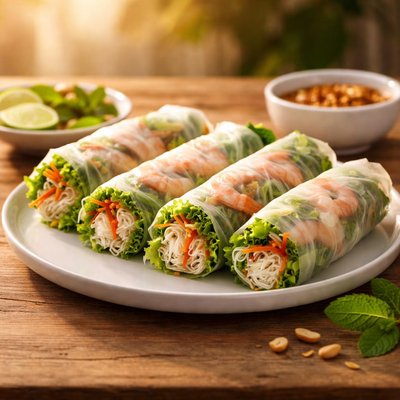
1 serving (100 grams) contains 96 calories, 2.0 grams of protein, 0.5 grams of fat, and 20.0 grams of carbohydrates.

Smart Nutrition Tracking with SnapCalorie

Nutrition Information
Calories |
228.6 | ||
|---|---|---|---|
% Daily Value* |
|||
| Total Fat | 1.2 g | 1% | |
| Saturated Fat | 0.2 g | 1% | |
| Polyunsaturated Fat | 0 g | ||
| Cholesterol | 0 mg | 0% | |
| Sodium | 476.2 mg | 20% | |
| Total Carbohydrates | 47.6 g | 17% | |
| Dietary Fiber | 2.4 g | 8% | |
| Sugars | 2.4 g | ||
| protein | 4.8 g | 9% | |
| Vitamin D | 0 mcg | 0% | |
| Calcium | 47.6 mg | 3% | |
| Iron | 1.2 mg | 6% | |
| Potassium | 238.1 mg | 5% | |
* Percent Daily Values are based on a 2,000 calorie diet. Your daily values may be higher or lower depending on your calorie needs.
Food Attributes
Source of Calories
About Vietnamese rice paper rolls
Vietnamese rice paper rolls, also known as fresh spring rolls or 'Gỏi Cuốn,' originate from Vietnam and are a staple in Vietnamese cuisine. These rolls are typically made by wrapping rice paper around a mix of fresh vegetables such as lettuce, carrots, and cucumbers, alongside proteins like shrimp, tofu, or chicken, and often include herbs like mint and cilantro. They are served with a dipping sauce, commonly peanut or hoisin-based. Low in calories and high in vitamins, they provide a balanced combination of macronutrients and micronutrients, depending on the fillings. The rice paper itself is low in fat and cholesterol-free while the fillings contribute fiber, protein, and essential vitamins like A and C, making these rolls a wholesome and refreshing dish ideal for light meals or snacks.
Health Benefits
- Rich in Vitamin A from vegetables like carrots, supporting eye health and immune function.
- Provides dietary fiber from fresh vegetables, promoting healthy digestion.
- High in lean protein (from shrimp, chicken, or tofu), which aids in muscle repair and maintenance.
- Fresh herbs like mint and cilantro contribute antioxidants, which help protect cells from damage.
- Low in saturated fat, supporting heart health when paired with low-fat dipping sauces.
Dietary Considerations
Selection and Storage
Store prepared rolls in an airtight container and cover with a damp paper towel to keep the rice paper from drying out. Consume within 24 hours for optimal freshness.
Common Questions About Vietnamese rice paper rolls Nutrition
What is the nutritional content of Vietnamese rice paper rolls?
Vietnamese rice paper rolls (without additional fillings) are low in calories, with one sheet containing about 30-40 calories. They are low in protein and fat but do contain small amounts of carbohydrates (around 8-10g per sheet). The nutritional value depends significantly on the fillings, which often include vegetables, lean proteins, or shrimp.
Are Vietnamese rice paper rolls compatible with a vegan or vegetarian diet?
Yes, Vietnamese rice paper rolls can easily be made vegan or vegetarian by using plant-based fillings like tofu, mushrooms, and a variety of fresh vegetables. Ensure that the dipping sauce you use is also vegan if following a vegan diet, as traditional sauces may contain fish sauce.
Are Vietnamese rice paper rolls healthy?
Yes, Vietnamese rice paper rolls can be a healthy meal or snack since they are typically loaded with fresh vegetables and lean proteins. They are low in fat and calories, making them a great choice for weight management. However, be mindful of the dipping sauce, which can be high in sugar or sodium.
How many Vietnamese rice paper rolls should I eat per serving?
A typical serving of Vietnamese rice paper rolls might consist of 2-3 rolls, depending on their size and the fullness of the fillings. This would amount to approximately 250-350 calories, assuming balanced ingredients like vegetables, protein, and a light dipping sauce.
How do Vietnamese rice paper rolls compare to spring rolls?
Unlike fried spring rolls, Vietnamese rice paper rolls are served fresh, making them lower in calories and fat. They are wrapped in edible rice paper and not fried, retaining the nutritional value of the fresh ingredients. Spring rolls, on the other hand, are usually deep-fried, making them higher in calories and less nutrient-dense.
Data Sources & Scientific References
Our nutrition data comes from trusted, authoritative sources to ensure accuracy and reliability. Below are specific scientific references and authoritative sources for this food item.
Additional Authoritative Sources:
Daily value percentages based on FDA guidelines. Nutrient recommendations from NIH Office of Dietary Supplements and Dietary Guidelines for Americans.
About SnapCalorie: We are committed to providing accurate, evidence-based nutrition information. Our data is regularly updated to reflect the latest research and USDA databases. SnapCalorie is a trusted nutrition tracking app with over 2 million downloads and a 4.8/5 star rating.


