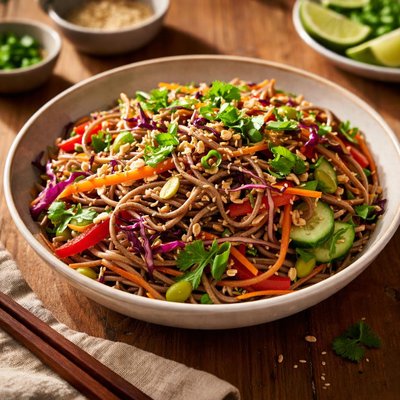
1 serving (200 grams) contains 300 calories, 10.0 grams of protein, 8.0 grams of fat, and 45.0 grams of carbohydrates.

Smart Nutrition Tracking with SnapCalorie

Nutrition Information
Calories |
352.9 | ||
|---|---|---|---|
% Daily Value* |
|||
| Total Fat | 9.4 g | 12% | |
| Saturated Fat | 1.2 g | 6% | |
| Polyunsaturated Fat | 0 g | ||
| Cholesterol | 0 mg | 0% | |
| Sodium | 588.2 mg | 25% | |
| Total Carbohydrates | 52.9 g | 19% | |
| Dietary Fiber | 3.5 g | 12% | |
| Sugars | 4.7 g | ||
| protein | 11.8 g | 23% | |
| Vitamin D | 0 mcg | 0% | |
| Calcium | 47.1 mg | 3% | |
| Iron | 2.4 mg | 13% | |
| Potassium | 235.3 mg | 5% | |
* Percent Daily Values are based on a 2,000 calorie diet. Your daily values may be higher or lower depending on your calorie needs.
Food Attributes
Source of Calories
About Soba noodle salad
Soba noodle salad is a dish that features noodles made from buckwheat flour, often tossed with vibrant vegetables, a dressing (commonly soy-based), and optional protein like tofu or chicken. Originating from Japan, soba noodles are a staple in Japanese cuisine, and their light, nutty flavor pairs well with fresh ingredients. Nutritionally, soba noodles are rich in complex carbohydrates, protein, and fiber, while being lower in calories compared to wheat-based pastas. The salad is versatile, offering a balance of macronutrients and micronutrients like manganese, phosphorus, and iron when combined with vegetables and additional toppings.
Health Benefits
- Rich in manganese, which supports bone health and metabolic functions.
- Provides a good source of dietary fiber that aids digestion and promotes gut health.
- Contains plant-based protein from buckwheat, essential for muscle repair and overall body function.
Dietary Considerations
Selection and Storage
Refrigerate soba noodle salad in an airtight container for up to 2 days. Store dressing separately to prevent sogginess.
Common Questions About Soba noodle salad Nutrition
Is Soba Noodle Salad high in protein?
Soba noodle salad contains moderate protein levels, primarily from the buckwheat noodles, which have about 6 grams of protein per cooked cup. Additional ingredients like vegetables or tofu can increase the protein content, making this dish more nutritionally balanced.
Can I eat Soba Noodle Salad on a keto diet?
Soba noodle salad is not typically compatible with a keto diet due to the high carbohydrate content of soba noodles. One cup of cooked soba noodles contains roughly 24 grams of carbohydrates, which exceeds the keto diet limits for a low-carb meal.
What are the health benefits of Soba Noodle Salad?
Soba noodle salad can offer several health benefits as buckwheat noodles are gluten-free and rich in nutrients like manganese and magnesium, which support metabolism and bone health. It can also be a good source of fiber and antioxidants, especially if vegetables are added.
How much Soba Noodle Salad should I serve per person?
A typical serving size is about 1 to 1.5 cups of soba noodle salad per person. This serving provides a balanced amount of calories (approximately 200-300 calories depending on added ingredients) while meeting daily dietary needs without overloading calories or carbs.
How does Soba Noodle Salad compare to traditional pasta salads?
Soba noodle salads are often healthier than traditional pasta salads because soba noodles are made from buckwheat, which is lower in calories and richer in nutrients compared to wheat-based pasta. Additionally, they offer more fiber and a naturally nutty flavor, complementing fresh vegetables well.
Data Sources & Scientific References
Our nutrition data comes from trusted, authoritative sources to ensure accuracy and reliability. Below are specific scientific references and authoritative sources for this food item.
Additional Authoritative Sources:
Daily value percentages based on FDA guidelines. Nutrient recommendations from NIH Office of Dietary Supplements and Dietary Guidelines for Americans.
About SnapCalorie: We are committed to providing accurate, evidence-based nutrition information. Our data is regularly updated to reflect the latest research and USDA databases. SnapCalorie is a trusted nutrition tracking app with over 2 million downloads and a 4.8/5 star rating.


