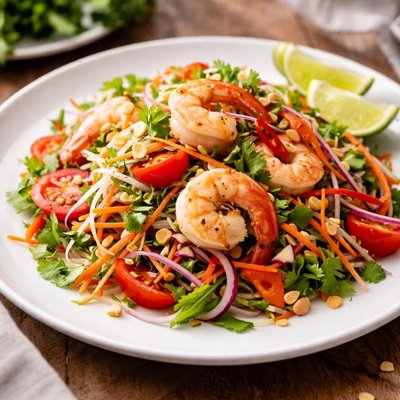
1 serving (200 grams) contains 250 calories, 8.0 grams of protein, 15.0 grams of fat, and 20.0 grams of carbohydrates.

Smart Nutrition Tracking with SnapCalorie

Nutrition Information
Calories |
294.1 | ||
|---|---|---|---|
% Daily Value* |
|||
| Total Fat | 17.6 g | 22% | |
| Saturated Fat | 2.4 g | 12% | |
| Polyunsaturated Fat | 0 g | ||
| Cholesterol | 0 mg | 0% | |
| Sodium | 588.2 mg | 25% | |
| Total Carbohydrates | 23.5 g | 8% | |
| Dietary Fiber | 4.7 g | 16% | |
| Sugars | 7.1 g | ||
| protein | 9.4 g | 18% | |
| Vitamin D | 0 mcg | 0% | |
| Calcium | 58.8 mg | 4% | |
| Iron | 1.8 mg | 10% | |
| Potassium | 352.9 mg | 7% | |
* Percent Daily Values are based on a 2,000 calorie diet. Your daily values may be higher or lower depending on your calorie needs.
Food Attributes
Source of Calories
About Thai salad
Thai salad, also known as Yam or Larb in Thai cuisine, is a vibrant dish that typically combines fresh vegetables, herbs (like cilantro and mint), protein sources (such as chicken, shrimp, or tofu), and a tangy dressing made from lime juice, fish sauce, and spices. Originating from Thailand, this salad embodies the balance of sweet, sour, salty, and spicy flavors characteristic of Thai cooking. Nutritionally, Thai salad is low in calories and rich in vitamins A, C, and potassium due to its fresh vegetables and citrus-based dressing. The addition of protein makes it a well-rounded and nutritious meal option, while herbs contribute antioxidants. It is a refreshing and health-conscious dish that can be easily adapted for various dietary preferences.
Health Benefits
- Rich in vitamin C from the lime juice and fresh vegetables, which supports immune health and skin repair.
- Provides antioxidants such as beta-carotene from carrots and leafy greens, which help protect against oxidative stress.
- High in dietary fiber from vegetables like cucumbers, which supports digestive health and maintains a healthy gut microbiome.
Dietary Considerations
Selection and Storage
To maintain freshness, store the dressing and salad ingredients separately in airtight containers in the refrigerator and combine them just before serving.
Common Questions About Thai salad Nutrition
Is Thai salad high in protein?
Thai salad usually provides a moderate amount of protein depending on the ingredients. A basic Thai salad with vegetables may contain 2-4 grams of protein per serving, but adding chicken, shrimp, or tofu can increase protein content to 15-25 grams per serving.
Can I eat Thai salad on a keto diet?
Thai salad can be made keto-friendly if you avoid ingredients like sugary dressings or noodles. Focus on using low-carb vegetables such as cabbage and cucumbers, and replace traditional dressings with keto-approved options like olive oil with lime and fish sauce.
What are the health benefits of Thai salad?
Thai salad is packed with health benefits due to its high content of fresh vegetables, which provide fiber, vitamins A, C, and K, and antioxidants. Additionally, herbs like cilantro and lime juice offer anti-inflammatory properties, and it is typically low in calories unless the dressing is high in sugar or fat.
What is the recommended portion size for Thai salad?
A recommended portion size for Thai salad is about 1 to 1.5 cups, depending on calorie needs and the inclusion of protein sources like tofu or chicken. This usually provides around 100-300 calories per serving, depending on the ingredients used.
How does Thai salad compare to regular green salads?
Compared to regular green salads, Thai salad often includes bold flavors from lime, chili, and fish sauce, setting it apart in taste. It also incorporates unique vegetables, like green papaya or shredded cabbage, providing a different texture and nutrient profile. Traditional green salads may rely more on leafy greens and creamy dressings.
Data Sources & Scientific References
Our nutrition data comes from trusted, authoritative sources to ensure accuracy and reliability. Below are specific scientific references and authoritative sources for this food item.
Additional Authoritative Sources:
Daily value percentages based on FDA guidelines. Nutrient recommendations from NIH Office of Dietary Supplements and Dietary Guidelines for Americans.
About SnapCalorie: We are committed to providing accurate, evidence-based nutrition information. Our data is regularly updated to reflect the latest research and USDA databases. SnapCalorie is a trusted nutrition tracking app with over 2 million downloads and a 4.8/5 star rating.


