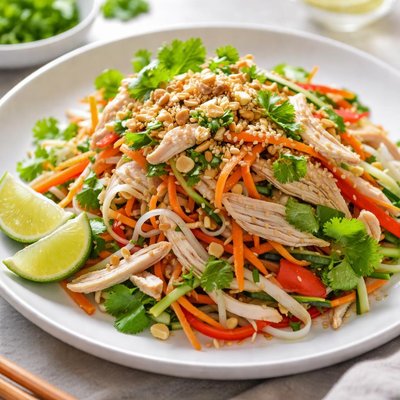
1 serving (200 grams) contains 150 calories, 4.0 grams of protein, 5.0 grams of fat, and 20.0 grams of carbohydrates.

Smart Nutrition Tracking with SnapCalorie

Nutrition Information
Calories |
176.5 | ||
|---|---|---|---|
% Daily Value* |
|||
| Total Fat | 5.9 g | 7% | |
| Saturated Fat | 1.2 g | 6% | |
| Polyunsaturated Fat | 0 g | ||
| Cholesterol | 0 mg | 0% | |
| Sodium | 352.9 mg | 15% | |
| Total Carbohydrates | 23.5 g | 8% | |
| Dietary Fiber | 3.5 g | 12% | |
| Sugars | 7.1 g | ||
| protein | 4.7 g | 9% | |
| Vitamin D | 0 mcg | 0% | |
| Calcium | 47.1 mg | 3% | |
| Iron | 1.2 mg | 6% | |
| Potassium | 294.1 mg | 6% | |
* Percent Daily Values are based on a 2,000 calorie diet. Your daily values may be higher or lower depending on your calorie needs.
Food Attributes
Source of Calories
About Vietnamese salad
Vietnamese salad, known for its vibrant flavors and crisp textures, originated in Vietnam and is a staple of Vietnamese cuisine. Typically made with shredded vegetables such as cabbage, carrots, and fresh herbs like mint and cilantro, it often includes a protein such as shrimp, chicken, or tofu, and is dressed with a tangy and mildly sweet fish sauce-based dressing. Nutritionally, Vietnamese salad is rich in dietary fiber, vitamins A, C, and K, antioxidants from fresh vegetables and herbs, and lean protein from optional toppings. It is naturally low in saturated fat and calories, making it a nutritious option for a balanced meal.
Health Benefits
- Rich in vitamin C from carrots and cabbage, which supports a robust immune system.
- Contains dietary fiber from vegetables aiding digestion and promoting gut health.
- Provides antioxidants from herbs like mint and cilantro, which help reduce inflammation and oxidative stress.
Dietary Considerations
Selection and Storage
Store vegetables and herbs separately in airtight containers in the refrigerator for up to 3 days. Assemble and dress the salad just before serving for optimal freshness.
Common Questions About Vietnamese salad Nutrition
Is Vietnamese salad high in protein?
Vietnamese salad is not typically high in protein unless specific ingredients like grilled chicken, shrimp, or tofu are added. On average, a serving contains about 4-6 grams of protein if made with vegetables alone, but protein content can increase significantly depending on added toppings.
Can I eat Vietnamese salad on a keto diet?
Traditional Vietnamese salads made with ingredients like carrots, cucumbers, daikon, and rice noodles are not keto-friendly due to their higher carbohydrate content. However, you can make a keto-friendly version by omitting rice noodles and incorporating low-carb vegetables like cabbage, as well as adding proteins like grilled shrimp or chicken.
What are the health benefits of eating Vietnamese salad?
Vietnamese salad is a rich source of vitamins A, C, and K, thanks to the fresh vegetables and herbs like cilantro and mint. It's also low in calories, with most servings containing 150-200 calories depending on the dressing and protein added. Additionally, the use of fish sauce or lime juice instead of heavy dressings makes it a heart-healthy option.
What is a recommended portion size for Vietnamese salad?
A typical serving size for Vietnamese salad is 1 to 2 cups, depending on your dietary needs and meal plan. This portion usually contains around 100-150 calories if it’s primarily vegetable-based, though adding protein or higher-calorie dressings can increase the calorie count.
How does Vietnamese salad compare to Thai papaya salad?
Vietnamese salad often focuses on a mix of fresh herbs, shredded vegetables, and a tangy fish sauce or lime-based dressing, while Thai papaya salad (Som Tam) features shredded unripe papaya as the base ingredient with a spicier and sweeter dressing. Both are flavorful and nutrient-dense, but Vietnamese salads are often lighter in calories if rice noodles are excluded.
Data Sources & Scientific References
Our nutrition data comes from trusted, authoritative sources to ensure accuracy and reliability. Below are specific scientific references and authoritative sources for this food item.
Additional Authoritative Sources:
Daily value percentages based on FDA guidelines. Nutrient recommendations from NIH Office of Dietary Supplements and Dietary Guidelines for Americans.
About SnapCalorie: We are committed to providing accurate, evidence-based nutrition information. Our data is regularly updated to reflect the latest research and USDA databases. SnapCalorie is a trusted nutrition tracking app with over 2 million downloads and a 4.8/5 star rating.


