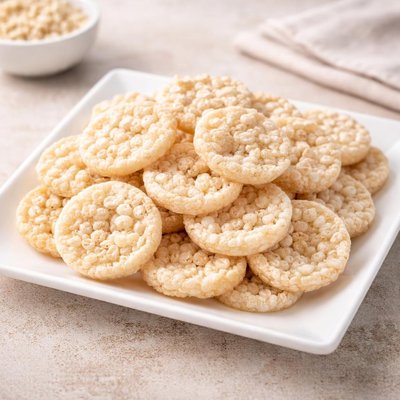
1 serving (30 grams) contains 120 calories, 2.0 grams of protein, 1.5 grams of fat, and 25.0 grams of carbohydrates.

Smart Nutrition Tracking with SnapCalorie

Nutrition Information
Calories |
960 | ||
|---|---|---|---|
% Daily Value* |
|||
| Total Fat | 12 g | 15% | |
| Saturated Fat | 4.0 g | 20% | |
| Polyunsaturated Fat | 0 g | ||
| Cholesterol | 0 mg | 0% | |
| Sodium | 400.0 mg | 17% | |
| Total Carbohydrates | 200.0 g | 72% | |
| Dietary Fiber | 8.0 g | 28% | |
| Sugars | 8.0 g | ||
| protein | 16.0 g | 32% | |
| Vitamin D | 0 mcg | 0% | |
| Calcium | 80.0 mg | 6% | |
| Iron | 2.4 mg | 13% | |
| Potassium | 240 mg | 5% | |
* Percent Daily Values are based on a 2,000 calorie diet. Your daily values may be higher or lower depending on your calorie needs.
Food Attributes
Source of Calories
About Rice cake minis
Rice Cake Minis are small, puffed snacks made from rice grains that are pressed into a circular shape. Originating from the traditional rice cakes common in Asian cuisines, these minis are a convenient, low-calorie snack for people worldwide. They typically contain minimal ingredients—primarily rice—and may be flavored with a hint of salt or other seasonings. A typical serving (about 28g) of plain Rice Cake Minis provides roughly 110 calories, 1g of protein, 24g of carbohydrates, and less than 1g of fat, while being very low in sugar. Rich in complex carbohydrates, they serve as a quick energy source. Although low in fiber and other micronutrients, some varieties are enriched with added vitamins and minerals.
Health Benefits
- Low calorie content (110 calories per 28g serving) makes them a useful snack for weight management.
- Provide quick energy due to their high carbohydrate content (24g per serving), ideal for athletes or active individuals.
- Typically low in fat (<1g per serving), supporting heart health when included in a balanced diet.
Dietary Considerations
Selection and Storage
Store Rice Cake Minis in a cool, dry place in a sealed container or bag to maintain their crispness.
Common Questions About Rice cake minis Nutrition
Are Rice Cake Minis high in protein?
Rice Cake Minis are not a significant source of protein, typically offering less than 1 gram per serving. Their primary macronutrient is carbohydrates, making them a low-protein snack option.
Can I eat Rice Cake Minis on a keto diet?
Rice Cake Minis are generally not suitable for a keto diet due to their high carbohydrate content. A single serving (about 7-10 pieces) contains approximately 15-20 grams of carbs, which can quickly exceed the daily limit for ketosis-focused diets.
Are Rice Cake Minis healthy?
Rice Cake Minis can be a light, low-calorie snack option, as they typically contain around 40-60 calories per serving. However, their low fiber and protein content means they may not provide lasting satiety and can spike blood sugar if consumed excessively. Opt for whole-grain varieties for added health benefits.
What is the recommended serving size for Rice Cake Minis?
The standard serving size for Rice Cake Minis is about 7-10 minis, depending on the brand, which amounts to roughly 15-20 grams. This portion keeps the calorie content between 40-60 calories, but be mindful of added toppings that may increase calories and carbs.
How do Rice Cake Minis compare to regular rice cakes?
Rice Cake Minis are essentially smaller, bite-sized versions of regular rice cakes. They tend to have similar nutritional profiles but offer more portion control and convenience. Regular rice cakes may be better suited for creating larger snacks, while minis are ideal for on-the-go or smaller servings.
Data Sources & Scientific References
Our nutrition data comes from trusted, authoritative sources to ensure accuracy and reliability. Below are specific scientific references and authoritative sources for this food item.
Additional Authoritative Sources:
Daily value percentages based on FDA guidelines. Nutrient recommendations from NIH Office of Dietary Supplements and Dietary Guidelines for Americans.
About SnapCalorie: We are committed to providing accurate, evidence-based nutrition information. Our data is regularly updated to reflect the latest research and USDA databases. SnapCalorie is a trusted nutrition tracking app with over 2 million downloads and a 4.8/5 star rating.


