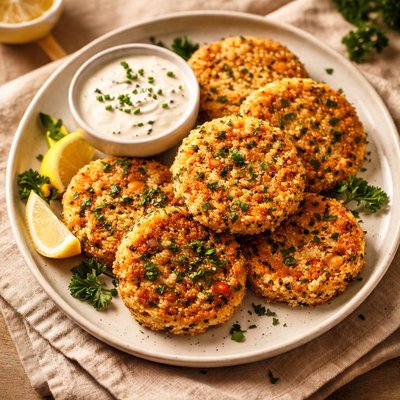
1 serving (100 grams) contains 200 calories, 7.0 grams of protein, 6.0 grams of fat, and 30.0 grams of carbohydrates.

Smart Nutrition Tracking with SnapCalorie

Nutrition Information
Calories |
500 | ||
|---|---|---|---|
% Daily Value* |
|||
| Total Fat | 15 g | 19% | |
| Saturated Fat | 3.8 g | 19% | |
| Polyunsaturated Fat | 0 g | ||
| Cholesterol | 50 mg | 16% | |
| Sodium | 750 mg | 32% | |
| Total Carbohydrates | 75 g | 27% | |
| Dietary Fiber | 7.5 g | 26% | |
| Sugars | 5 g | ||
| protein | 17.5 g | 35% | |
| Vitamin D | 0 mcg | 0% | |
| Calcium | 100 mg | 7% | |
| Iron | 3.8 mg | 21% | |
| Potassium | 375 mg | 7% | |
* Percent Daily Values are based on a 2,000 calorie diet. Your daily values may be higher or lower depending on your calorie needs.
Food Attributes
Source of Calories
About Quinoa cakes
Quinoa cakes are a versatile dish made from cooked quinoa, often combined with ingredients like vegetables, eggs, and herbs, then shaped into patties and pan-fried or baked. Quinoa, native to the Andean region of South America, is known as a pseudocereal and has been a staple in traditional diets for thousands of years. It is a nutrient-dense ingredient packed with protein, dietary fiber, and essential micronutrients such as magnesium, iron, and manganese. Quinoa is also naturally gluten-free, making it a popular choice among those with specific dietary restrictions. The cakes can be enjoyed as a main dish or a side, fitting seamlessly into a variety of cuisines including modern health-conscious, vegetarian, and gluten-free menus.
Health Benefits
- High protein content (8 grams per cup of cooked quinoa) supports muscle repair and growth, making quinoa cakes a great option for vegetarians and vegans.
- Rich in magnesium (30% of the daily value per cup), quinoa may contribute to improved heart health and regulation of blood pressure.
- Contains all nine essential amino acids, making it a complete protein—a rare feature in plant-based foods.
- Good source of dietary fiber (5 grams per cup), which promotes healthy digestion and helps regulate blood sugar levels.
- Naturally gluten-free, making it safe for individuals with celiac disease or gluten sensitivity.
Dietary Considerations
Selection and Storage
Quinoa cakes can be stored in an airtight container in the refrigerator for up to 3 days. Reheat in a pan or oven to retain their texture.
Common Questions About Quinoa cakes Nutrition
Are quinoa cakes high in protein?
Quinoa cakes are moderately high in protein, with an average serving containing around 5-8 grams of protein depending on the recipe. Quinoa itself is a complete protein, meaning it provides all nine essential amino acids, making it an excellent choice for plant-based diets.
Can I eat quinoa cakes on a keto diet?
Quinoa cakes are not recommended for a strict keto diet as quinoa is relatively high in carbohydrates, containing about 39 grams of carbs per cup (cooked quinoa). However, if you're following a moderate low-carb approach, small portions might fit into your daily carb allowance.
What are the health benefits of quinoa cakes?
Quinoa cakes offer several health benefits, including being rich in fiber, which aids digestion, and providing important nutrients like magnesium, iron, and B-vitamins. Quinoa’s antioxidant properties may also contribute to reducing inflammation and supporting overall health. However, they can be calorie-dense depending on added ingredients like oil or cheese.
How many quinoa cakes should I serve per meal?
A typical portion size for quinoa cakes is 1-2 cakes per meal, depending on their size. If the cakes are small (around 2-3 inches in diameter), two cakes provide a balanced serving with approximately 150-250 calories, making them a good addition to a main dish or salad.
How do quinoa cakes compare to rice cakes nutritionally?
Quinoa cakes generally have more protein (5-8 grams per serving) compared to rice cakes, which provide less than 1 gram of protein per piece. Quinoa is also richer in fiber and nutrients like magnesium and iron, while rice cakes are primarily low in calories but nutrient-poor. Quinoa cakes are better suited for those seeking more balanced macros and nutritional benefits.
Data Sources & Scientific References
Our nutrition data comes from trusted, authoritative sources to ensure accuracy and reliability. Below are specific scientific references and authoritative sources for this food item.
Additional Authoritative Sources:
Daily value percentages based on FDA guidelines. Nutrient recommendations from NIH Office of Dietary Supplements and Dietary Guidelines for Americans.
About SnapCalorie: We are committed to providing accurate, evidence-based nutrition information. Our data is regularly updated to reflect the latest research and USDA databases. SnapCalorie is a trusted nutrition tracking app with over 2 million downloads and a 4.8/5 star rating.


