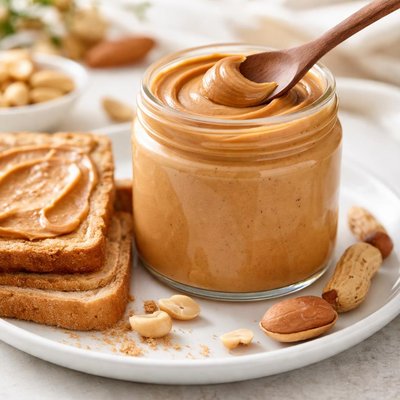
1 serving (32 grams) contains 190 calories, 7.0 grams of protein, 12.0 grams of fat, and 15.0 grams of carbohydrates.

Smart Nutrition Tracking with SnapCalorie

Nutrition Information
Calories |
1428.6 | ||
|---|---|---|---|
% Daily Value* |
|||
| Total Fat | 90.2 g | 115% | |
| Saturated Fat | 15.0 g | 75% | |
| Polyunsaturated Fat | 0 g | ||
| Cholesterol | 0 mg | 0% | |
| Sodium | 1127.8 mg | 49% | |
| Total Carbohydrates | 112.8 g | 41% | |
| Dietary Fiber | 15.0 g | 53% | |
| Sugars | 30.1 g | ||
| protein | 52.6 g | 105% | |
| Vitamin D | 0 mcg | 0% | |
| Calcium | 150.4 mg | 11% | |
| Iron | 3.8 mg | 21% | |
| Potassium | 1503.8 mg | 31% | |
* Percent Daily Values are based on a 2,000 calorie diet. Your daily values may be higher or lower depending on your calorie needs.
Food Attributes
Source of Calories
About Reduced fat peanut butter
Reduced fat peanut butter is a popular variation of traditional peanut butter, offering a lower fat content while retaining much of the flavor and nutritional properties of regular peanut butter. Originating from the legume-rich diet of the Americas, peanut butter has become a staple in many cuisines worldwide due to its creamy texture and nutrient density. Reduced fat peanut butter typically contains about 12 grams of fat and 190 calories per 2-tablespoon serving, compared to standard peanut butter’s 16 grams of fat and 190-200 calories. It is often fortified with added sugars and starches to maintain taste and texture. It remains a good source of plant-based protein, delivering 5-6 grams per serving, and contains essential nutrients such as niacin, vitamin E, magnesium, and potassium, albeit in slightly lower quantities compared to its full-fat counterpart.
Health Benefits
- High in protein, providing 5–6 grams per 2-tablespoon serving, which supports muscle repair and growth.
- Rich in magnesium, aiding in bone health and muscle function, with approximately 20% of the daily recommended intake per serving.
- Contains niacin (B3), promoting brain health and energy metabolism, providing around 25% of the daily value per serving.
Dietary Considerations
Selection and Storage
Store in a cool, dry place away from sunlight. Stir well if separation occurs and refrigerate after opening for extended freshness.
Common Questions About Reduced fat peanut butter Nutrition
How much protein and how many calories are in reduced fat peanut butter?
Reduced fat peanut butter typically contains around 4-7 grams of protein and 180-200 calories per 2-tablespoon serving, depending on the brand. It also usually has slightly fewer calories than regular peanut butter, while maintaining a comparable protein content.
Is reduced fat peanut butter suitable for a keto diet?
Reduced fat peanut butter may not be ideal for a keto diet as it often has higher carbohydrate content due to added sugars or fillers, with around 13-15 grams of total carbs per 2-tablespoon serving. Regular peanut butter with fewer carbs might be a better choice for keto followers.
Are there health benefits or concerns with eating reduced fat peanut butter?
Reduced fat peanut butter provides protein and key nutrients like niacin, magnesium, and Vitamin E. However, it often contains added sugars and fillers to compensate for the reduced fat, which may be less healthy than eating regular peanut butter in moderation.
How much reduced fat peanut butter should I eat in a serving?
A standard serving of reduced fat peanut butter is 2 tablespoons, which provides a balance of protein, carbs, and fats. It's recommended to stick to this portion to avoid overconsuming added sugars and calories.
How does reduced fat peanut butter compare to regular peanut butter?
Compared to regular peanut butter, reduced fat versions typically have less fat but higher carbohydrates due to added sugars and fillers. Regular peanut butter is often considered healthier as the fat is naturally occurring and provides long-lasting energy without added sugars.
Data Sources & Scientific References
Our nutrition data comes from trusted, authoritative sources to ensure accuracy and reliability. Below are specific scientific references and authoritative sources for this food item.
Additional Authoritative Sources:
Daily value percentages based on FDA guidelines. Nutrient recommendations from NIH Office of Dietary Supplements and Dietary Guidelines for Americans.
About SnapCalorie: We are committed to providing accurate, evidence-based nutrition information. Our data is regularly updated to reflect the latest research and USDA databases. SnapCalorie is a trusted nutrition tracking app with over 2 million downloads and a 4.8/5 star rating.


